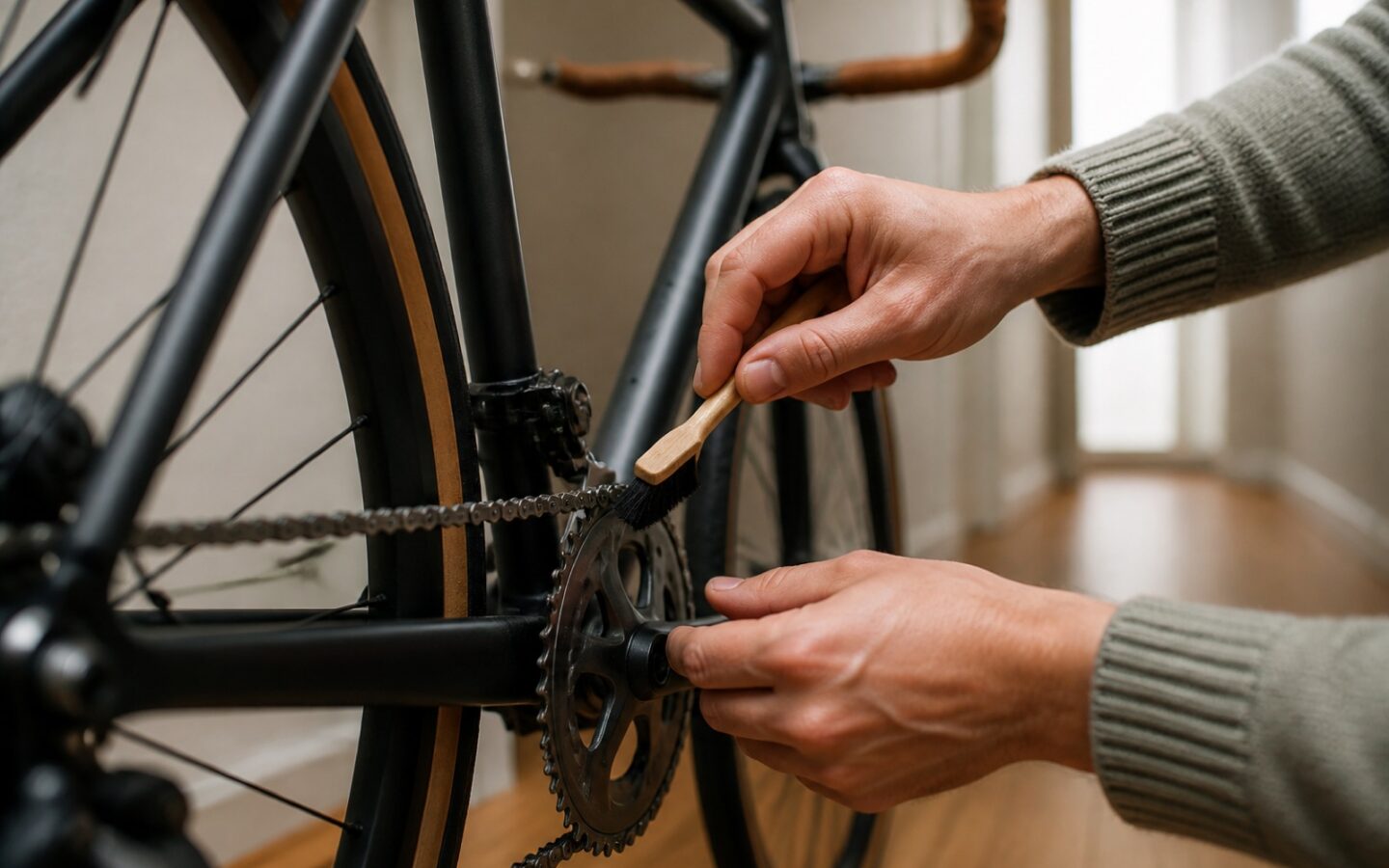
A chain is the only part of a bicycle that is simultaneously essential, exposed and cheap. Look after it and a drivetrain lasts years. Ignore it and you will be replacing a chain, cassette and chainring together, which costs roughly twenty times more than a bottle of oil.
What actually wears a chain out
Not use — grit. Oil on a chain attracts dust, that dust becomes a grinding paste between the pins and rollers, and the chain slowly lengthens until it no longer meshes with the teeth. The goal of chain care is therefore not to keep it wet, but to keep it clean.
The five-minute routine
Once a month, or after any properly wet ride:
- Hold a dry rag around the lower run of chain and backpedal twenty turns. Most of what comes off is the grinding paste.
- Move the rag to a clean patch and do it again. Keep going until the rag stops going black.
- Apply one drop of oil to each roller, backpedalling slowly. One drop. Not a stripe down the length of it.
- Wait a minute for it to creep into the rollers, then wipe the outside of the chain thoroughly dry with a clean rag.
That last step is the one everybody skips, and it is the most important. Oil belongs inside the chain, where the moving surfaces are. Oil on the outside is only there to collect grit.
Wet or dry lubricant
Wet lubricant lasts longer in rain and attracts more dirt. Dry lubricant stays cleaner and washes off in a downpour. For a city bicycle ridden year-round, a wet lubricant applied sparingly and wiped properly is the more forgiving choice.
Knowing when it is finished
A chain checker costs about the same as a coffee and tells you in three seconds. At 0.5% elongation, replace the chain and the cassette survives. At 1%, you are buying both. Check every few months and you will almost never reach 1%.
If your bicycle has a chaincase
Then largely ignore all of the above. A fully enclosed chain stays clean for thousands of kilometres and wants attention roughly once a year. This is the single most underrated feature of a proper city bicycle.