A cured lacquer is a plastic film sitting on top of the wood. It is genuinely tough, it resists water and red wine better than anything we could put on by hand, and the day it fails it fails completely. You cannot spot-repair a film finish. The whole surface has to be stripped and resprayed by somebody with a booth.
What oil does instead
Hardwax oil part-penetrates and part-sits, curing in the top fraction of a millimetre of timber. It is water resistant rather than waterproof, so a puddle left overnight will raise a mark. The trade is that the repair is a grey pad, a cloth and ten minutes, done in the room, by you, with no colour join to disguise.
The routine, in full
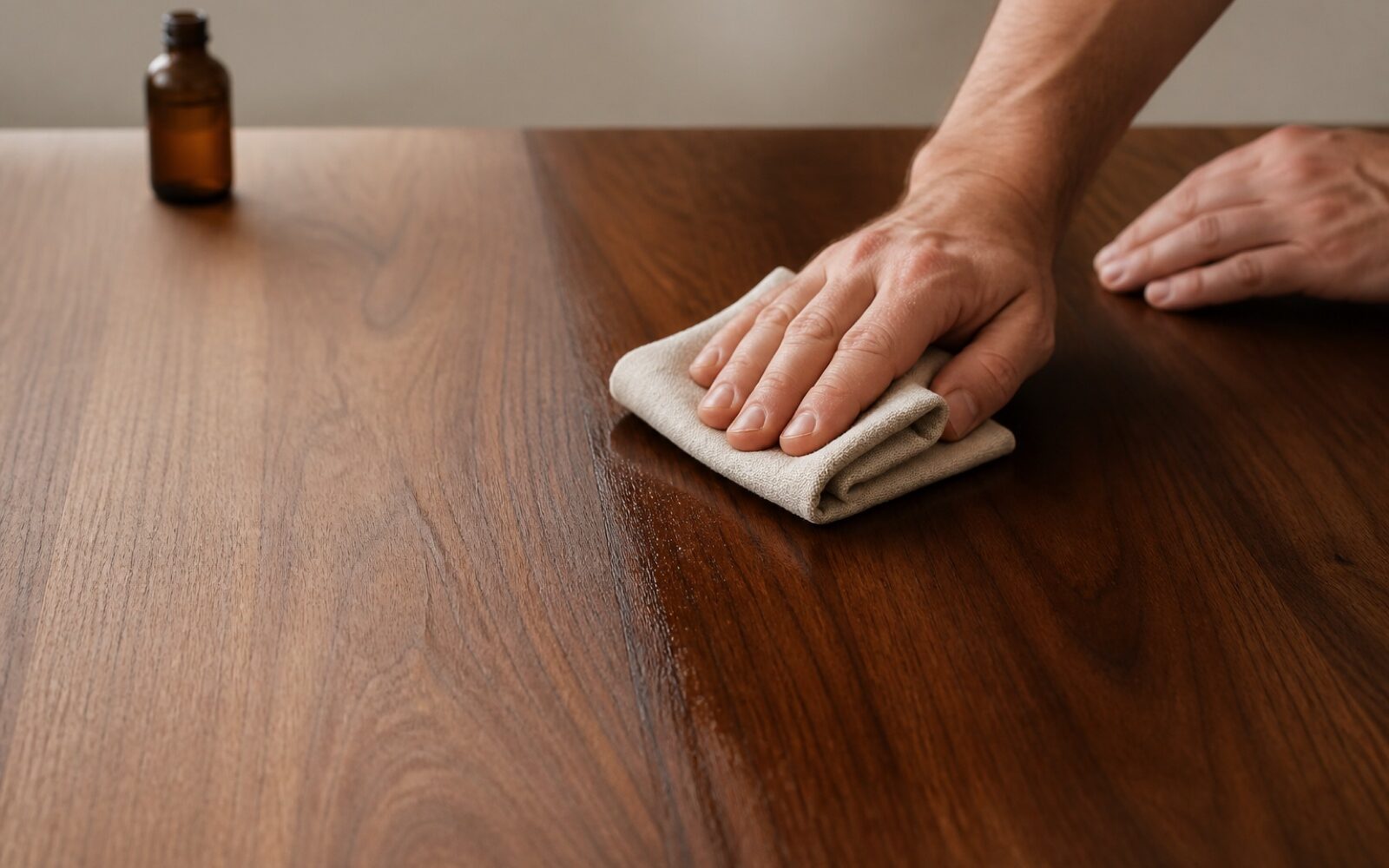
Wipe spills when they happen. Once a year, or whenever a surface starts to look thirsty and feel dry under the palm, scuff the whole top with a grey abrasive pad going with the grain, wipe off the dust, and put on one thin coat. Thin means you have wiped almost all of it back off within five minutes. Two thin coats are better than one heavy one; one heavy one will stay tacky for a week and you will hate us.
Rings and dents
A white ring is moisture trapped in the finish and it usually comes back out — a warm, dry cloth and patience first, then a light scuff and re-oil. A dent is crushed fibre; a drop of water and the tip of a hot iron through a damp cloth will steam most of it back up before you re-oil. A scratch that has gone through to bare wood is the easiest of the three.
None of this is maintenance in the sense of a chore. It is the reason the table will still be here in eighty years.