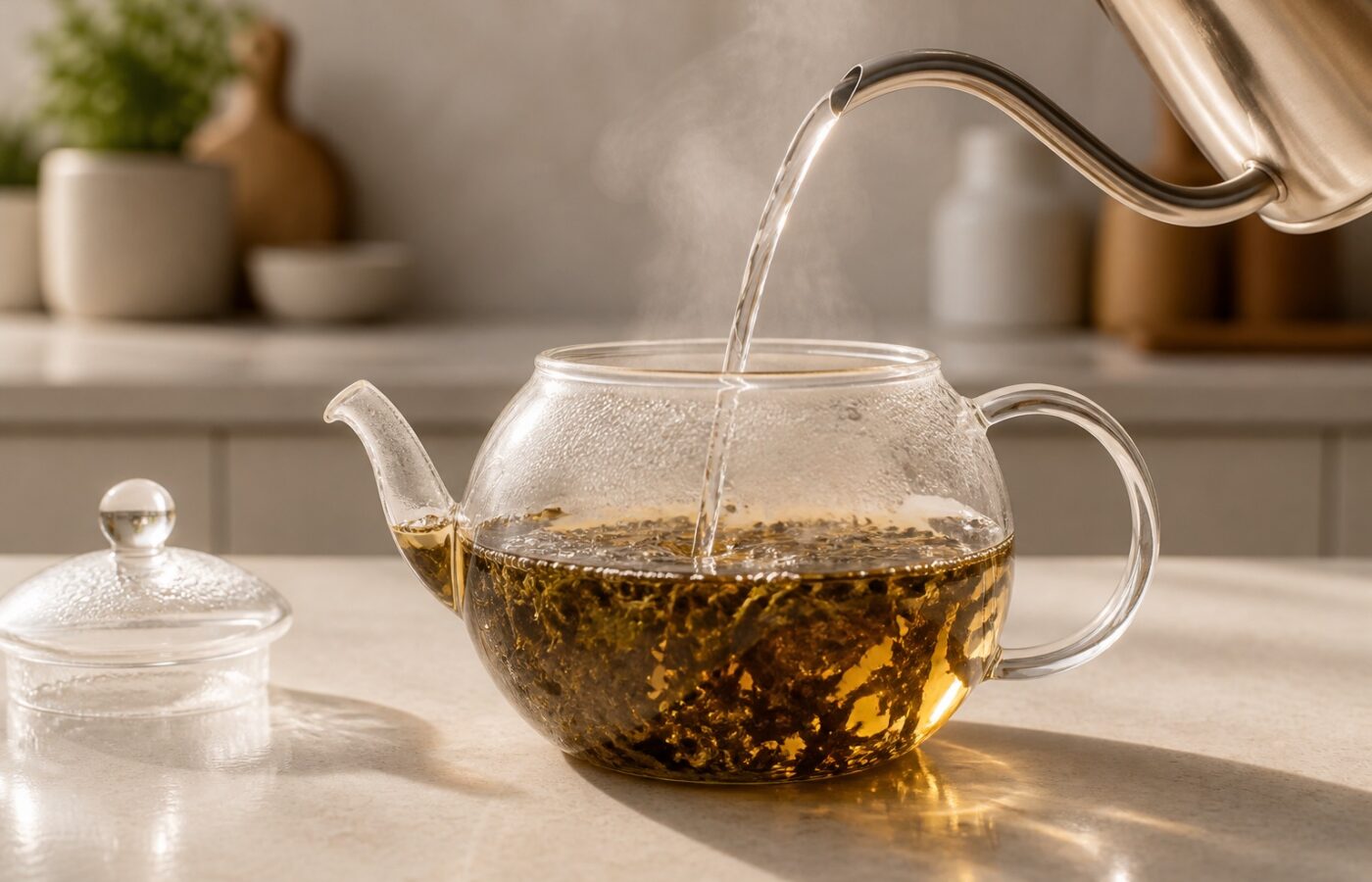
More cups of tea are ruined by water than by leaves. The good news: you do not need a thermometer, a chart taped to the kettle or a degree in chemistry – just three temperatures you can recognise by eye and ear. Here is the plain-words version we give everyone who asks at the bench.
Rolling boil: black teas and iron kettles
A full, noisy boil is right for black teas and most herbal infusions – robust leaves that want everything the water can give. It is also the temperature a cast iron kettle holds best, which is why iron and black tea are old companions. Pour immediately; water that boils twice tastes flat.
First quiet: oolongs
Let a boiled kettle stand until the rumble dies to silence – roughly ninety seconds – and you are near 90°C, the friendly zone for oolongs and most roasted teas. The leaves open fully without the bitter edge a raging boil drags out of them.
Shrimp eyes: greens and whites
For green and white teas, catch the water early – when the first small bubbles line the kettle floor like shrimp eyes and steam rises but nothing rolls. That is roughly 75-80°C. Delicate leaves brewed there taste sweet and vegetal instead of scorched. If you missed the moment, pour the water between two vessels once; each transfer sheds about ten degrees.
The honest shortcut
Brew the same leaves at two temperatures side by side once, and your taste will remember the difference longer than any chart. The vessel that makes this experiment easiest is a gaiwan – which is, not coincidentally, where most people’s second tea chapter begins.