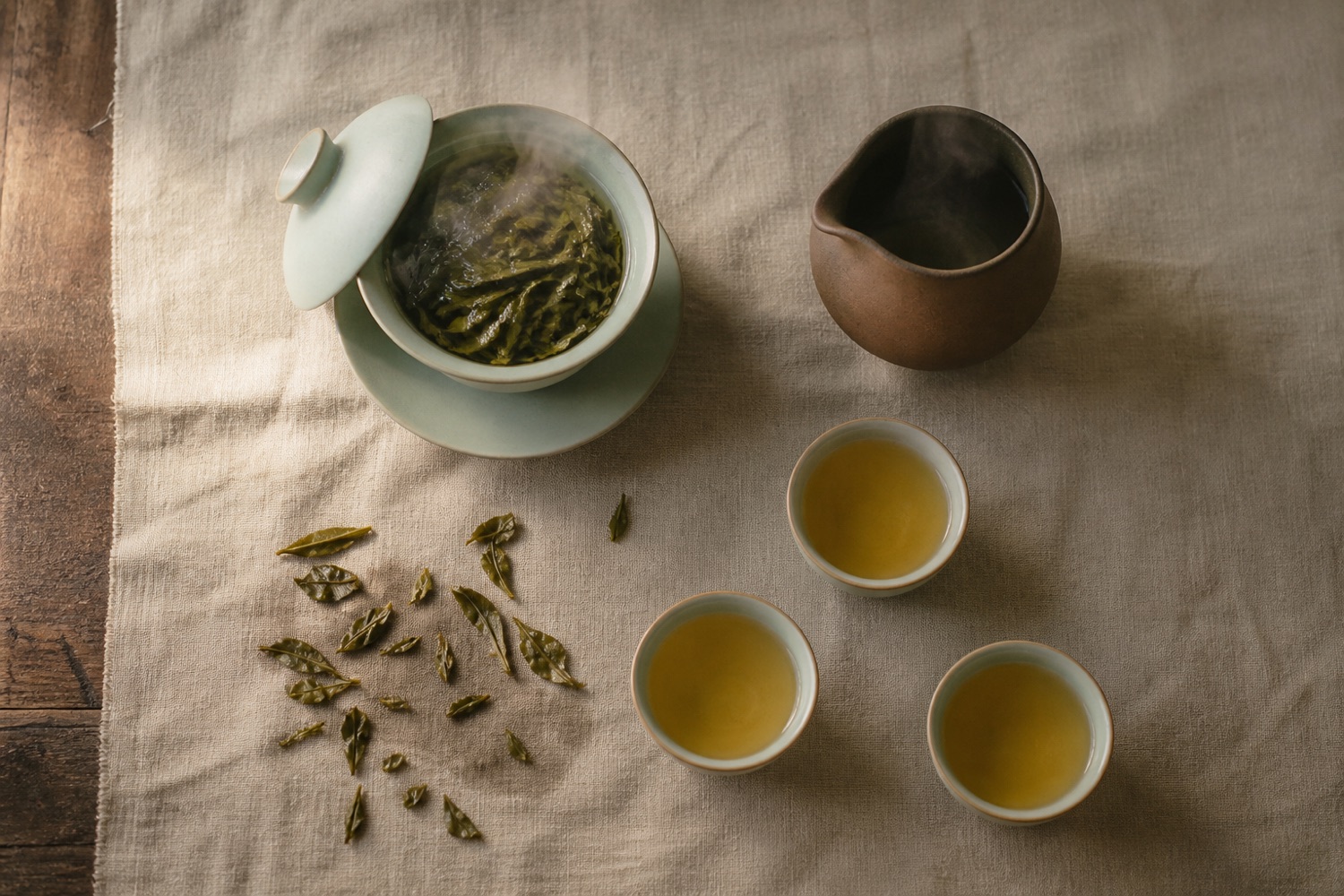
Gongfu brewing sounds ceremonial and is not. It is simply more leaf, less water and shorter times, repeated — and it will get more out of a good tea than any other method. Here is the simple version we teach in the tasting room.
The short version
- Warm everything. Rinse the pot, pitcher and cups with hot water and pour it away. A cold vessel flattens the first infusion.
- Use plenty of leaf. Enough to loosely cover the bottom of the vessel is a good starting point — you can fine-tune from there.
- Rinse, sometimes. Compressed and roasted teas get a quick rinse that is poured away. Delicate green and white leaf does not — you would be throwing out the best part.
- Start short, build slowly. Begin with a few seconds and add a little time to each round. Stop when the sweetness leaves the finish.
Rough guide by style
| Style | Water | First infusion | Rinse first? |
|---|---|---|---|
| Green | Well below the boil | Short | No |
| White | Hot, not quite boiling | Short | Only if aged |
| Oolong | Just off the boil | Short | Roasted ones, yes |
| Black | Just off the boil | Very short | No |
| Pu-erh | Boiling | Very short | Yes |
Water is half the tea
Very hard water flattens aroma and dulls sweetness; distilled water makes everything taste hollow. Ordinary filtered water is the sweet spot. If your tap water tastes of chlorine, the tea will too — a cheap carbon filter fixes more brewing problems than any change of vessel.
If it tastes bitter
Almost always too much leaf, too long, or too hot — in that order. Shorten the time before you lower the temperature, and pour the vessel completely empty between rounds so the leaf does not stew.
Western brewing is fine
A teaspoon of leaf in a mug-sized pot for about three minutes will make a genuinely good cup of any black tea or aged white on this site. Gongfu gets more out of the leaf, but a tea you actually brew beats a tea you feel too tired to approach.