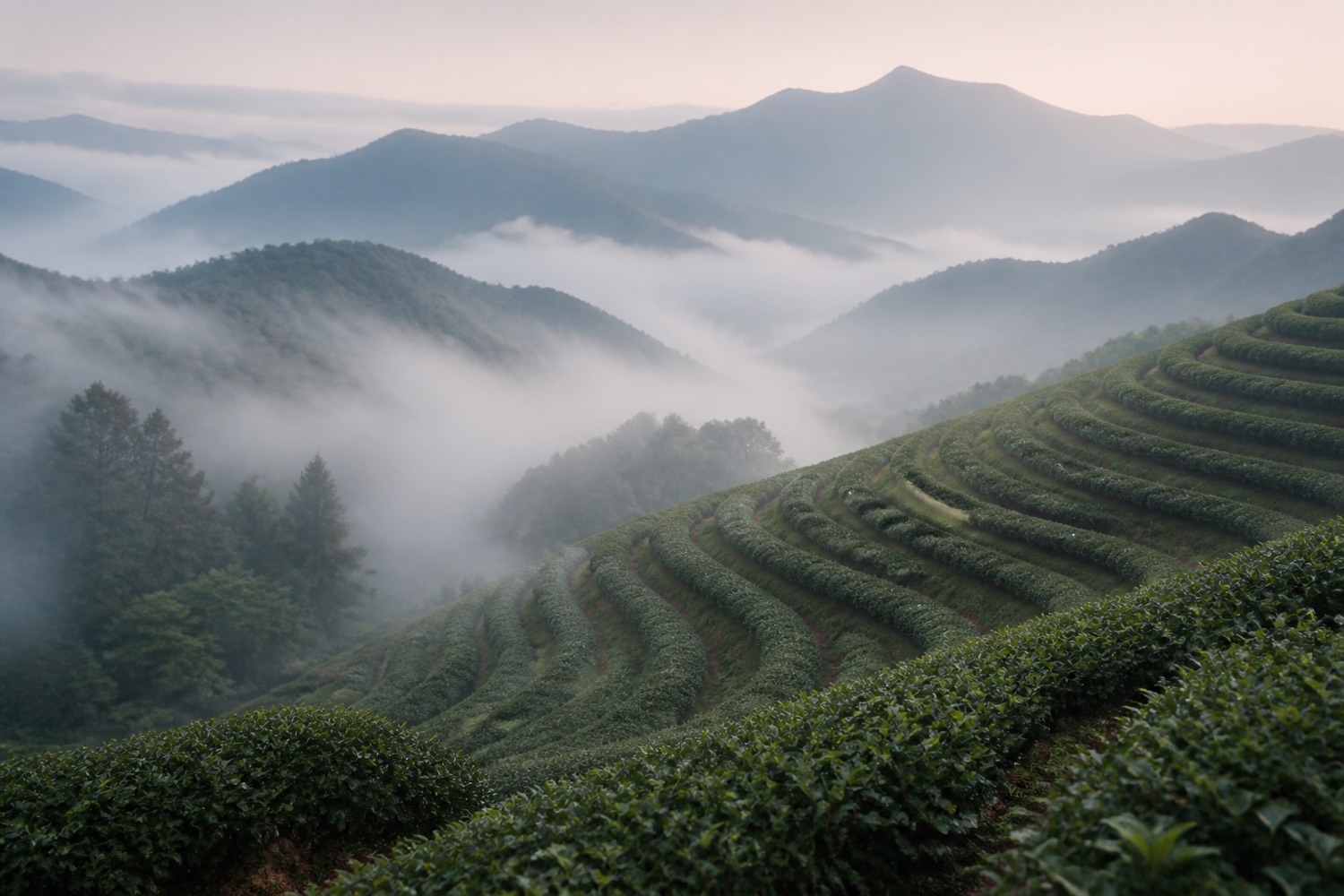
We are not a blending house. Every tea in the shop is a single lot from a single garden, bought in person and listed with honest tasting notes. When a lot runs out it comes off the site rather than being quietly topped up with something similar.
Many springs of the same road
The route has barely changed since the first year: the white tea gardens early in the season for the bud picking, the black tea and oolong regions through the middle weeks, then the high mountain gardens for the summer flush and again in winter for the roast. Several regions, many weeks on the road, and the same conversations with mostly the same people.
That repetition is the whole method. We are not sourcing by sample request from an office. We taste the leaf where it is made, ask questions about the roast, and buy what we would want to drink ourselves for the next twelve months.
What we pay for
Growers are paid on collection, in full, at a price agreed before the picking rather than after. It costs more and it means we buy less. It also means we get first refusal on the good lots, which is the only competitive advantage a shop this size can realistically have.
- Small lots. Small enough that one garden and one season can still be tasted in the cup.
- Traceability. We only list a tea when we know exactly where and when it was made.
- No blending. Not across gardens, not across years, not to hit a house style.
- Careful storage. Everything except pu-erh goes into cool, airtight storage as soon as it arrives.
What we turn down
A large share of what we taste. Some springs a garden we love simply does not produce anything worth carrying — bad picking weather, a rushed roast, a new hand on the firing. In those years we say so and skip it rather than substituting something similar and hoping nobody notices.
Storage, which nobody talks about
Most tea is ruined after it is made, not during. Fresh, delicate leaf loses its aroma to warmth and oxygen within months, so ours is kept sealed and cool, and only packed into retail pouches when an order is placed. Pu-erh is the exception and is stored dry at room temperature, because it is supposed to keep changing.