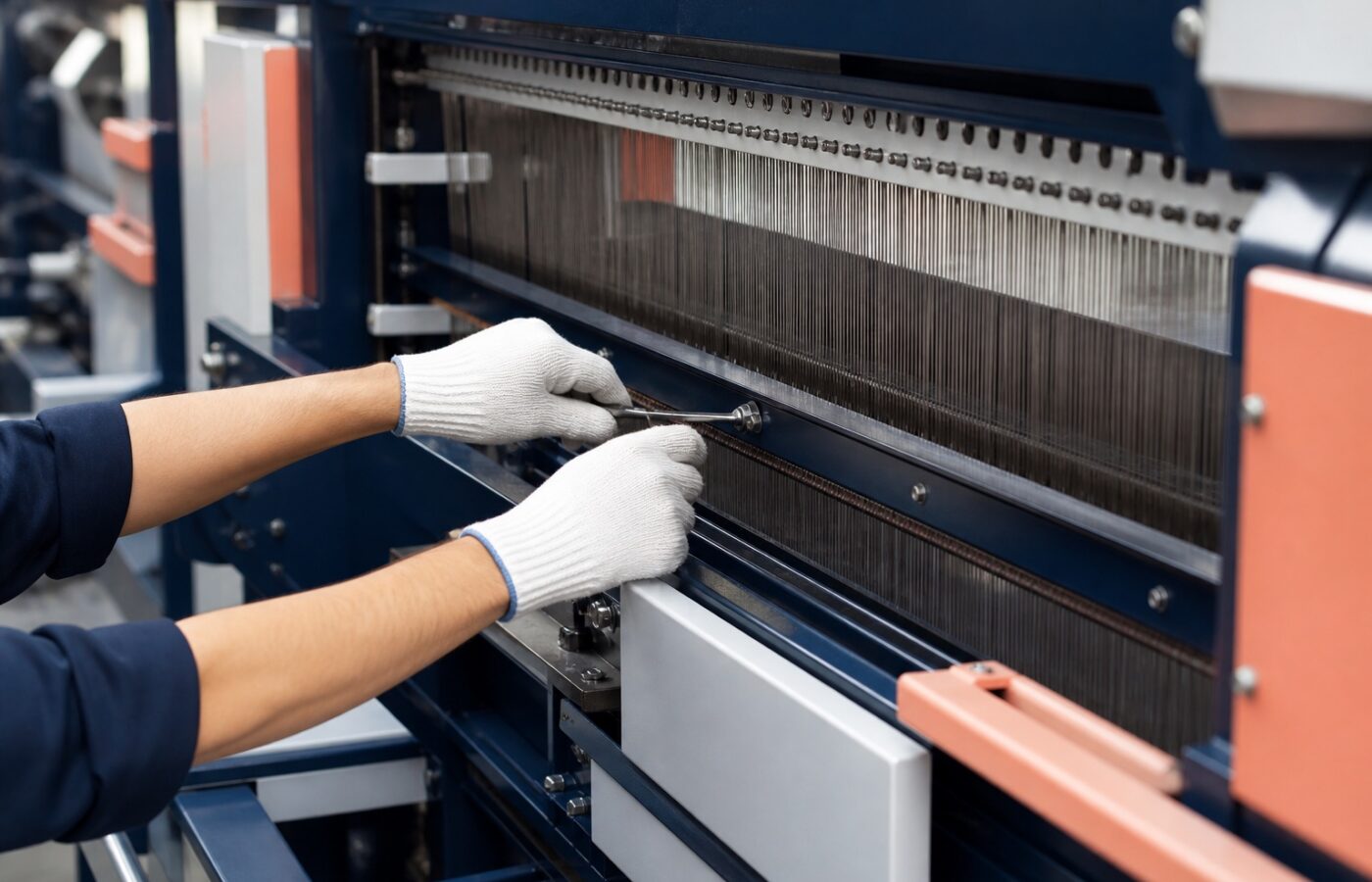
The defects that stop a weaving shed in winter were usually seeded in autumn. A short, disciplined daily round is the cheapest fabric quality money buys.
Start where the yarn suffers: the shed and the reed
Look along the reed with a light — a single burred dent writes a warp streak the full length of the beam. Check heald eyes for wear grooves and drop wires for bent tails; each costs seconds to see and hours to explain in the cloth room.
Listen to the insertion system
Rapier tapes and grippers announce wear before they fail: a new click at transfer, a scuff mark on the tape, a weft loop at the receiving side. On air-jet looms, watch the arrival timing display — drift means a nozzle, a valve or a leak, not a setting.
Keep the fabric line straight
Temple rings, breast beam surfaces and take-up rollers touch every centimetre of cloth. A wrap of waste yarn around one temple ring shows up as a puckered selvedge three rolls later. Clean them on the round, every round.
Write down what changed
A loom log with one line per shift — what was adjusted, what was replaced, what sounded different — turns the next defect investigation from archaeology into a lookup. The best weaving sheds run on boring, complete logs.