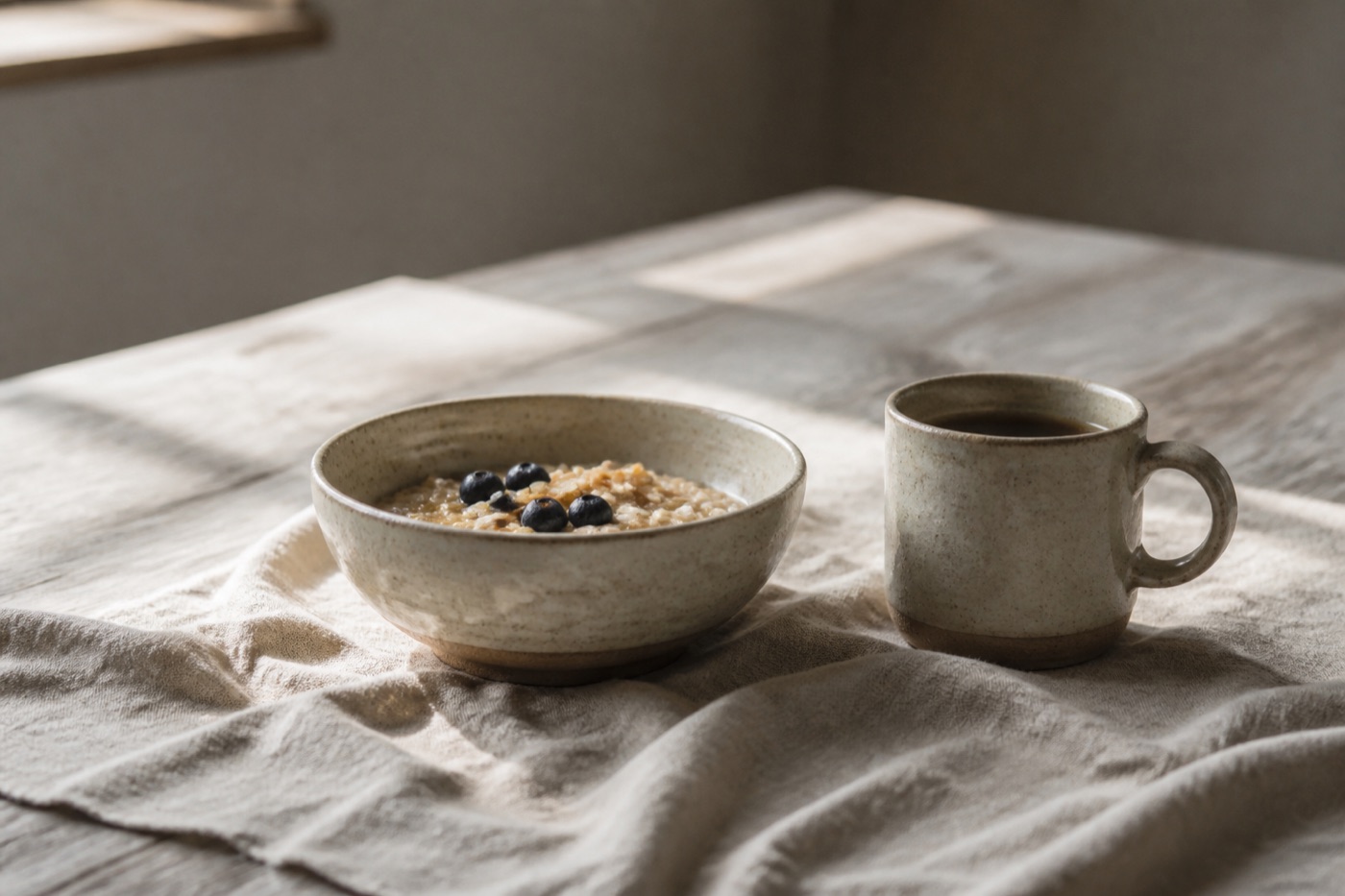
Someone emailed last week to ask, very politely, whether the two bowls they had ordered were meant to be slightly different heights. They were about four millimetres apart.
Yes. They were meant to be.
Where the variation comes from
A thrown pot is made by pulling a wall upward with two hands while the wheel turns. How high it goes depends on how much clay you started with, how wet the wall is, how fast the wheel is running, and how tired you are at four in the afternoon.
Potters who need identical output use moulds and slip casting. That is a legitimate craft and it produces excellent work — it is simply a different one.
What we do control
We are not being romantic about this. Some things are held tightly:
- Weight of clay: every ball is weighed to within five grams.
- Diameter: measured with calipers at the rim, held to two millimetres.
- Capacity: checked with water on the first piece of every batch.
- Foot: trimmed to the same profile so pieces stack properly.
Height, wall thickness and the exact fall of the glaze are left where they land.
The part that surprises people
Sets bought over several years still look like a family. The clay is the same, the glaze recipe is the same, the profile is the same. A mug from 2019 sits happily beside one from this month.
The differences show up close, in the hand, one piece at a time. That is roughly the distance at which we would like them to be noticed.