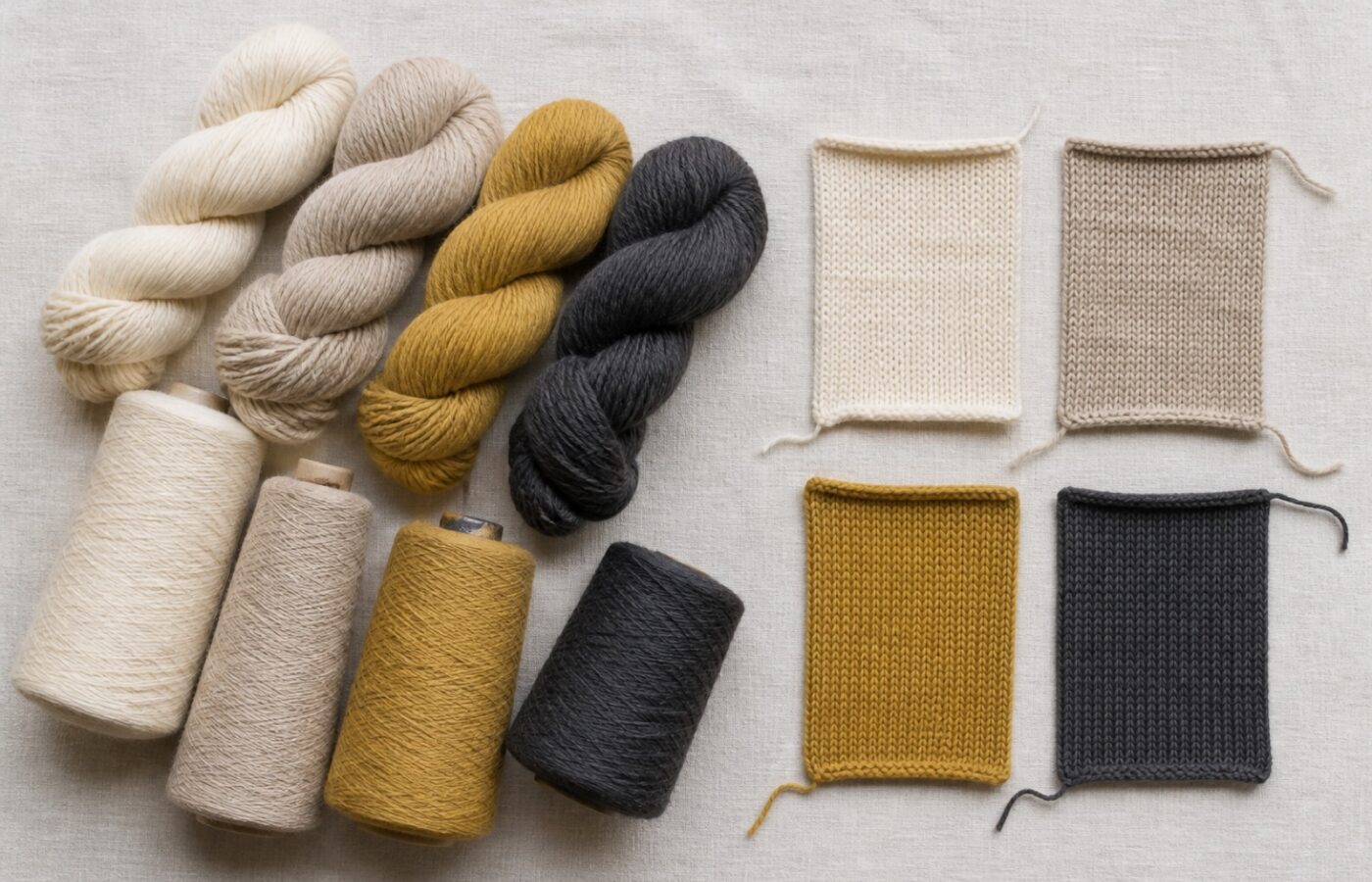
Sock labels love long words, but the drawer only needs a few of them. After years of knitting and darning, here is the honest map of what sock materials actually mean for your feet, your wash cycle and your wallet.
Combed cotton: the everyday default
Combing removes short, weak fibers before spinning, leaving yarn that is smoother, stronger and far less prone to pilling than basic cotton. It breathes well and washes without drama, which is why most of our everyday and dress pairs start here. On a label, the word to look for is combed – plain “cotton” can mean anything the mill had that week.
Merino blends: warmth that breathes
Merino wool fibers are fine enough to skip the itch and clever enough to warm without stewing – the reason hikers swear by them in both January and June. Pure merino is soft but fragile underfoot, so honest sock makers blend it with a fine nylon core for strength. Blends around two-thirds merino give you the warmth with a working heel.
The quiet percentages
A few percent of elastane is what keeps a cuff holding and a rib springing back – no sock survives without it. Nylon in the mix is not a shortcut; placed at heel and toe it is the difference between one season and four. Be suspicious only of socks that are mostly polyester and entirely silent about it.
Match the material to the day
Cotton rib for the office and the weekend, terry-cushioned cotton for miles and gym floors, merino blend for trails, cold houses and long sits, fleece-lined knits for the sofa. The material is the job description – read it once and the drawer sorts itself.