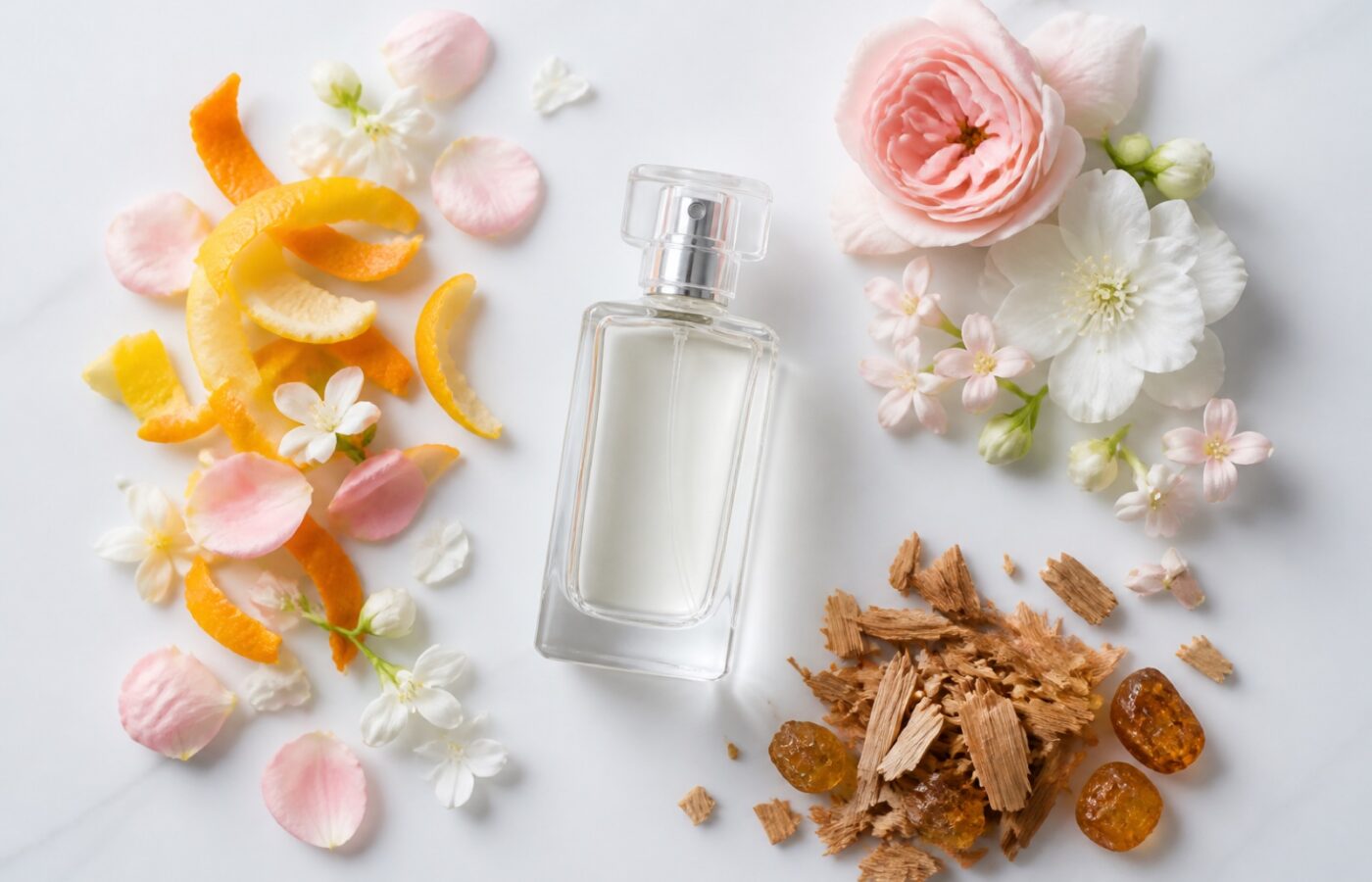
Every fragrance you have ever loved is a piece of timing. What you smell in the first minute is not what you will smell at lunch, and neither is what stays on your scarf a day later. Perfumers describe this arc in three registers – top, heart and base – and once you can hear them separately, choosing a fragrance stops being guesswork.
The top: the first five minutes
Top notes are the lightest materials – citrus zests, green leaves, bright herbs – and they evaporate fastest. They are the handshake, not the conversation. A common buying mistake is judging a blend entirely on this opening flash; by the time you reach the register, it has already begun to leave.
The heart: the working day
Twenty minutes in, the heart takes over – typically florals, teas, spices and fruit accords. This register is the fragrance most people around you actually experience, which is why we always suggest wearing a discovery vial through a full afternoon before committing. The heart is where a blend either becomes yours or politely excuses itself.
The base: what stays
Base notes – woods, musks, ambers, resins – are the heaviest materials and the slowest to leave. They anchor everything above them and they are what your coat remembers tomorrow. If you have ever loved a scent at first spray and tired of it by evening, it was the base you disagreed with.
Listening in practice
Spray one blend on skin in the morning and take three deliberate smells: at five minutes, at one hour, at six hours. Note one word each time. Do this for a week with a discovery set and you will know your own taste better than any counter assistant ever could.
