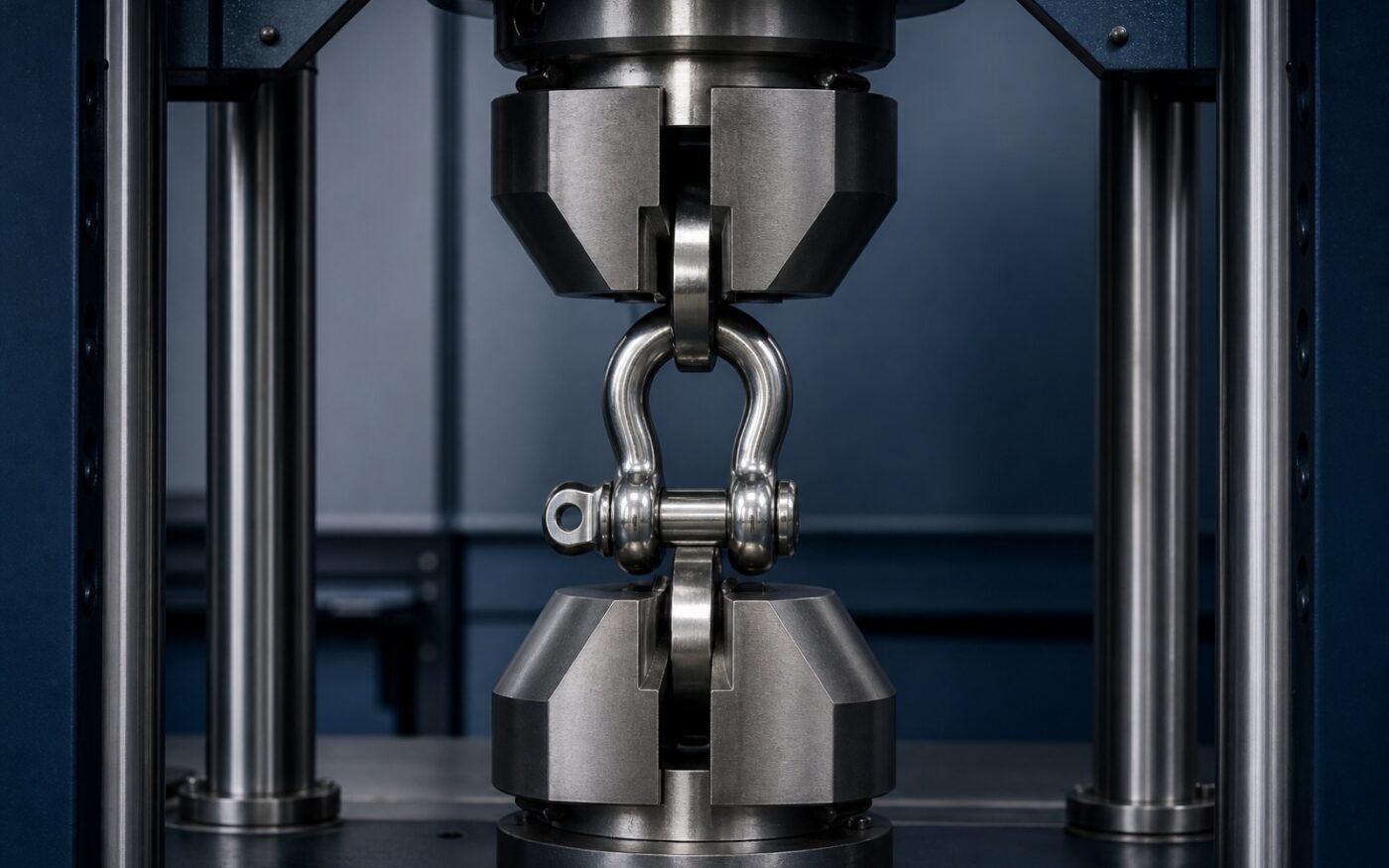
A specification sheet is only useful if you know how the numbers in it were produced. Across most hardware markets the same terms are used to mean noticeably different things, so it is worth being precise about what we publish and why.
The headline rating
A published rating is a claim about how the product will perform. Ours is not the average of a test batch and it is definitely not the best sample we ever tested. We publish a figure near the bottom of the test results, which means the overwhelming majority of parts tested exceeded it. If a supplier does not say how their rating was derived, assume it is an average, and treat it accordingly.
The safety margin
The figure you are allowed to rely on in service is lower than the failure figure, by a deliberate margin. Some suppliers publish a generous margin, some a slim one, and a few publish only a single number with no stated margin at all, which makes different products impossible to compare.
Why the margin is not padding
The safety margin is not there because we are unsure of the number. It covers the things a controlled test cannot reproduce:
- Sudden peak loads. Real use produces short spikes well above the steady figure.
- Fatigue. A part used hard for years is not the same part it was when new.
- Imperfect conditions. Almost nothing is used in exactly the way it was tested.
- Wear and corrosion. A worn part has lost far more capacity than the wear alone suggests.
How the numbers are produced
Qualification is done by testing real samples to failure in our own facility, and the way a sample fails is recorded as well as the number it reaches. A part that reaches a good number but fails in the wrong way goes back to the drawing board rather than into the catalogue. Once qualified, each production batch is sampled again, and every product is checked before dispatch.
Reading somebody else’s specification sheet
Three questions will tell you most of what you need to know. Is there a stated safety margin? Is the headline figure a minimum or an average? Is the product checked individually or by batch sample? A supplier who can answer all three quickly is a supplier who tests.