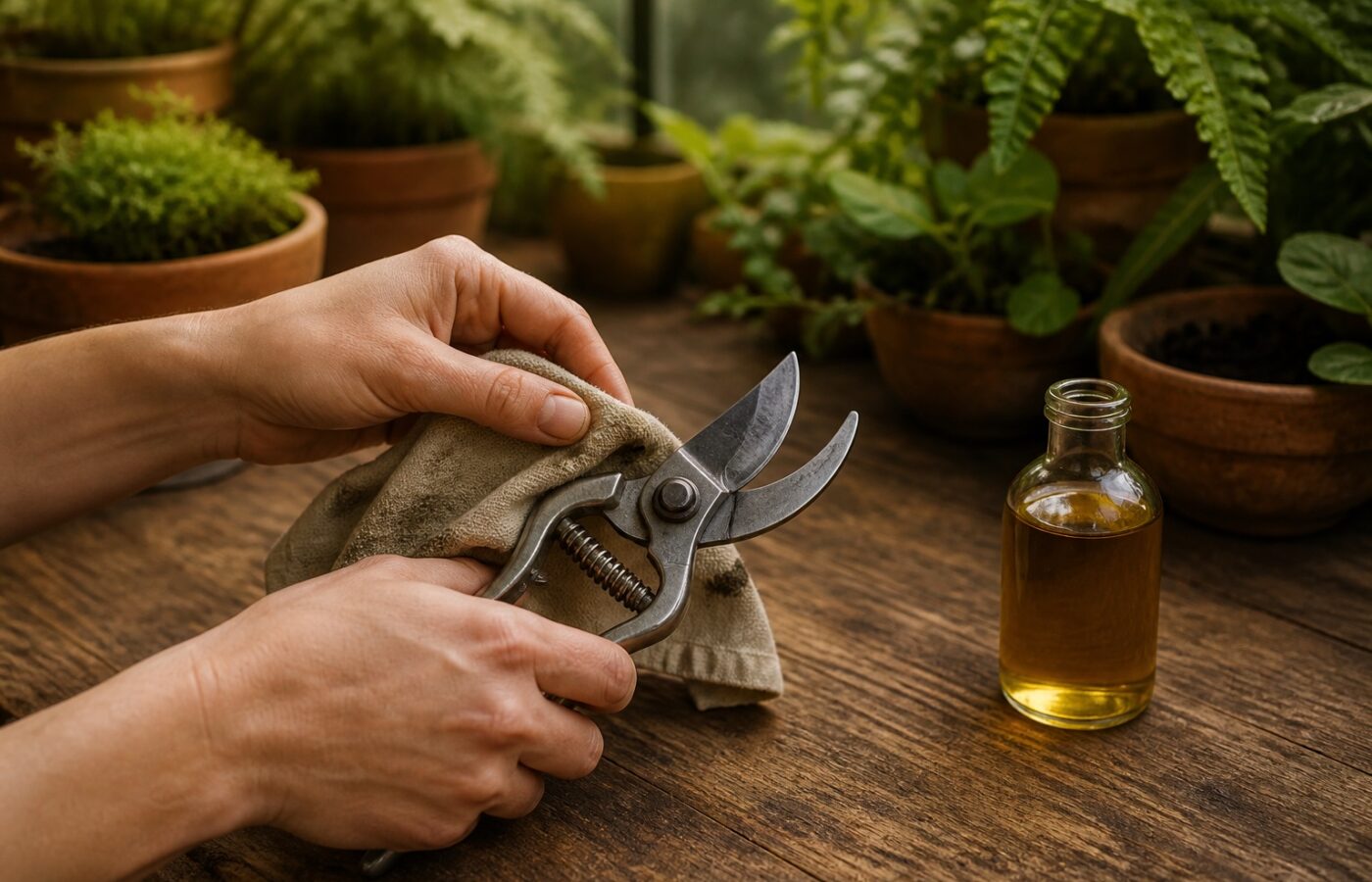
Good tools are not bought, they are kept. One unhurried hour in late autumn is the difference between opening the shed in March to a rack of ready tools or a bucket of rust. The ritual has four steps and none of them is difficult.
Clean: soil off, sap off
Brush dried soil off blades and tines with a stiff brush, then wipe pruner blades with an oily rag to lift the dark sap varnish that builds over a season. Stubborn residue yields to fine steel wool. Dry everything properly before the next step.
Sharpen: follow the factory angle
A few light passes with a sharpening stone along the existing bevel restores a pruner or trowel edge – you are refreshing an edge, not regrinding one. Sharpen the beveled side only, then take one flat pass on the back to remove the burr.
Oil: metal and wood both
A thin film of light oil on all bare metal keeps winter damp off the steel. Wooden handles get a coat of linseed oil rubbed in with a rag – wait ten minutes, wipe the excess, and the wood goes into winter fed rather than thirsty.
Store: dry, hanging, apart
Tools live longest hanging on a rack or rail, blades apart, in a dry shed – never point-down in a bucket where moisture gathers. Empty and rinse watering cans, drain hoses, and bring terracotta somewhere dry if your winters freeze hard. March will thank you.