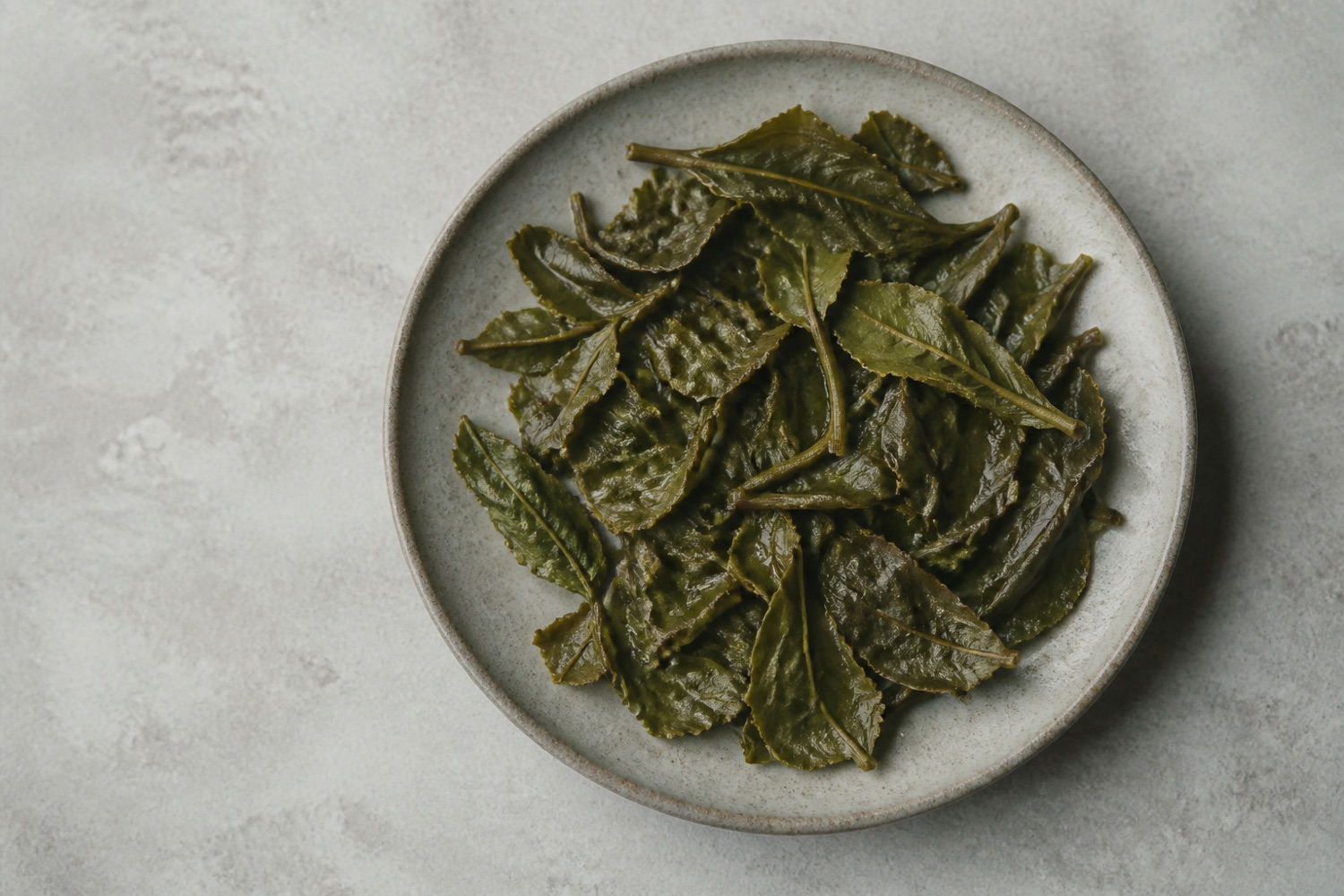
Most of us judge a tea by the liquor, which is a bit like judging bread by the smell of the kitchen. The leaf itself — opened, wet, spread out on a plate — will tell you more about how it was made than anything in the cup.
Pull it out and look
After the fourth or fifth infusion, tip the spent leaf onto a white plate and spread it. Do this every time for a month and you will start to read teas the way a mechanic listens to an engine.
- Whole leaf and intact stems mean careful picking and gentle handling. Fragments mean machine harvest, rough sorting, or both.
- Even colour means even oxidation. Patchy colour means the leaf was piled unevenly during withering.
- Red rims on a green leaf are the signature of a proper oolong bruising. No red rim at all on something sold as oolong is a question worth asking.
- Brittle, cracked leaf that will not unfurl is a roast pushed too far, or old tea that has dried out in storage.
- A grey or muddy cast on pu-erh is damp storage. Trust it over anything the seller tells you.
The smell of the wet leaf
Cup your hand over the warm spent leaf and breathe in. The aroma here is louder and more honest than in the cup — sweetness that was subtle in the liquor becomes obvious, and defects that were hiding behind bitterness come forward. It is also the best way to tell whether a tea is genuinely finished or has simply run out of the strength to express itself.
A small habit worth keeping
We keep a notebook by the table with three columns: dry leaf, liquor, wet leaf. Nothing elaborate, three or four words in each. After a year of that you will trust your own palate more than any review, including ours.