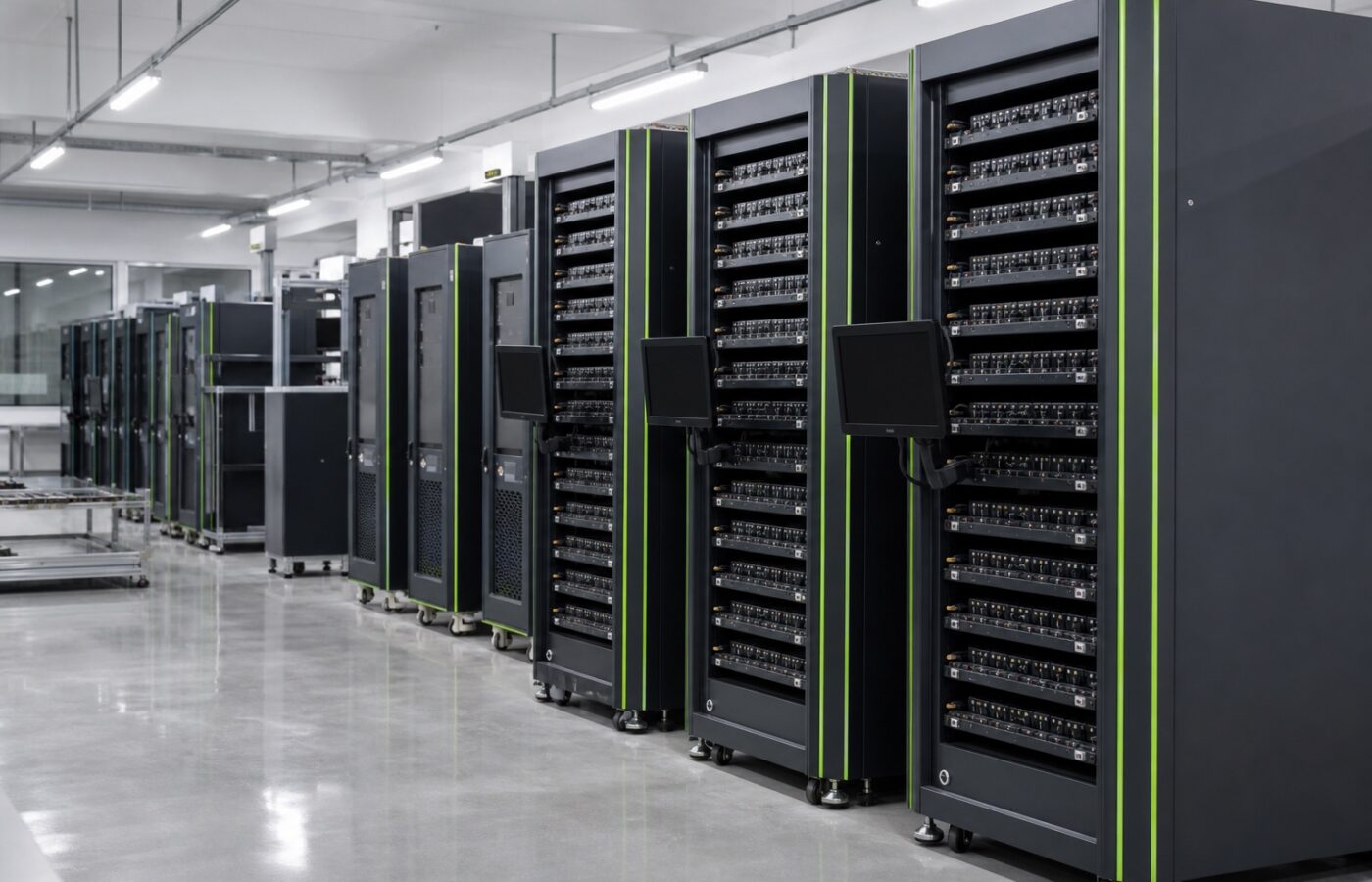
Aging looks like waiting from the outside. Inside a well-run grading process, it is where cell-to-cell consistency is measured, sorted and turned into pack quality.
Why grade at all
Cells leave formation with real differences in capacity and self-discharge. Grouping cells with similar behaviour into the same module keeps those differences from becoming imbalance later. Grading is not about finding good and bad cells — it is about building modules from cells that behave alike.
Rest time is measurement time
Open-circuit voltage drift over a controlled rest period is the classic self-discharge screen. The measurement only means something if rest time and temperature are actually controlled — a tray near a warm air outlet grades differently from one across the aisle, and neither number is wrong. The environment is part of the instrument.
Keep channels honest
Grading data is only as good as the channel electronics behind it. Reference checks on a schedule, contact-resistance monitoring at the tray interface and a rule for flagging suspect channels keep the cabinet from quietly sorting cells by its own drift instead of theirs.
Close the loop with pack data
The grading bands that matter are the ones that predict pack behaviour. Feed end-of-line pack results back against grading records and adjust the bands with evidence. A grading process that never learns from packs is running on tradition.