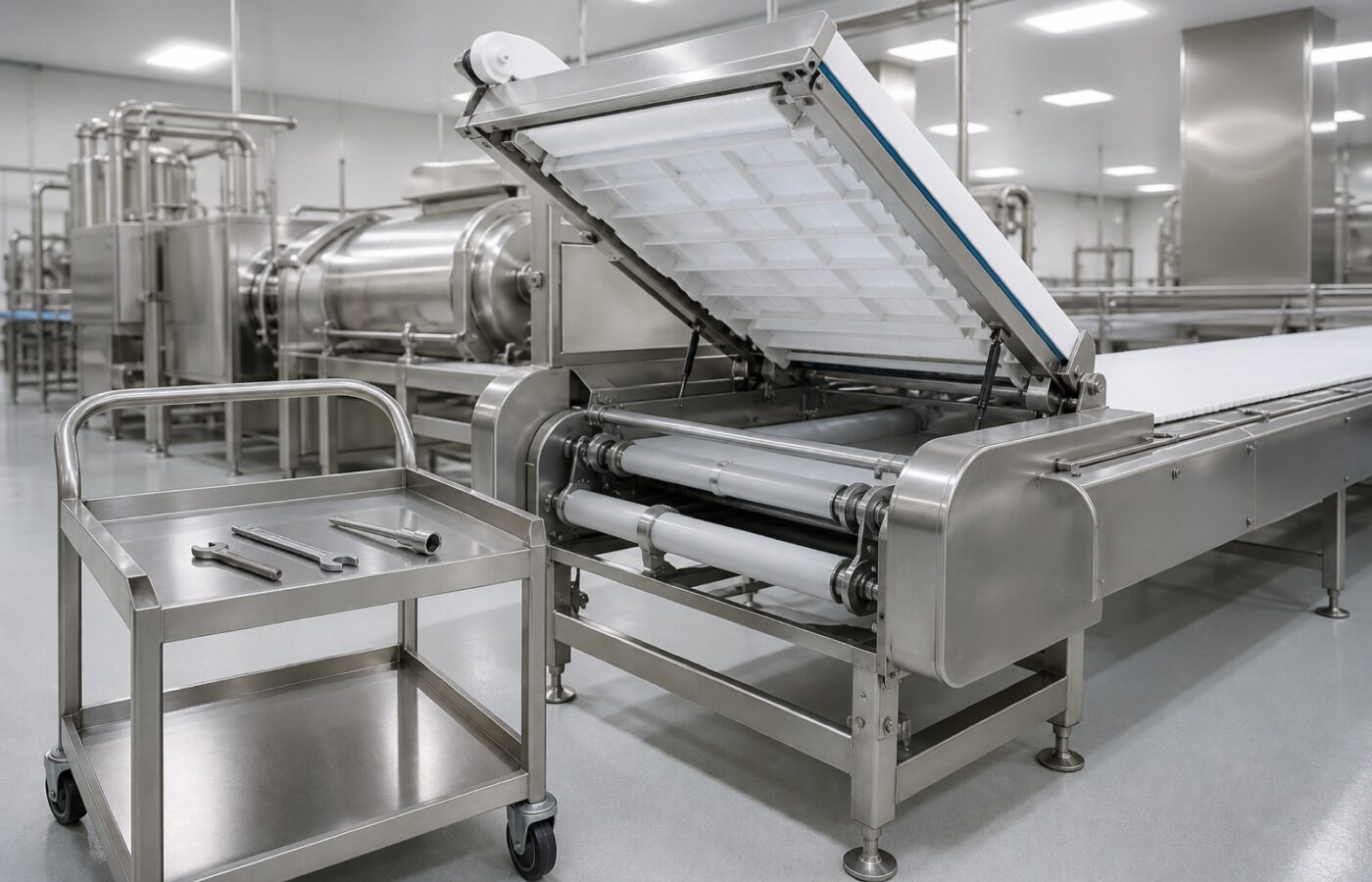
Conveyors are the quietest machines in the plant until one stops the whole line. A short daily rhythm keeps them quiet for years.
Lift the belt, not just the mood
Modular belts hide their soil on the underside and in the hinge pins. Daily cleaning that only rinses the top surface builds a biofilm schedule instead of a sanitation schedule. Use the belt lifters, expose the return run, and let the rinse reach the hinges — two extra minutes per conveyor.
Watch the tracking before it wanders
A belt that runs against one guide edge is telling you something moved: a drum picking up product wrap, a frame knocked by a trolley, a tension change after a cold night. Tracking corrected at the first rub costs a hand adjustment; tracking ignored costs a belt edge and a production stop.
Listen to the drives
Washdown-rated motors fail slowly and audibly — a new whine after cleaning usually means a seal has started letting water past. Reporting the sound the day it appears turns a motor exchange into planned work instead of a Saturday call-out.
Keep the floor under the frame visible
Open hygienic frames are designed so the floor beneath them can be seen and squeegeed. The day boxes and spare parts start living under a conveyor is the day the cleaning round stops reaching it. Clear floor is not tidiness — it is a hygiene control.