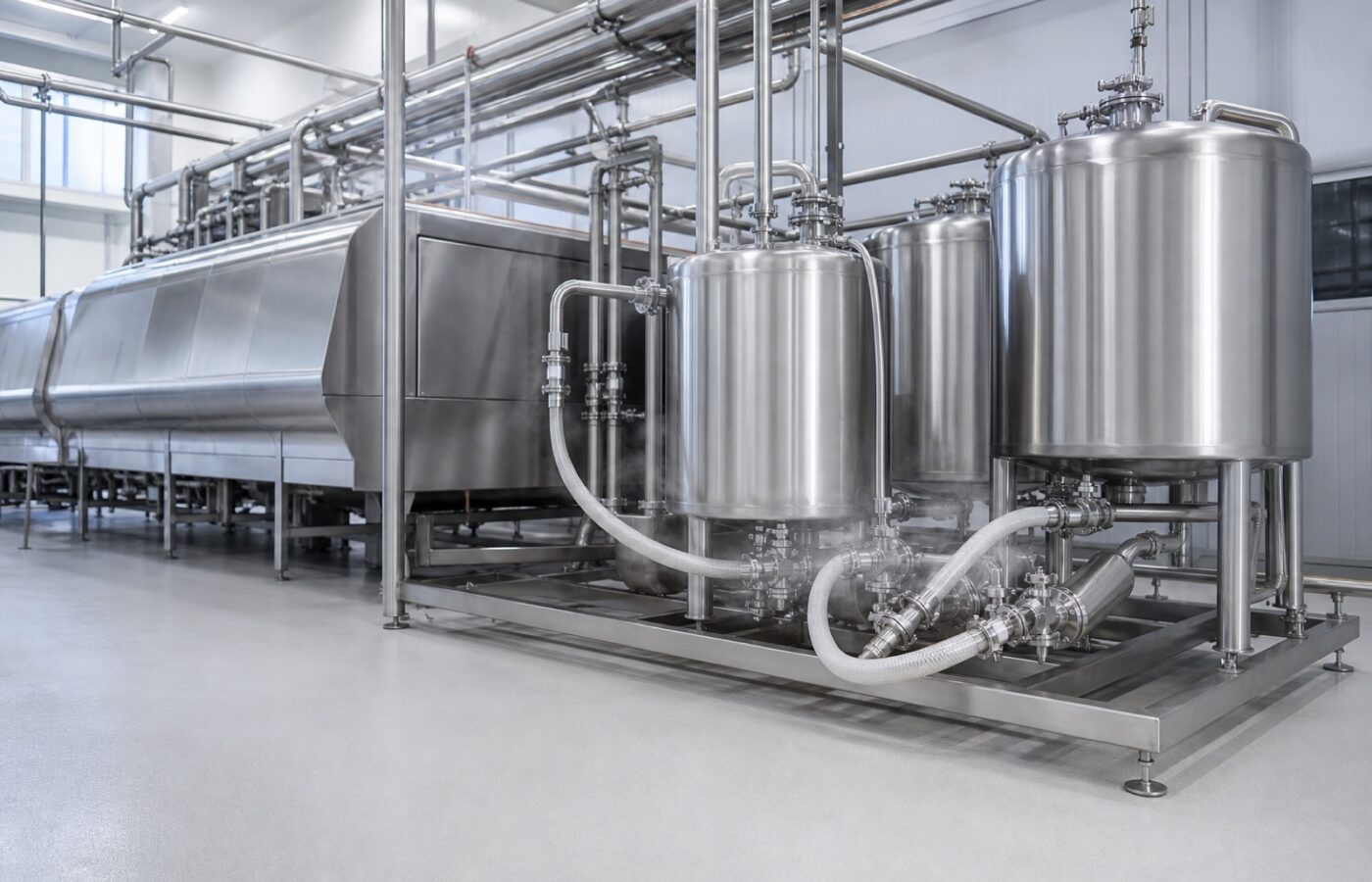
Clean-in-place looks complicated from the outside — tanks, sensors, a skid full of pipework. The logic underneath is simple, and knowing it makes every hygiene conversation easier.
The four things a cycle controls
Every CIP cycle manages the same four levers: time, temperature, chemical concentration and flow. Raise one and you can often lower another — a hotter wash can be shorter; a stronger flow can compensate for cooler water. A written cycle is just a chosen balance of the four, repeated identically every night.
A standard cycle, step by step
Most circuits run the same skeleton: a pre-rinse pushes loose soil to the drain; an alkaline wash circulates heated detergent to break down fats and proteins; an intermediate rinse clears the chemistry; an optional acid stage removes mineral scale; and a final rinse leaves the circuit ready for production. Each step ends on measured values, not on a timer alone.
Why the return line tells the truth
The supply side proves what was sent; the return line proves what happened. Temperature and conductivity sensors on the return show whether the far end of the circuit actually reached cleaning conditions — and the cycle log built from those sensors is the document an audit wants to see.
Where plants lose cycle quality
Dead legs that the flow never sweeps, spray balls blocked by debris, and manual valves left in last week’s position are the usual suspects. A quarterly walk of the circuit with the piping drawing finds most of them before the swab results do.