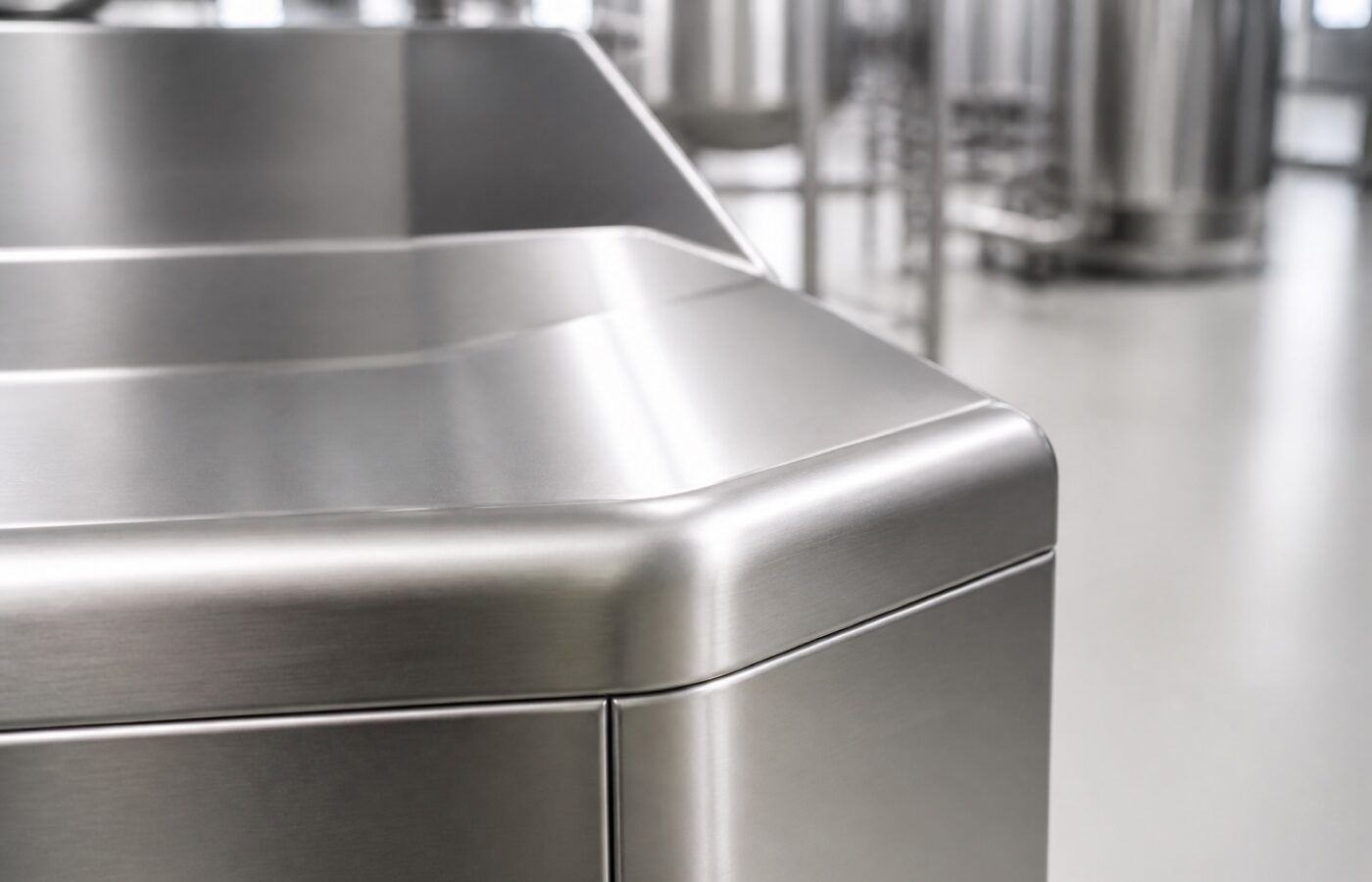
Hygienic design is not a finish applied at the end of a project — it is a set of decisions made while the steel is still on the drawing. Four of those decisions do most of the work.
Radius every corner the product can touch
Sharp internal corners hold residue against cleaning chemistry and rinse pressure alike. Radiused transitions let the cleaning flow reach the surface — which is why product zones on well-designed machines look smooth and almost featureless. If a brush has to be bent to reach it, the geometry is wrong.
Make every surface drain itself
Water that pools after rinsing becomes the growth medium the sanitation round was meant to remove. Horizontal surfaces should slope, frame tubes should be sealed or drilled to drain, and the floor under the machine should be reachable with a squeegee. Walk the line after a washdown: anywhere still wet an hour later is a design finding.
Keep mechanics out of the product zone
Bearings, gearboxes and lubrication points belong outside the product envelope, behind a splash barrier, where grease and product can never meet. External mounting also means service happens without opening the hygienic zone at all.
Design for the sanitation crew, not the brochure
Tool-free guards, belt lifters, wash racks for loose parts and a laminated strip-down card at the machine — these decide whether the documented cleaning sequence actually happens at 2 a.m. A machine that is easy to clean correctly will be cleaned correctly.