The performance of a water treatment plant is decided at the design desk, long before anything is built. A well-made plant designed on wrong assumptions will simply reach the wrong result very reliably. Everything below exists to make sure the design is right before fabrication starts.
Stage one — reviewing the water analysis
The first thing we do with a feed water analysis is check that it is complete and believable. If figures are missing or inconsistent, we say so and ask for a re-test rather than designing on guesswork. From a sound analysis we can tell how hard the water can safely be worked and what pre-treatment it will need.
| What we check | Why it matters | What you get |
|---|---|---|
| Completeness of the analysis | A design is only as good as its input data | A clear list of anything still needed |
| Scaling and fouling tendency | Decides how hard the water can be worked | A safe operating window for the plant |
| Seasonal variation | Water changes through the year | A design that works all year round |
| Pre-treatment needs | Protects the equipment downstream | The right pre-treatment, no more and no less |
Stage two — the system design
We size every system conservatively, because water treatment equipment ages: performance drifts slowly downwards between cleanings over the years. A design that only works on day one is not a design. Energy consumption is calculated across the whole seasonal range, so there are no surprises on the first winter electricity bill.
- Capacity checked at the worst season, not just the average
- Energy consumption stated openly, with and without energy-saving options
- A built-in allowance for gradual ageing over several years of operation
- Chemical consumption estimated at realistic, not optimistic, conditions
Stage three — trials where the water is unusual
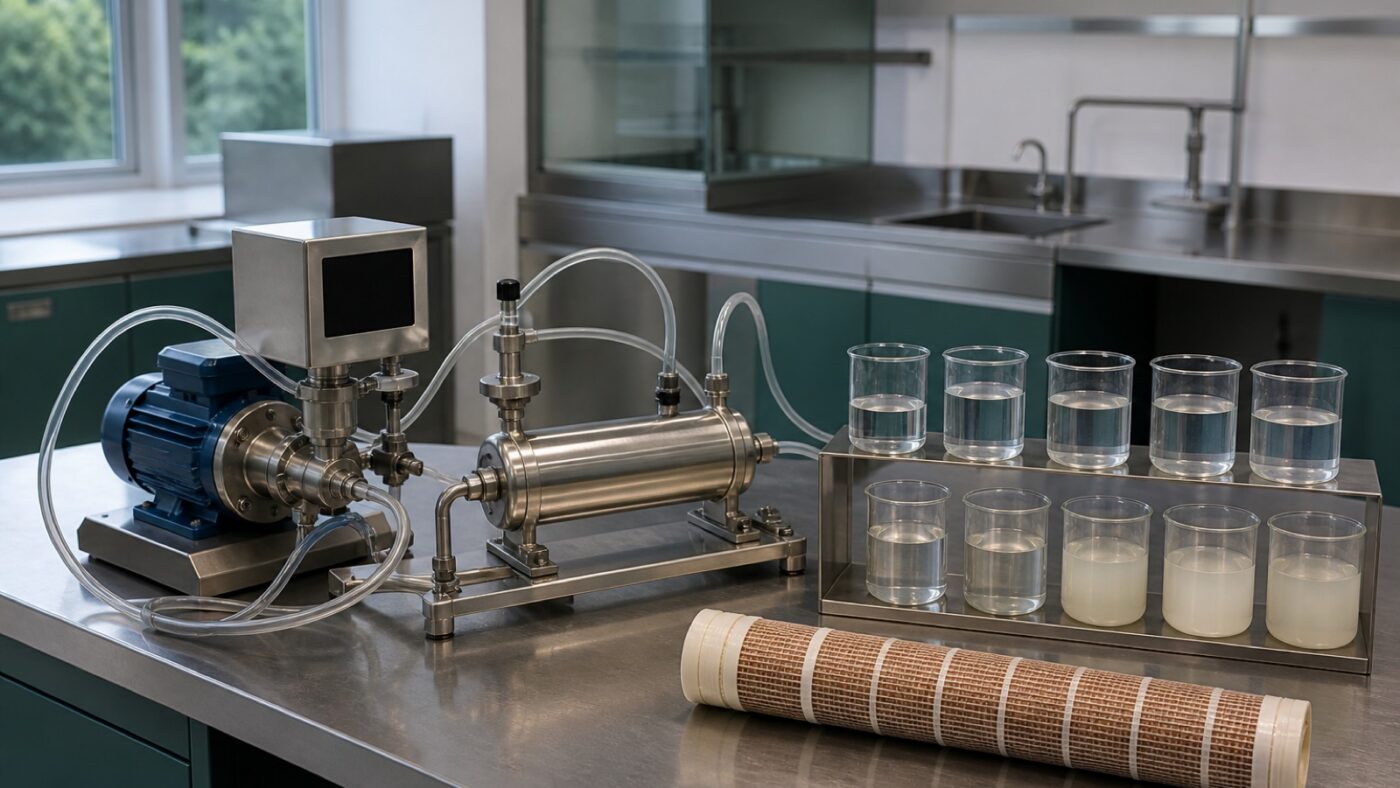
Design software models typical, well-behaved water. Industrial effluents and difficult natural waters are often not that. Where a water is unusual, we run a several-day trial on an actual sample and measure how the equipment behaves rather than assuming it. It is the least glamorous step in the process, and it has saved more projects than anything else we do.
Stage four — factory testing and commissioning
Every unit runs a witnessed test at our factory before it ships: pressure test, instrument checks, control sequences, alarms and a full performance run. On site we supervise installation, start the plant up, prove its performance under contract conditions and train the operators. At handover we leave behind a simple monitoring sheet so small problems can be caught while they are still small.