A greenhouse works as one system
The most common mistake in greenhouse projects is buying each piece of equipment separately. Heating, ventilation, screens, lighting and irrigation all affect the same air and the same roots. If they are sized independently, they end up working against each other. We plan them together from the start.
Stage 1 — Understand the site and the crop
We start from long-term local weather records and your intended production plan. From these we work out how much heating, cooling, light and water the greenhouse will actually need across a full year. Those numbers set the size of everything that follows.
Stage 2 — Design the system as a whole
Compartment layout, sensor positions, pipework, valve groups and cabinet locations are drawn up as one scheme. Anything the control system will have to coordinate later is decided at the drawing stage, where changes are still free.
Controlling what the plant actually feels
Rather than chasing a single humidity or temperature reading, our controls work from measurements that reflect what the plant experiences. That keeps the crop in a comfortable, steady environment and noticeably reduces disease pressure.
Planning light around the crop
Lighting is planned around how much light the crop needs over the day, spread evenly across the growing area. Sometimes the best first step is simply cleaning the roof or adjusting the screen schedule before adding any fixtures — and we will say so before quoting.
Reusing water
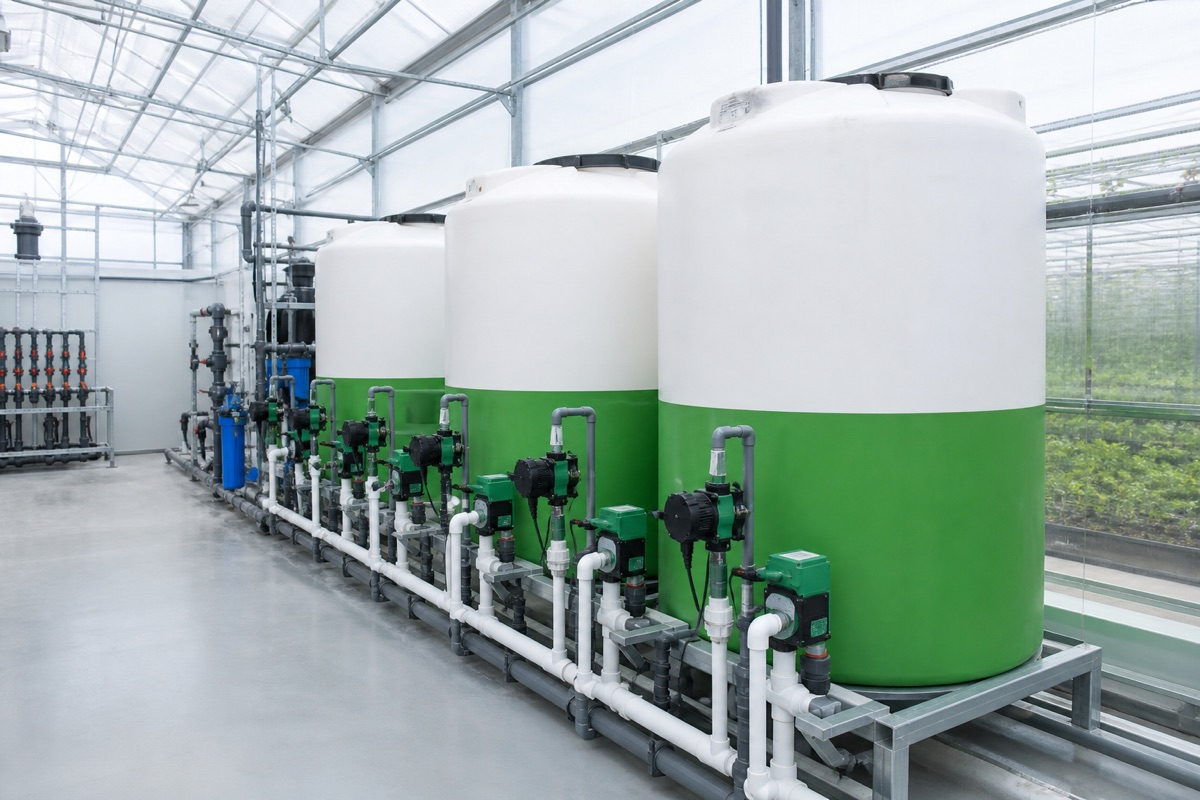
Drain water is collected, cleaned and returned to the crop. Saving water is the visible benefit; just as valuable is that the grower gets much better information about how the crop is drinking and feeding.
Stage 3 — Build and factory test
Cabinets and units are assembled and tested in our workshop before delivery. Anything that can be proven indoors is proven before it ships, because fault-finding on a working nursery during a crop cycle is expensive for everybody.
Stage 4 — Commissioning
Our engineers fine-tune the installation on site with the crop growing, then hand over clear documentation and train the people who will actually operate it — including the ones on the night shift.
Stage 5 — Ongoing measurement
Every installation records its own performance in an open format that you own. If we say the system holds a stable climate, you can check it yourself at any time.