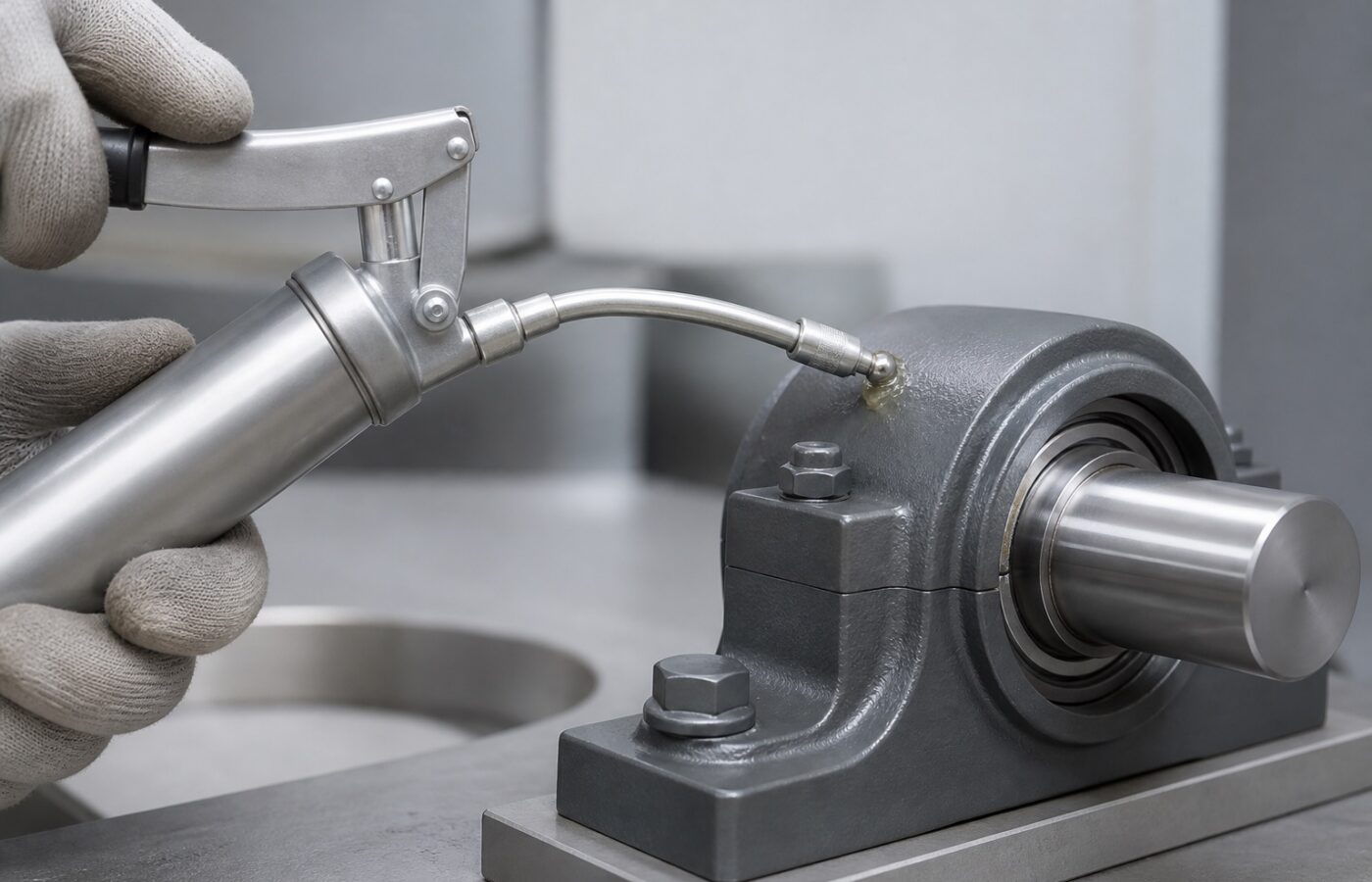
Relubrication by calendar is a guess; relubrication by duty is a calculation. The difference shows up in bearing temperatures, grease bills and unplanned stops.
Start from speed, size and temperature
The base interval comes from the bearing’s speed factor and size, then shortens for every hour above the grease’s comfortable temperature. A bearing at 70 °C may want grease four times as often as its twin running cool — same machine, same catalogue page, different duty.
Derate for the environment, honestly
Moisture, washdown, vibration and vertical shafts all shorten the interval again. The point is not pessimism but honesty: an interval that ignores the hose-down at shift end is a schedule for growing rust inside a bearing.
Quantity matters as much as timing
Each relubrication should replace the working grease, not flood the housing. The rule-of-thumb quantities by bearing dimensions exist for a reason: too little leaves contact surfaces starving, too much churns and overheats. Purge paths matter — old grease must have somewhere to go.
Automate the schedule you calculated
A calculated interval kept in a spreadsheet still depends on someone’s Tuesday. Single-point lubricators hold the schedule through holidays and night shifts, and a stalled progressive system reports a blocked line before the bearing does. Calculate once, then let hardware keep the promise.
