The Cookware Workshop
Care & Seasoning
Four habits, ten minutes of reading, and a pan that gets better for the rest of your life.
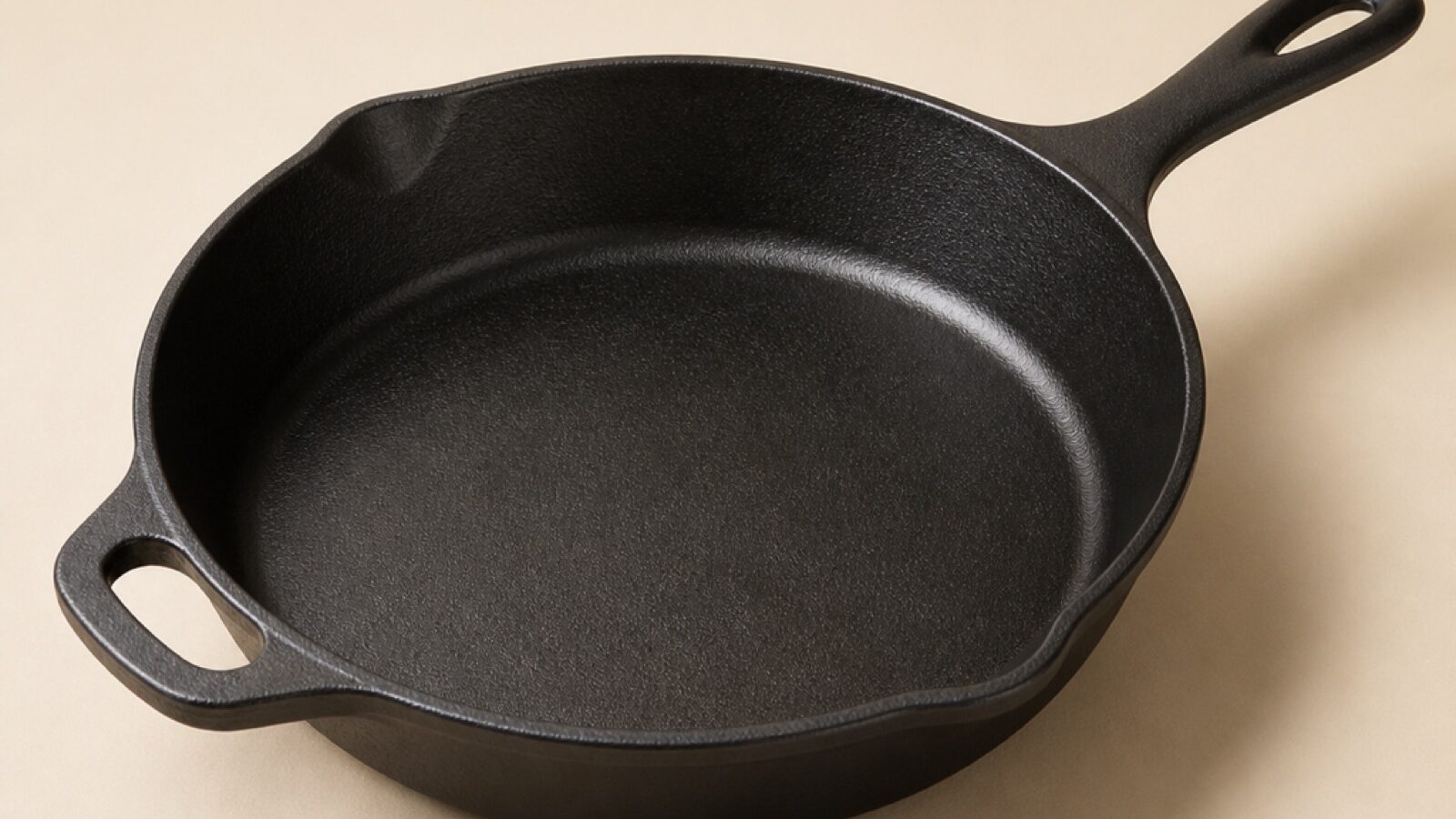
The whole routine, in four lines
- Wash it hot, with a brush. Soap is fine in small amounts; soaking is not.
- Dry it on the burner for ninety seconds, until the last of the water steams off.
- Wipe a fingertip of neutral oil across the face while it is still warm, then buff until it looks dry.
- Put it away somewhere with air. Not in a sealed cupboard with a wet lid on.
The first ten cooks matter most
A new piece arrives with three coats on it. That is a floor, not a finish. Cook fat in it early and often — bacon, potatoes in oil, cornbread, anything shallow-fried. Each of those cooks lays down another molecular layer, and after ten of them the grinding marks will have disappeared under a bronze film.
Avoid long acidic simmers for the first month. Tomato sauce for twenty minutes is fine on a mature pan and a bad idea on a new one.
Rust is not a failure
Iron rusts. It is the whole reason the seasoning exists. If you find orange on a pan, it means the film has a gap, and a gap is a ten-minute problem.
Scour the rust off with steel wool and hot water, dry it hard on the burner, then apply three thin coats of our seasoning puck at 500 °F, an hour each, cooling in the oven between coats. It comes back every single time. There is a full walkthrough in the journal.
Things that genuinely damage cast iron
- Dishwashers. The detergent is aggressive enough to strip polymerised oil, and the drying cycle leaves it wet.
- Thermal shock. A screaming-hot pan into cold water can crack it. Let it fall below boiling first.
- Storing it wet with the lid on. This is how a dutch oven grows a fur coat.
Free re-seasoning, forever
If it goes badly wrong, post it back to the workshop. We will strip it to bare metal, re-grind if it needs it and re-season it from scratch, free, for as long as we exist. Get in touch and we will send you the details.