The Cookware Workshop
The Workshop
Nine people, one pouring floor, and a process that has not been shortened since 1974.
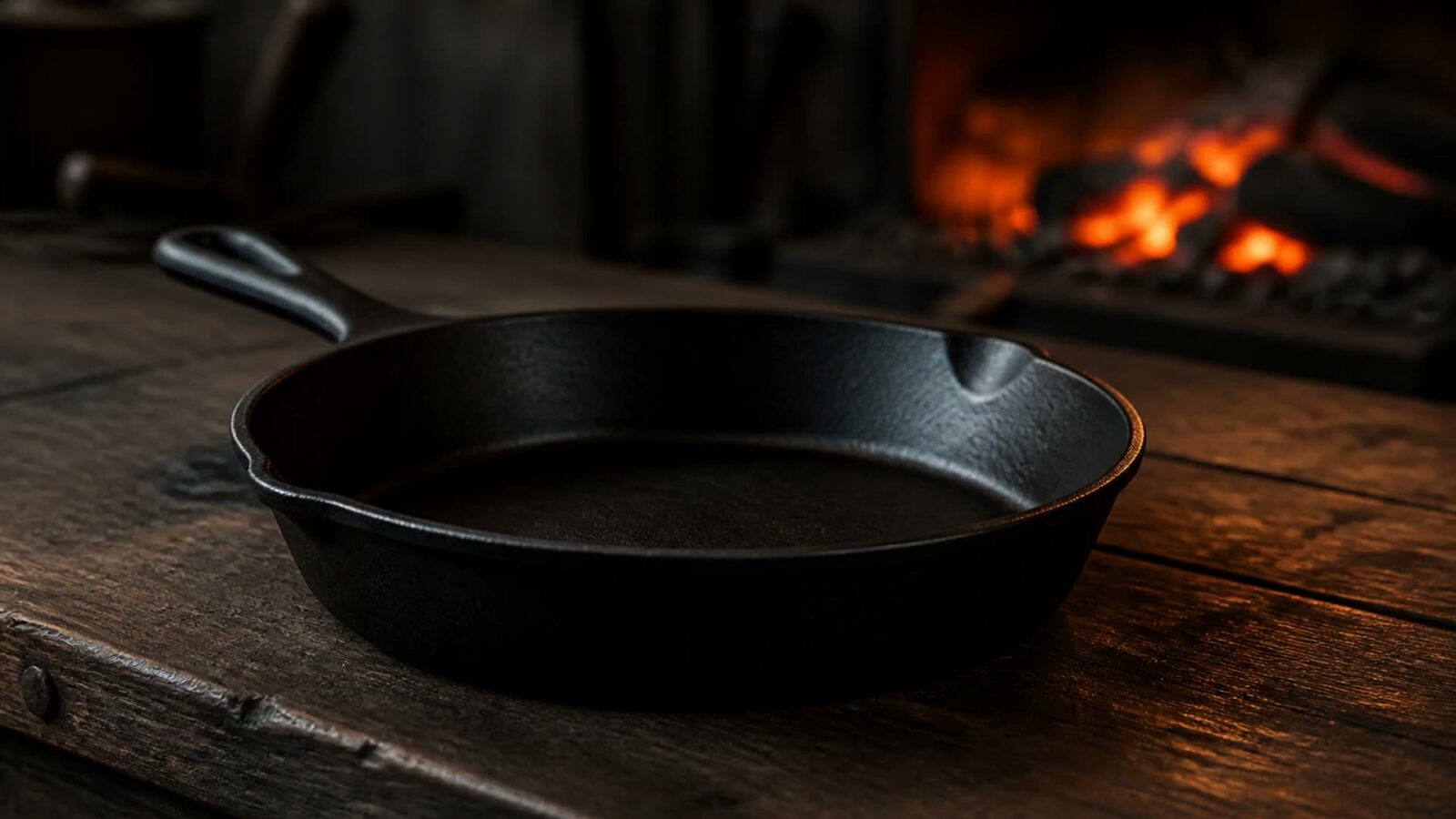
It starts with a wooden pattern and a box of damp sand
Every piece begins as a hand-cut wooden pattern. The pattern is pressed into a box of damp casting sand, packed by hand until the cavity holds its shape. The pattern comes out. The mould goes to the floor.
Molten iron is poured into the cavity while it still glows. The casting cools slowly from the outside in, and then the mould is broken open by hand. The sand is collected and reused, but the mould itself is gone forever — which is why no two of our pieces carry quite the same grain.
Ground smooth, by hand
What comes out of the sand is rough, and this is where many makers stop. We put every cooking face on a grinding bench and work it by hand until it is properly smooth — smooth enough for eggs, with just enough texture left for seasoning to hold on.
We deliberately do not polish it to a mirror. A mirror-polished face looks impressive for a couple of weeks and then seasoning slides straight off it. A hand-ground face keeps a little tooth, which is what makes the surface improve rather than wear out.
Seasoned three times before it leaves
Seasoning is not a coating we apply for you to protect. It is the first three layers of a finish you will spend years building. We use a natural plant oil, applied in coats thin enough that they look dry before they go into the oven.
Each coat bakes for about an hour and cools slowly inside the oven. Three of those and the piece leaves the workshop a warm graphite grey. Ten cooks later it will be bronze. A few years later it will be deep black and slick.
A small team, and a hundred-year promise
We are a small workshop. We pour early in the week, grind through the middle of it, and season over the weekend before each batch is checked and boxed.
Every piece is covered for a hundred years. Crack it, warp it, rust it through — send it back and we restore it or re-cast it. Once per owner, and there is no receipt required, because we can recognise our own iron.