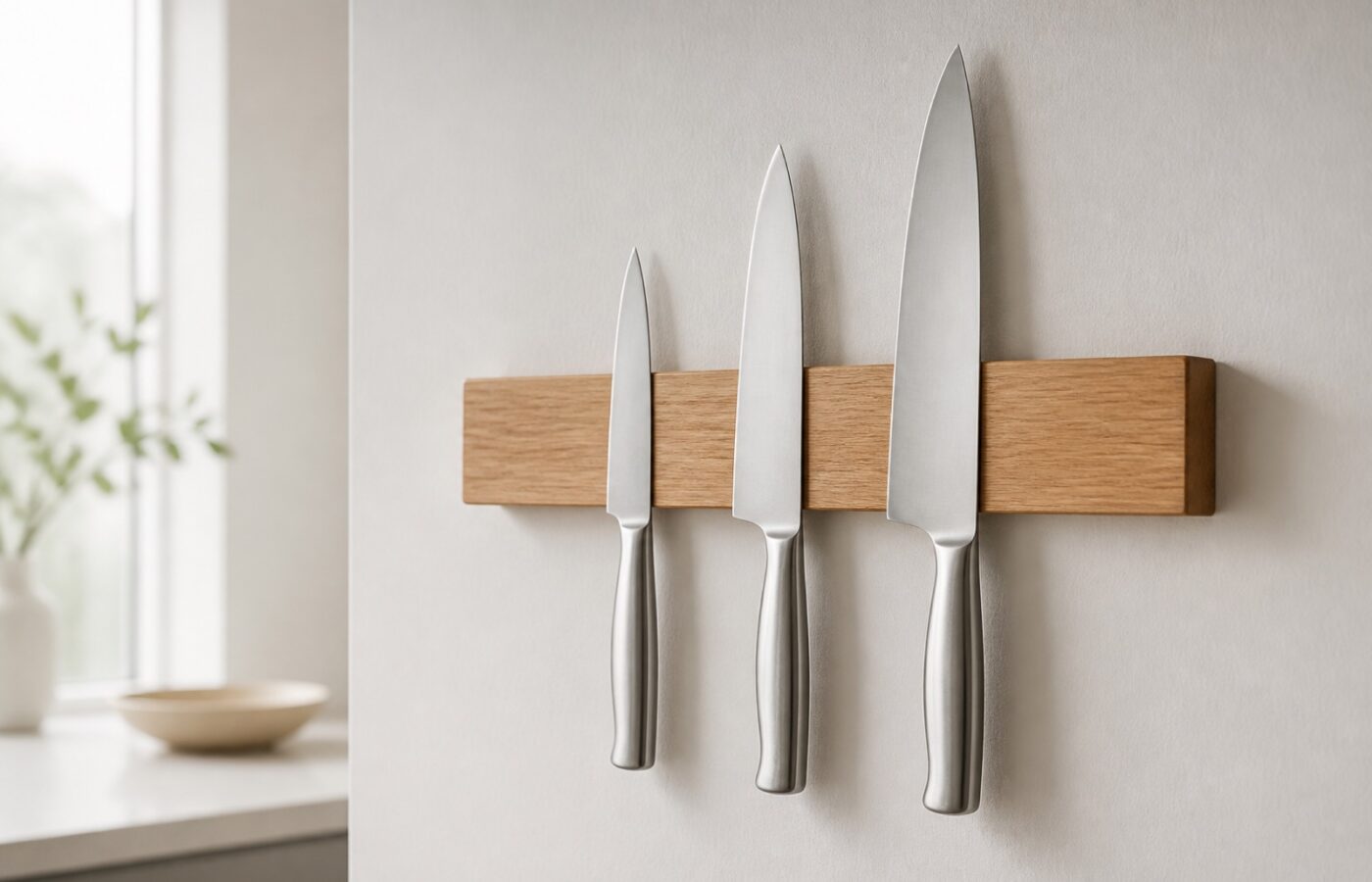
Where a knife sleeps decides how long it stays sharp and how safe the kitchen is around it. The loose drawer – where most knives live – is the worst answer on both counts. Here are the good ones, and how to choose between them.
The wall strip: dry, visible, edge-safe
A magnetic strip is the best daily storage we know: each blade hangs alone in moving air, nothing touches the edge, and the knife you want is visible from across the room. Mount it at eye level, clear of the hob and sink, and place blades spine-first with a small roll of the wrist so the edge never slaps the magnet.
The block: for walls that say no
Rentals, tiled splashbacks and stone walls all veto drilling – which is what counter blocks are for. Choose one with open, visible slots that dry in air, and store blades edge-up so the knife rests on its spine rather than grinding its edge on wood every draw. Skip enclosed blocks you cannot see into; they hide crumbs and damp.
The roll or guard: knives in motion
Knives that travel – to the holiday house, the potluck, the next apartment – want a canvas roll or at least a blade guard each. A loose knife in a packed box is a hazard with your name on it. Guards are cheap insurance for drawer storage too, if the drawer is truly the only option.
Three habits that finish the job
Store blades dry – moisture is the only thing steel truly fears. Keep storage out of small hands’ reach, strip and block alike. And give every knife a home so it never rides loose among the whisks: the sharpest knife in the kitchen should never be the one you find by surprise.