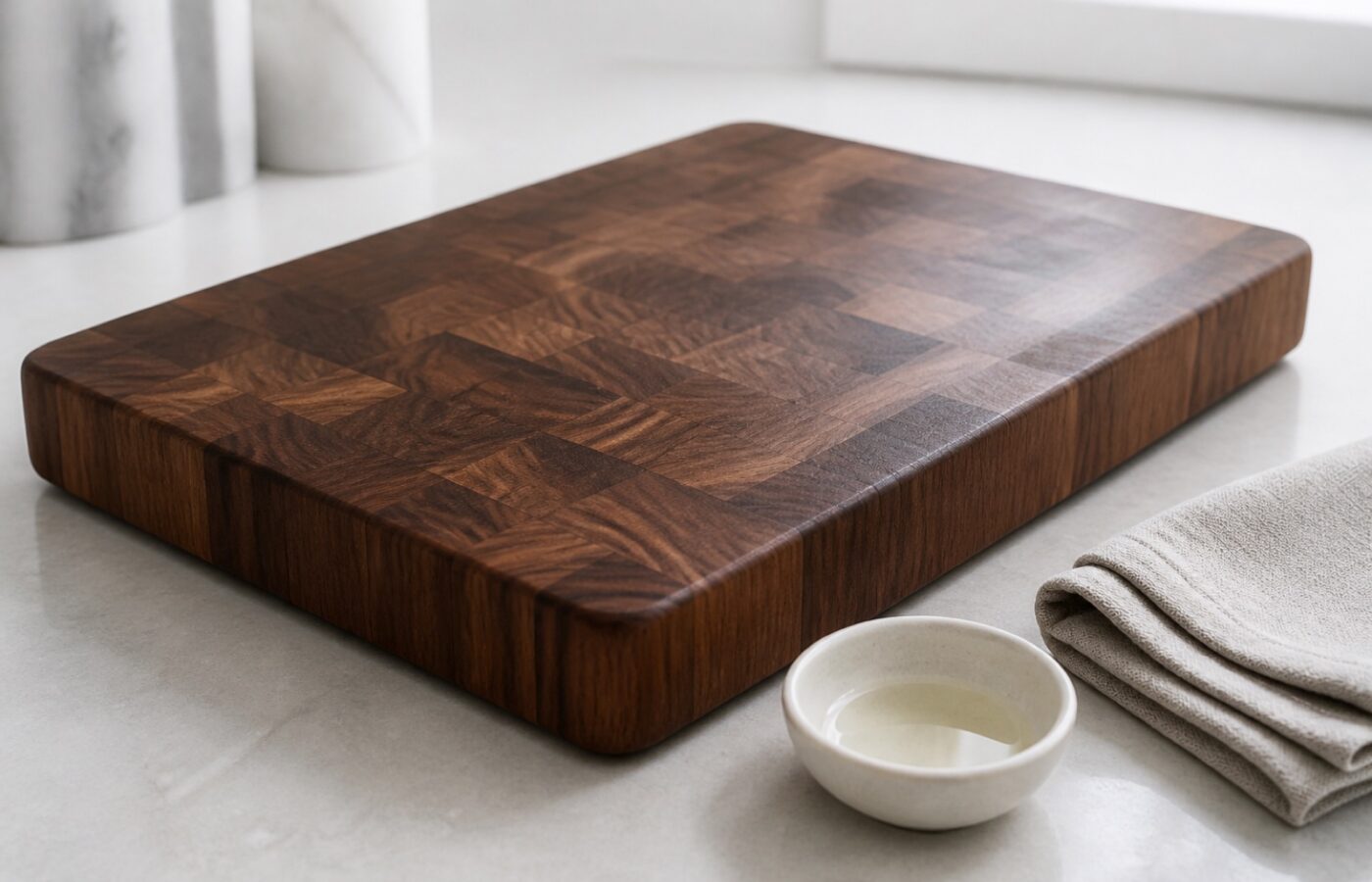
The board is half the sharpness equation: a fine edge that lands on glass or ceramic dies in a week, while the same edge on good wood stays keen for months. Here is how to choose the wood and keep it healthy.
End-grain is kindest, edge-grain is lightest
End-grain boards present the wood fibres standing upright, so the edge slips between them and the surface closes behind – the reason butcher blocks survive generations. Edge-grain boards are lighter, cheaper and still far gentler than bamboo, which is harder than most people expect. Glass, stone and those thin flexible mats: keep them for serving, never for cutting.
Wash like a skillet, not like a plate
Hot soapy water, a quick scrub, rinse, and – this is the whole secret – stand it on edge to dry so both faces breathe. Never soak a wooden board and never put one in the dishwasher; trapped moisture is what cups, cracks and splits them. Salt and half a lemon lift onion and fish smells without harming the surface.
Oil monthly, wax when you remember
A thirsty board looks pale and dry and drinks water fast – that is the signal. Flood it with food-safe board oil, let it sit twenty minutes, wipe the excess, done. A board-butter wax over the top seals the deal for busy months. Never use cooking oils; they go rancid in the wood.
Give raw proteins their own board
The simplest kitchen hygiene rule: one board for raw meat and fish, another for everything else. Wood’s natural structure is surprisingly inhospitable to microbes, but separation removes the question entirely – and gives you an excuse for a second handsome board.