The Alderport works draws its own conductor from 8 mm copper rod, lays it up on a 16-bobbin rigid strander and extrudes bedding, screen and sheath in a single triple-head pass. Around that line sit the trays, glands, lugs, tools and drums that turn a delivery into a finished installation.
What we believe
Cable is infrastructure: once pulled, it should disappear from the project’s worry list for decades. We design for that disappearance — honest constructions, batch testing on every production lot, and documentation that stays retrievable long after the trench is closed. Specifications state typical values and reference conditions rather than best-case numbers.
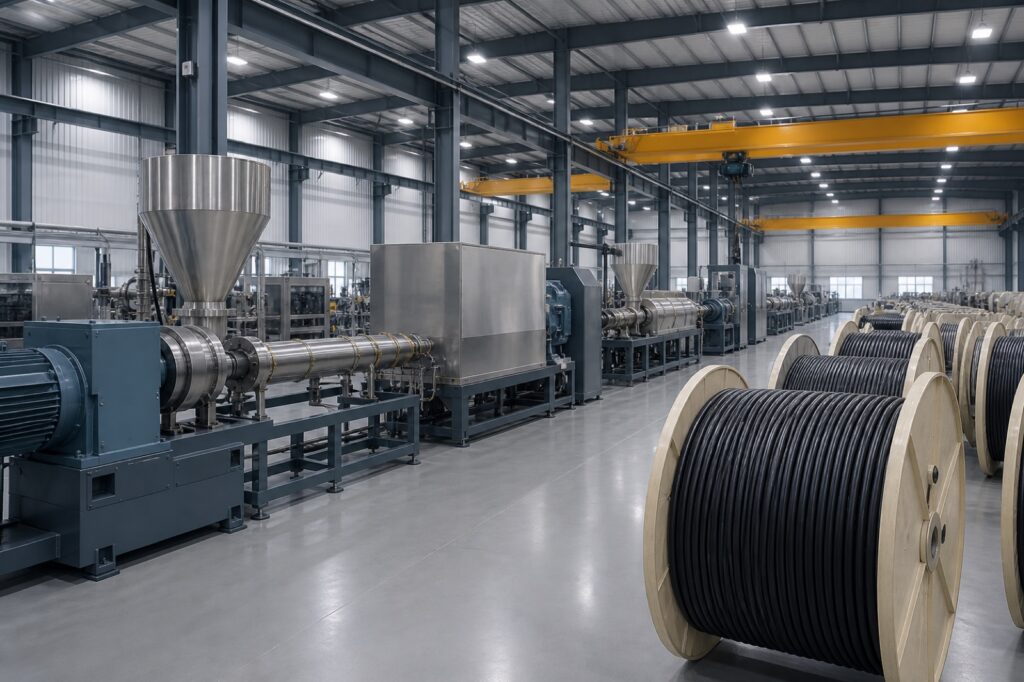
How the works is laid out
- Application desk: duty, route and environment fixed on the specification sheet before any copper is drawn.
- Rod and strand: two drawing lines feeding a rigid strander that lays cores at a 14 × pitch.
- Extrusion: bedding, screen and sheath applied in one pass, with a spark tester reading the insulation at line speed.
- Test bay: conductor resistance, insulation resistance and voltage withstand on every batch, measured values printed to the flange tag.
- Winding: cut lengths on timber drums, tagged so the batch stays findable for the life of the installation.
Planning a project or replacing an ageing installation? Talk to an engineer — replies within one business day.
