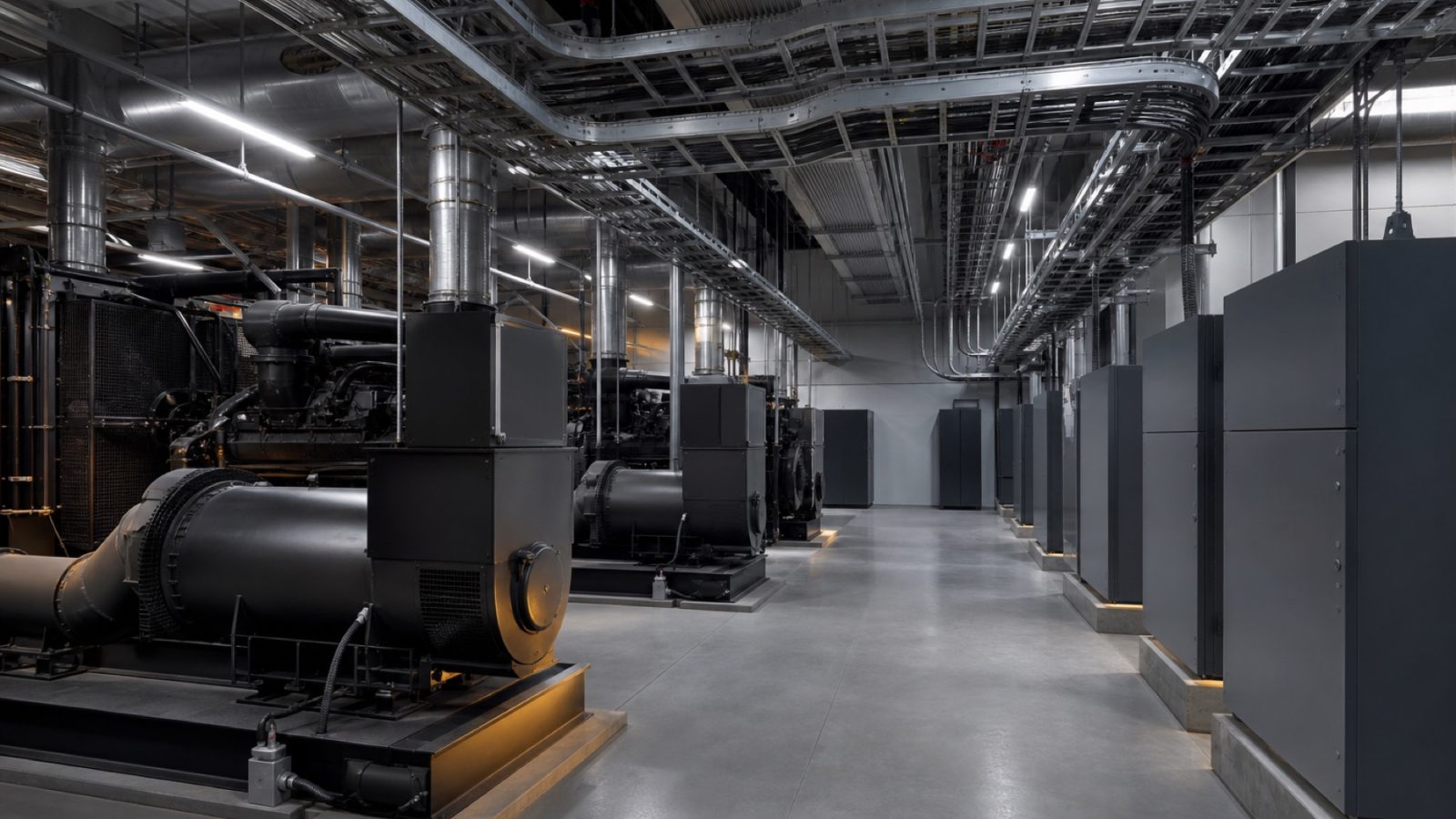
Two numbers on a generator quotation look almost the same and mean completely different things. Getting them the wrong way round is the most common and most expensive error in a standby installation.
What the rating labels actually mean
ISO 8528 defines the rating classes. The standby rating, usually written ESP, is the maximum power a set may deliver for a variable load, for a limited number of hours per year, when the normal supply has failed. There is no overload capability on top of it. The prime rating, PRP, is the maximum power for a variable load for an unlimited number of hours, with a permitted overload for a short period in any twelve hours. The continuous rating, COP, is a constant load for unlimited hours with no overload at all.
The same physical set carries all three labels at different numbers, and the number drops as the duty gets harder. A frame sold as 500 kVA standby is not a 500 kVA prime set. If the installation is going to run for hundreds of hours a year because the grid is unreliable, or because the site is off-grid, the prime figure is the one that matters and the standby figure is marketing.
Why more capacity is not more safety
The instinct when a load schedule looks uncertain is to add a frame size. It feels like insurance. On a diesel it is not.
A diesel engine is designed to run hot. Below roughly 30 per cent of its rating it does not reach the cylinder temperatures it needs, combustion becomes incomplete, and unburned fuel and lubricating oil work past the rings and collect in the exhaust. That is wet stacking. It shows as a wet, oily deposit at the tail pipe, then as glazed bores, sticking rings, rising oil consumption and lost power. On a standby set that only ever runs a monthly off-load exercise, oversizing turns an annual test into a slow way of ruining an engine.
Oversizing also costs money three times over: on the set itself, on the transfer switch and cabling that has to match it, and on the fuel a bigger engine burns to carry the same real load.
What to send instead of a kVA number
The useful information is the load schedule, not a single figure. Send the connected kW by board, the largest motor and whether it starts direct on line, through a star-delta starter or through a soft starter or drive, and the share of the load that is non-linear because it sits behind a UPS rectifier or a variable-speed drive. Add the duty class, the site altitude, and the maximum ambient temperature at the intake.
Altitude and temperature are deratings, not footnotes. A set rated at sea level and 25 degrees C loses output at 1500 m and 45 degrees C, and the loss can be ten per cent or more. A rating quoted without those two figures is a rating quoted for somebody else’s site.
When the load really is uncertain
Sometimes the future load genuinely is not known: a building that will be fitted out later, or a plant that will add a line. The answer is not a single oversized set idling at 15 per cent. It is either two smaller sets in parallel, which lets one carry the base load properly and the second start when it is needed, or a correctly sized set today with the switchgear, cabling and space provisioned for a second one later.
If a single oversized set is unavoidable, the mitigation is a load bank on the annual test, run in steps to full rating, so the engine gets the hours at temperature that its monthly exercise never gives it.