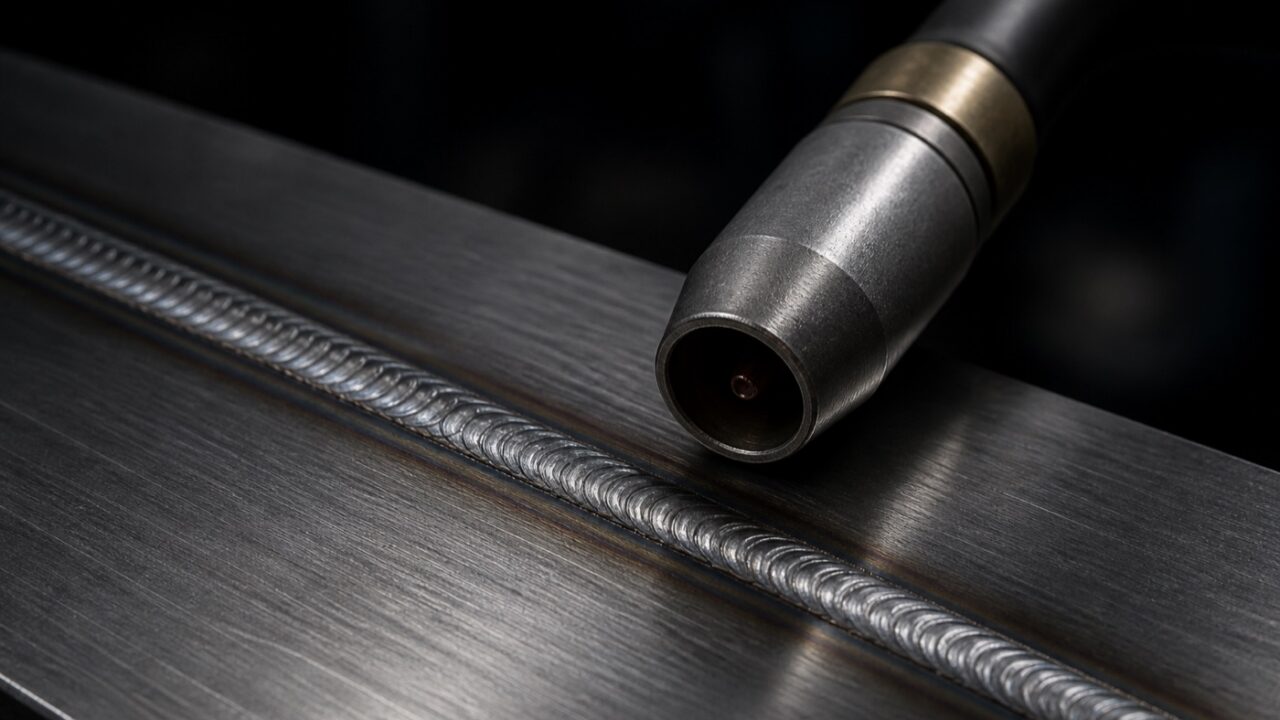
Spatter is far more than a cosmetic issue. Excessive spatter means more torch cleaning, shorter consumable life and extra grinding before parts can be painted — costs that repeat on every single part.
Lever one: shielding gas
The choice of shielding gas has one of the biggest effects on spatter. A well-chosen gas mixture keeps the arc stable and the material transfer smooth, which noticeably reduces the amount of spatter produced.
Lever two: the power source
Modern welding power sources control the arc far more precisely than older machines. Selecting the right welding program for the material and thickness reduces spatter at the source, and usually improves the appearance of the weld at the same time.
Lever three: torch setup
- Torch distance. Keeping the torch at a consistent, correct distance from the work is one of the simplest and most effective measures.
- Torch angle. A suitable torch angle improves gas coverage and gives a cleaner result on most joints.
- Consumable condition. Worn contact tips and clogged nozzles are behind many spatter problems; regular inspection pays for itself.
Keep a baseline
Every cell we commission is documented with a reference weld before handover. If quality drifts later, there is a clear baseline to compare against — which turns a debate about opinions into a simple measurement.