Robotic Welding Cells
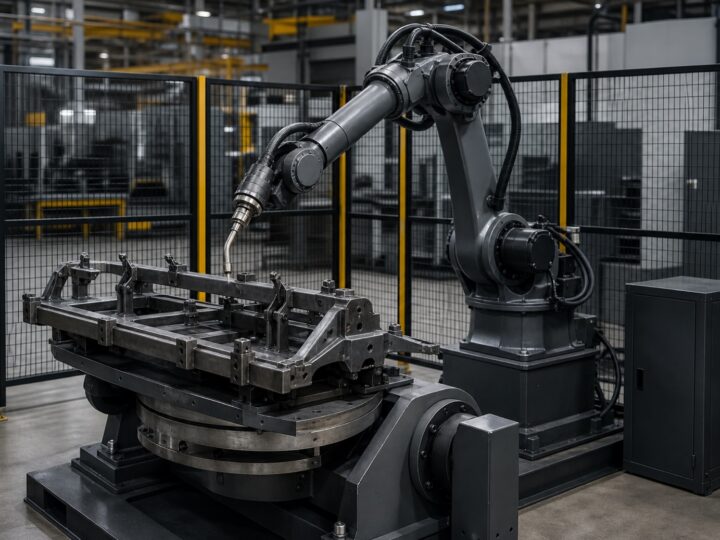
Twin-Station Welding Cell
Two-station index cell that welds one side while the operator loads the other, removing load time from the cycle.
- Robot payload12 kg
- Robot reach1 440 mm
- Pose repeatability±0.05 mm
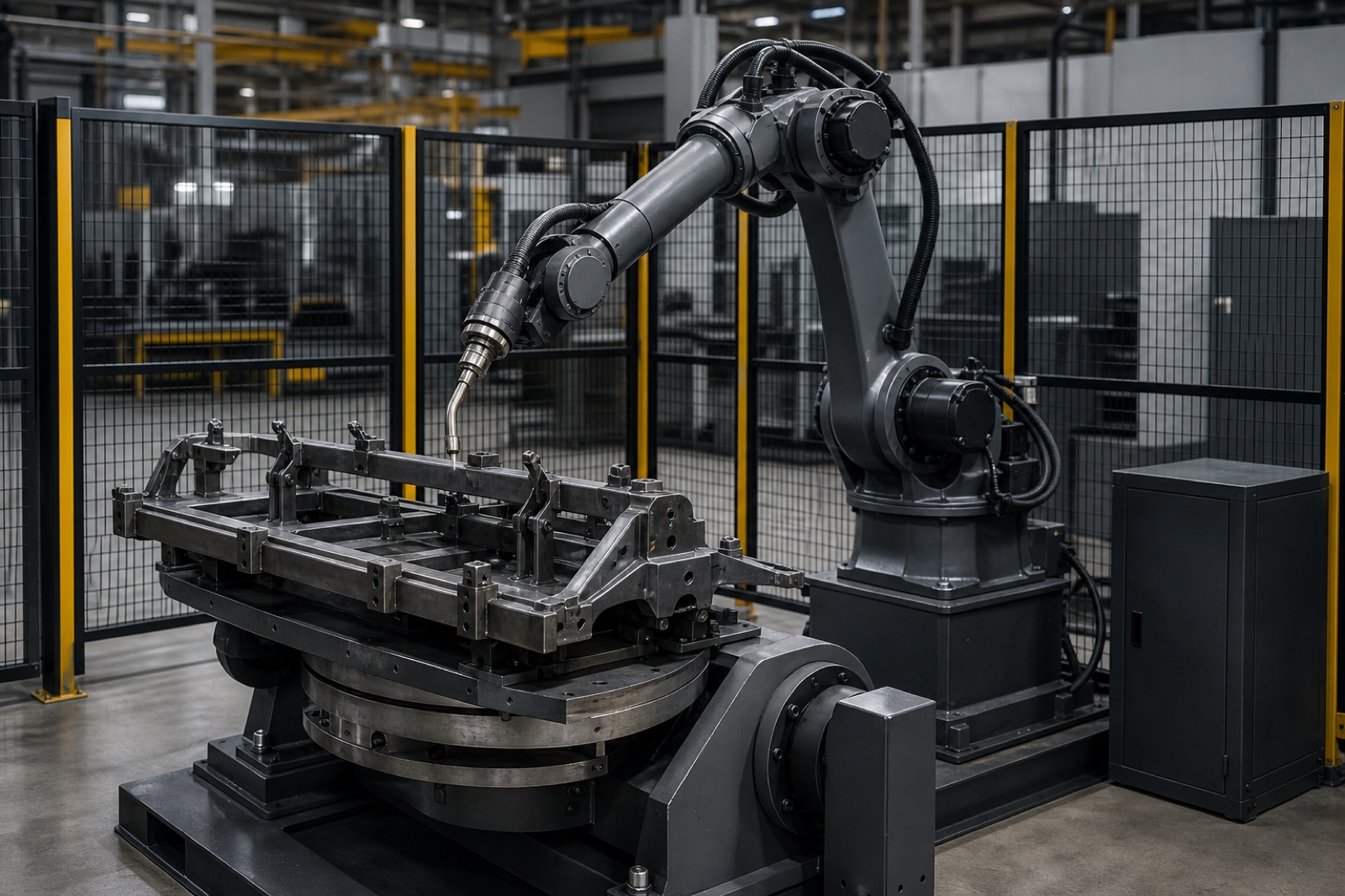
We engineer, build and commission robotic welding cells, positioners, seam tracking and safety systems for manufacturers who need consistent quality, clean welds and predictable cycle times.
Robot pose repeatability across the full working envelope
Sustained travel speed on 6 mm fillet welds
Average cycle-time reduction against manual welding
Welding cells commissioned worldwide
Cells, positioners, torch packages and sensing hardware that we size, integrate and prove out as one commissioned system — not a box of parts.
Two-station index cell that welds one side while the operator loads the other, removing load time from the cycle.
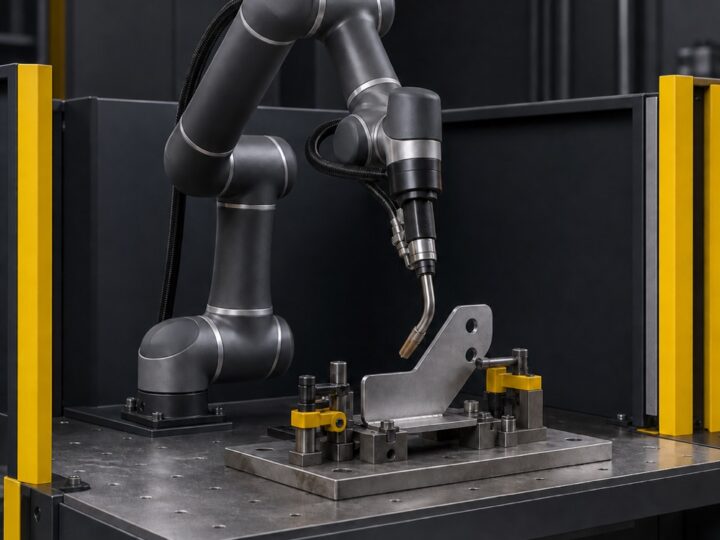
Compact hand-guided cobot bench for high-mix, low-volume shops that change over several times a shift.
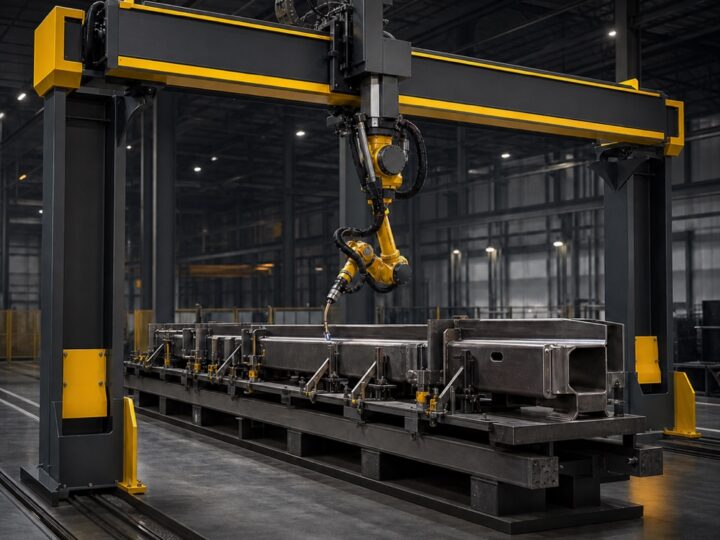
Overhead-mounted robot on a bridge gantry for long weldments that will not fit inside a conventional cell.

Two-tonne servo positioner that rolls the weldment so every joint is welded in the flat position.

Servo rail that extends the robot envelope along the part, so one robot can serve several stations.

Pneumatic clamping fixtures designed for repeat location within 0.2 mm and fast changeover.
Joint geometry, material thickness and volume drive every design decision. These are the sectors our application engineers work in daily.
 01
01
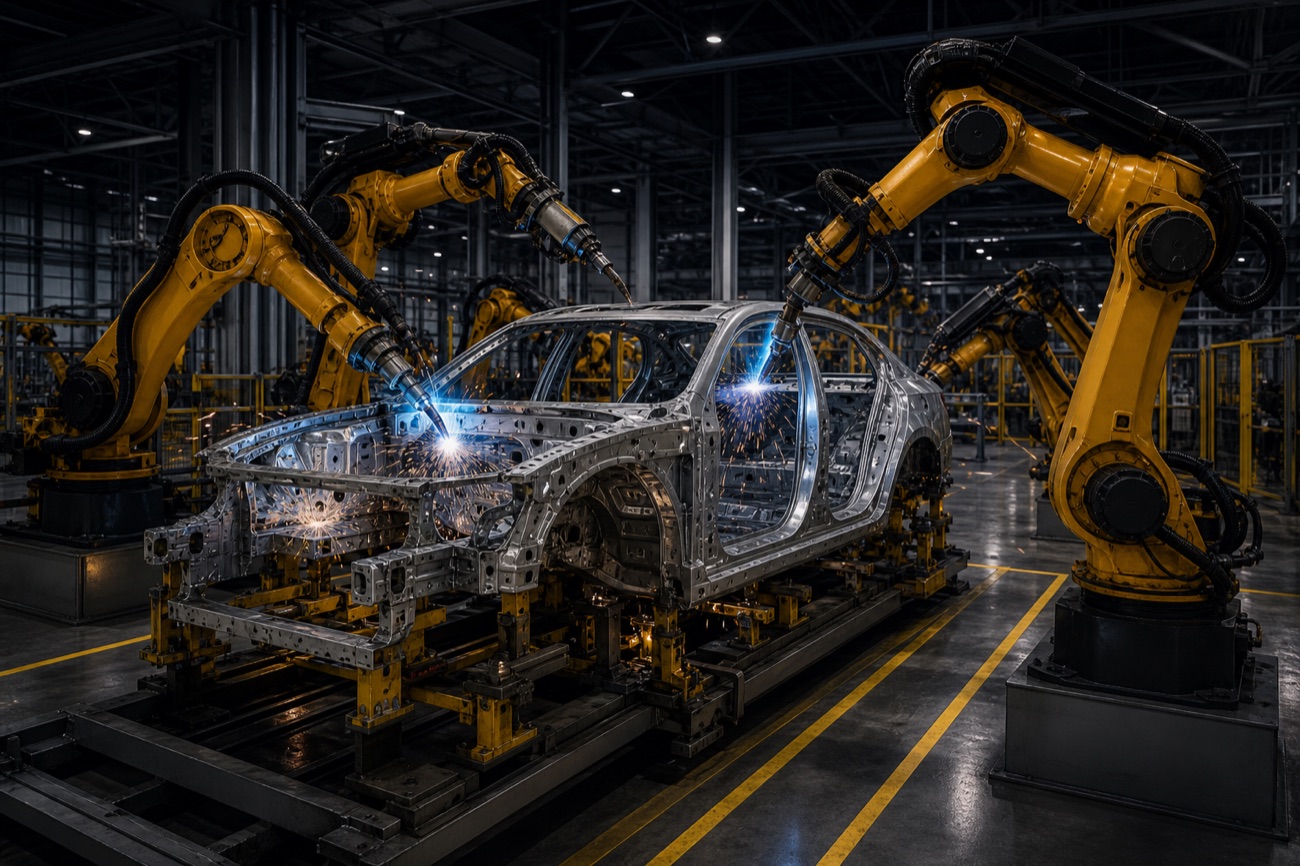
Body-in-white subassemblies, seat frames and exhaust components at line takt.
 02
02
Thick-section booms, buckets and chassis weldments with multi-pass sequencing.
 03
03
Circumferential and longitudinal seams on vessels, spools and headers.
 04
04
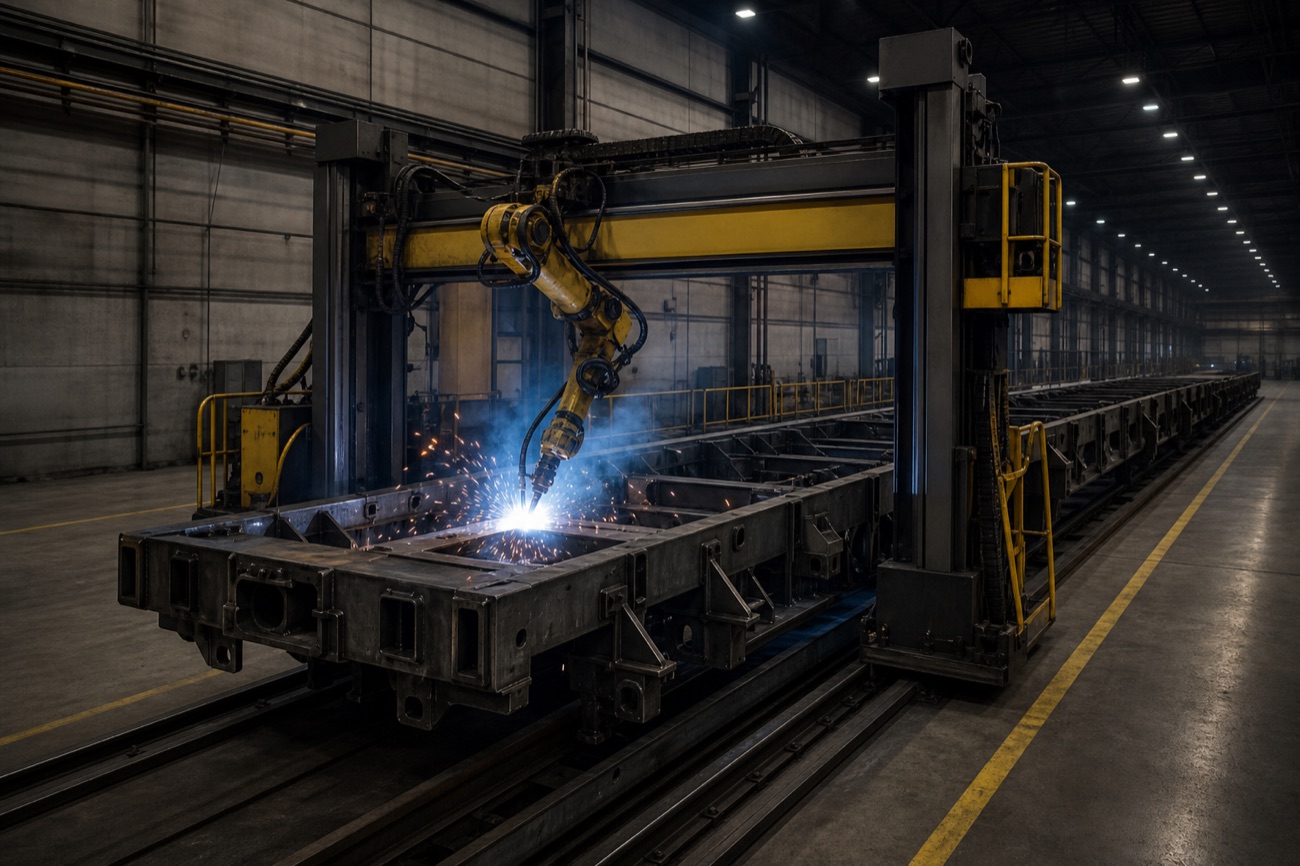
Long underframes and bogie assemblies welded from a tracked seventh axis.
 05
05
High-mix loader arms, hitches and frames on quick-change fixturing.
 06
06
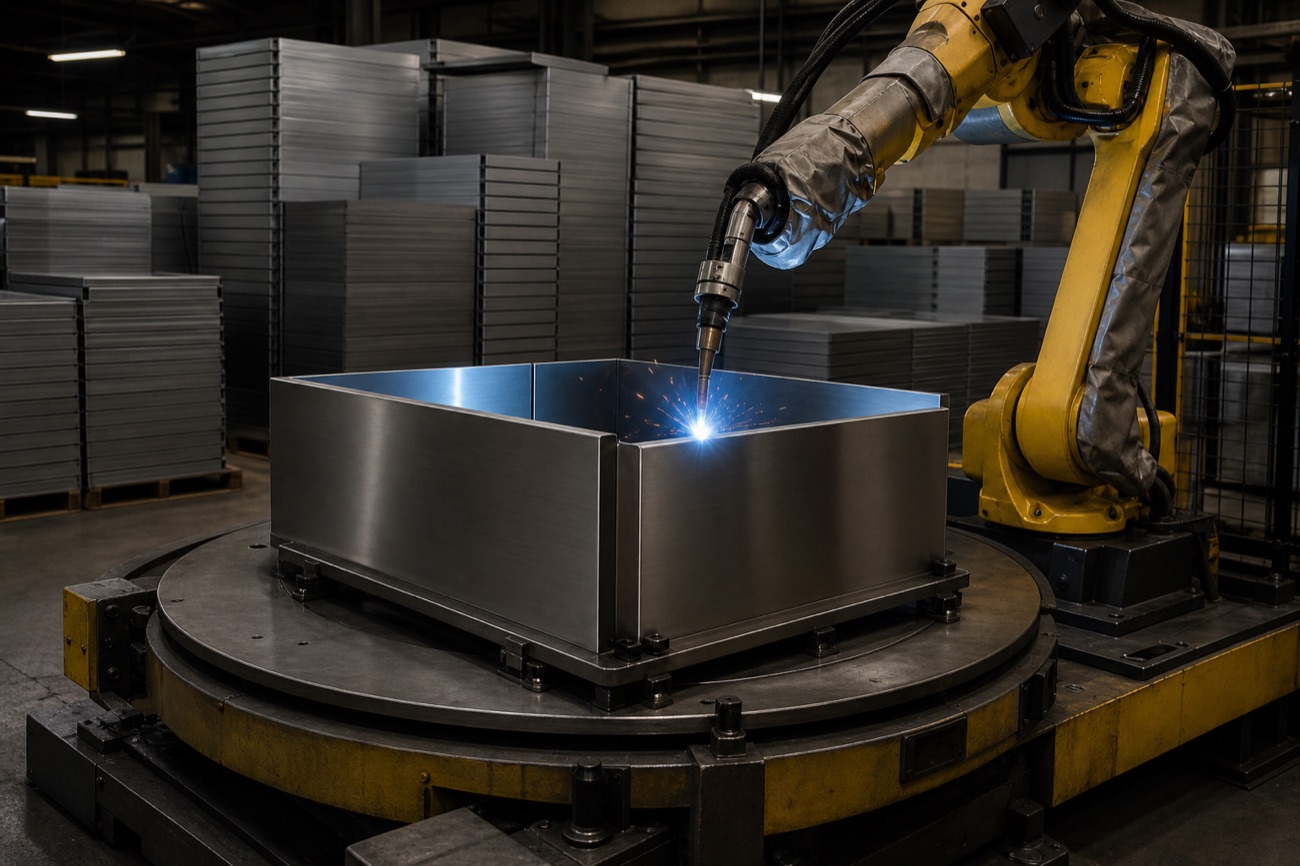
Thin-gauge enclosures and cabinets where distortion control decides quality.

We map every joint on your drawing: type, length, access angle, material grade and thickness, then flag anything that needs a design-for-automation change.
Offline programming confirms torch access, collision clearance and the seventh-axis stroke before a single bracket is cut.
Clamping is designed for repeat location within 0.2 mm and for distortion control across the full weld sequence.
Wire, gas mix, waveform, travel speed and work angle are tuned on your coupons until penetration and spatter meet the acceptance criteria.
The cell is proven at our facility against your parts and cycle time, then re-commissioned and operator-trained on your floor.
Each cell ships with weld procedure specifications, a machine safety file and a signed run-off report against agreed acceptance criteria.
Risk assessment, category-3 interlocking and validated stop-time measurement.
Welding procedure specifications qualified on your material and joint prep.
Bead geometry and penetration measured across a 30-part capability run.
Spares, remote diagnostics and re-programming for the life of the cell.
Two-station index table let the operator load while the robot welded, removing the entire load/unload wait from the cycle.
Laser seam tracking absorbed up to 3 mm of fit-up variation on thick plate, holding penetration through six passes.
A pulsed short-arc procedure on 1.5 mm sheet cut distortion and let a high-mix shop change over in under ten minutes.
Design, build, programming and commissioning under one roof — with a single point of responsibility for the finished system.
We review your parts and production volumes first, and tell you plainly whether automation will pay off — and where it will not.
Acceptance criteria are agreed in writing before the build starts, so the final test is a measurement rather than a negotiation.
Spare parts, remote diagnostics and re-programming keep the system productive for its whole working life.
Practical write-ups on cycle time, spatter control and seam tracking — the parameters that decide whether a cell pays for itself.
Seam tracking is not free: it costs cycle time, capital and maintenance. Here is the fit-up threshold where it starts returning more…
Read articleSpatter is not just a cleaning problem. It drives nozzle life, arc start reliability and downstream labour. Three levers control most of…
Read articleMost robotic welding cells lose more time between arcs than during them. Here is where the seconds actually go, and which of…
Read articleShare part geometry, joint types, material thickness and annual volume. Our application engineers return a cell concept, cycle-time estimate and budget range within two working days.
Tell us about the weldment and the volume. An application engineer replies within two working days.
Tell us about the weldment, the joint types and the annual volume. An application engineer replies within two working days.