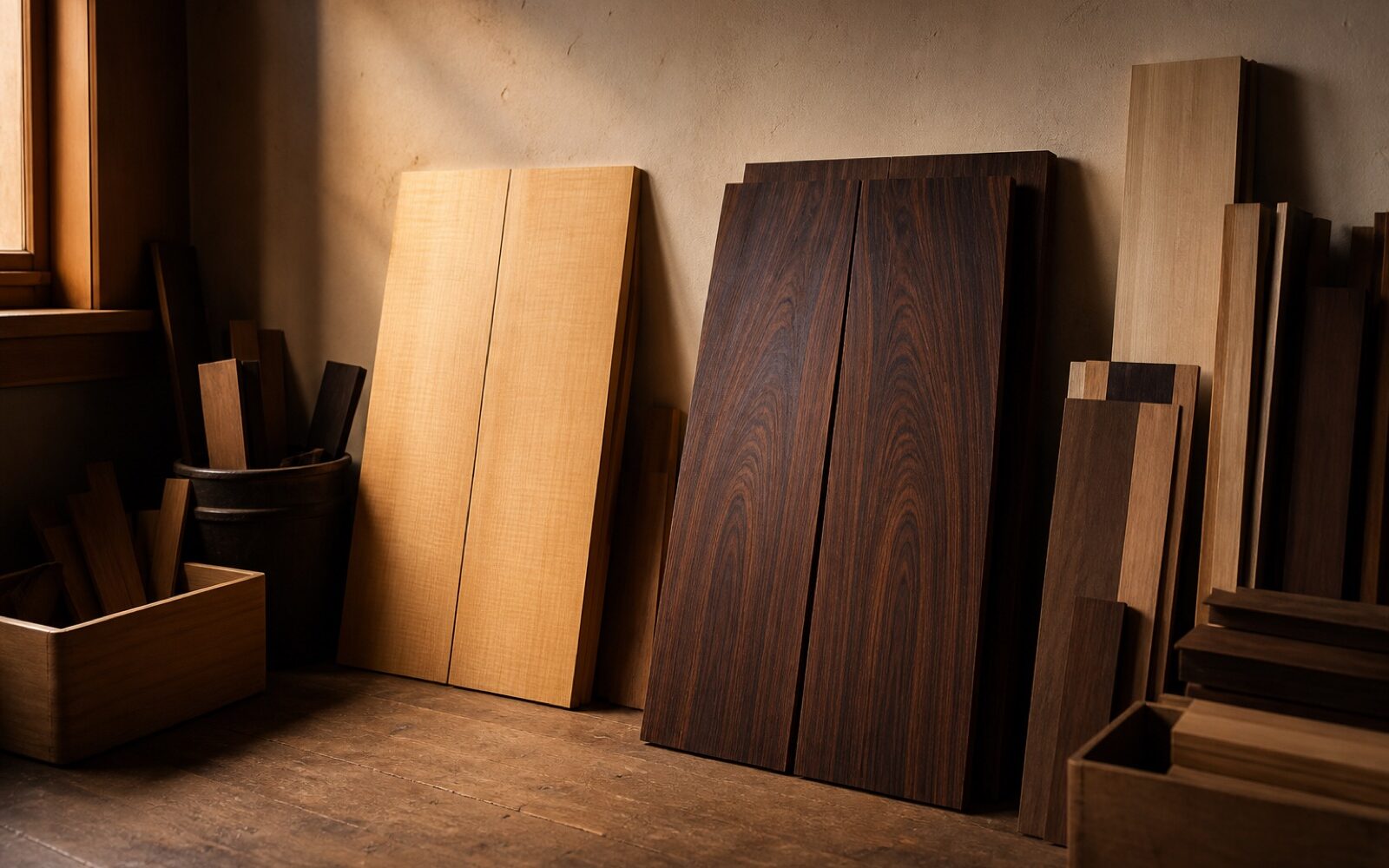
We buy wood years before we use it, so everything here is either resting in the loft right now or already reserved for a future instrument.
Top woods
The top of a guitar does most of the work. Its job is to be as light as possible while staying strong enough to hold the pull of the strings, and every kind of wood solves that problem a little differently.
Sitka Spruce
Our standard choice, and the most widely used guitar top wood in the world. It is strong, versatile and handles hard playing without losing its clarity. It sounds a little reserved at first and opens up beautifully within the first year of playing.
Adirondack Red Spruce
A bolder, louder top wood with power in reserve. It suits players with a strong, confident style who want an instrument that can keep up with them.
Western Red Cedar
Warm, soft and responsive from the very first day. It favours a gentle touch, which is why fingerstyle players love it.
Alpine Spruce
Pale, light and lively, and increasingly hard to find in good sizes. We reserve it for smaller-bodied guitars that benefit from its extra projection.
Backs and sides
The back and sides colour the sound the top produces. They also decide how much of the sound comes back at you and how long each note lasts.
| Wood | Character | Best on |
|---|---|---|
| Indian Rosewood | Deep bass, sparkling highs, long sustain | Larger bodies, twelve-string |
| Madagascar Rosewood | Denser, brighter attack, even longer ring | Flagship models |
| Mahogany | Dry, woody and direct; records cleanly | Most body sizes |
| Flamed Maple | Bright and clear, adds little colour of its own | Jumbo |
| Walnut | A warm middle ground between mahogany and rosewood | Orchestra model |
| Ziricote | Striking figure, bright voice, long sustain | Small bodies |
| Sapele | Mahogany-like, stable and forgiving | Travel guitars |
| Black Walnut | Warm and mellow | Cedar-topped travel guitars |
Sourcing
Every set of wood we buy comes with proper documentation of its species and origin, and where international rules require it, the paperwork stays with the instrument for life. We buy only from suppliers we know and trust, and we do not use wood from unverified sources.
Off-cuts
Braces, linings and the small structural parts inside each guitar are cut from the off-cuts of larger sets. Very little wood leaves this building unused.