Helical Inline
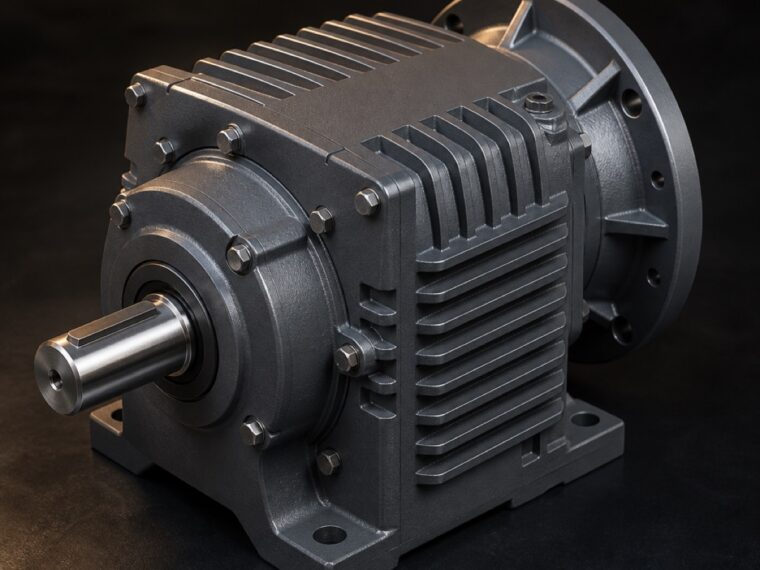
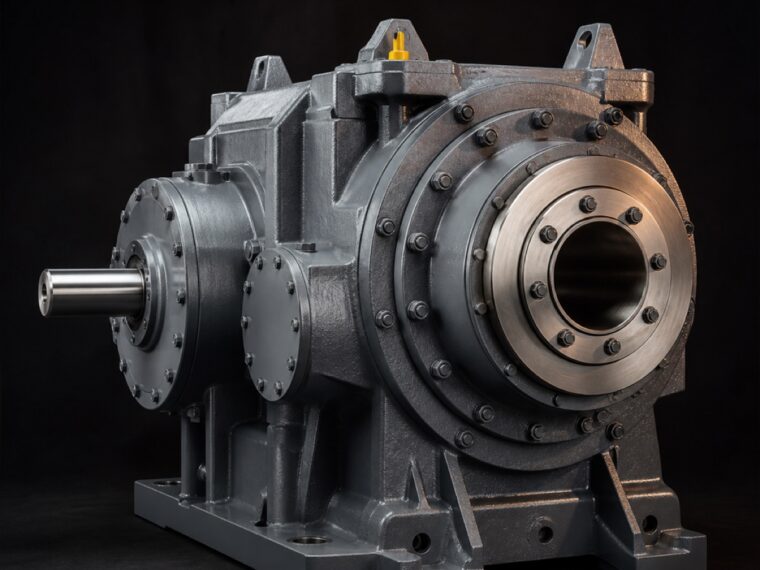
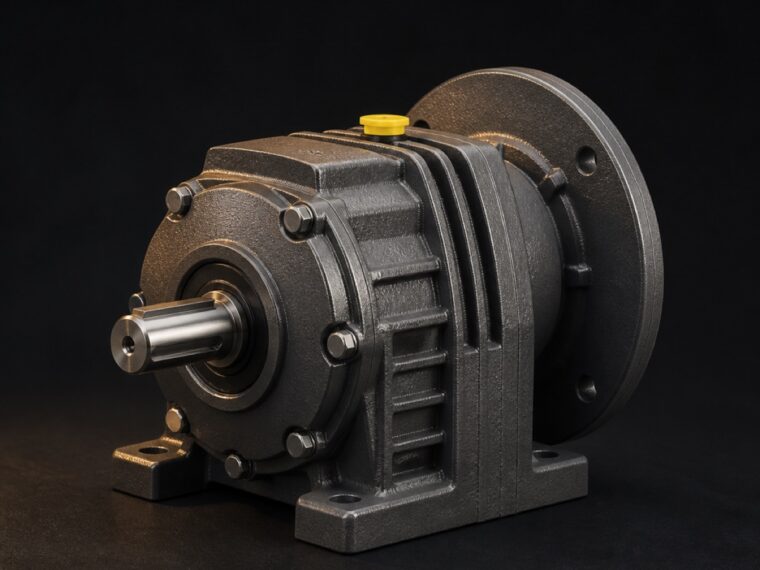
GU-H37 Helical Inline Gear Unit
The smallest frame in the inline range. A two or three stage helical train in a ribbed grey iron housing, sized for…

Gear units engineered to recognised international gear standards
Seven drive families from 130 to 42,000 Nm. Every unit rated on measured tooth-flank capacity, thermal limit and permissible overhung load - not on a catalogue round number.
The range
Inline, right-angle, worm, parallel offset, vertical agitator, planetary and split-housing industrial. Same tooth calculation, same test bench, same paperwork.
Coaxial helical gear units for the widest span of general drive duty. Case-hardened, ground helical teeth run quiet and hold their efficiency across the whole ratio band.
View the range 02Right-angle units combining a spiral bevel first stage with helical output stages. High torque density in a short installed length, ideal where the motor must fold back along the machine.
View the range 03A helical primary stage ahead of the worm set lifts efficiency well above a plain worm box while keeping the compact right-angle envelope and quiet, near-silent running.
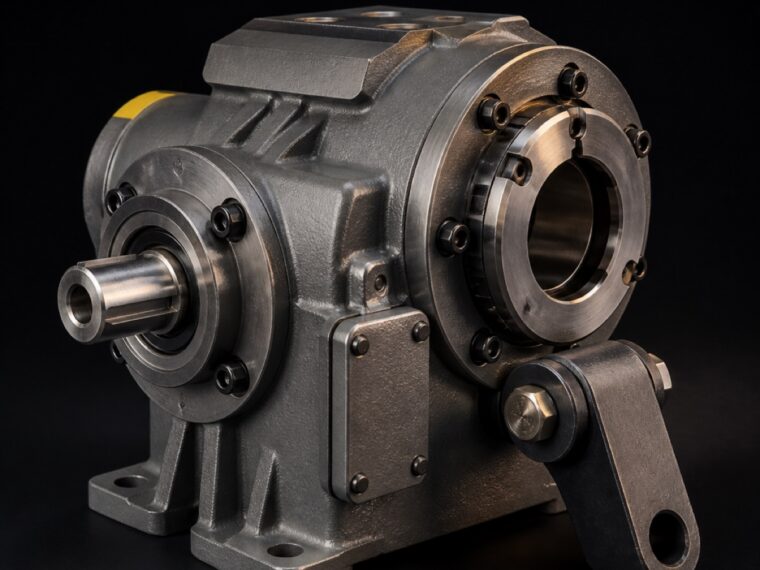
View the range 04Shaft-mounted parallel units that hang straight on the driven shaft with a torque arm. No coupling, no baseplate, no alignment - the standard answer for conveyor head drives.
View the range 05Vertical mixer drives with a reinforced output bearing system sized for the bending moment and axial thrust of a long impeller shaft, plus a dry-well seal chamber above the vessel.
View the range 06Load shared over three or more planets gives the highest torque per kilogram in the range, with low backlash and a short coaxial envelope for slewing, winch and travel drives.
View the range 07Split-housing industrial gear units built to recognised international gear standards for process duty - pressure-fed lubrication, heavy-duty bearings and full instrumentation ports.
View the rangeCatalogue
Helical Inline
The smallest frame in the inline range. A two or three stage helical train in a ribbed grey iron housing, sized for…
Helical Inline
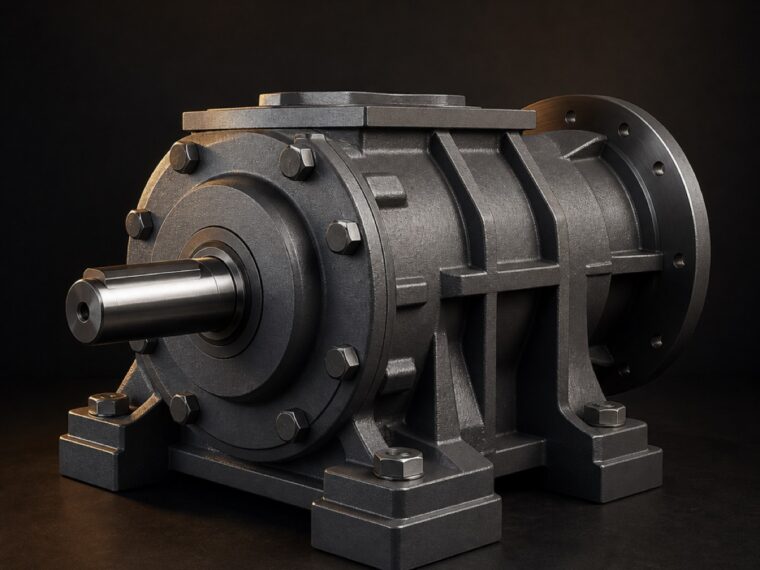
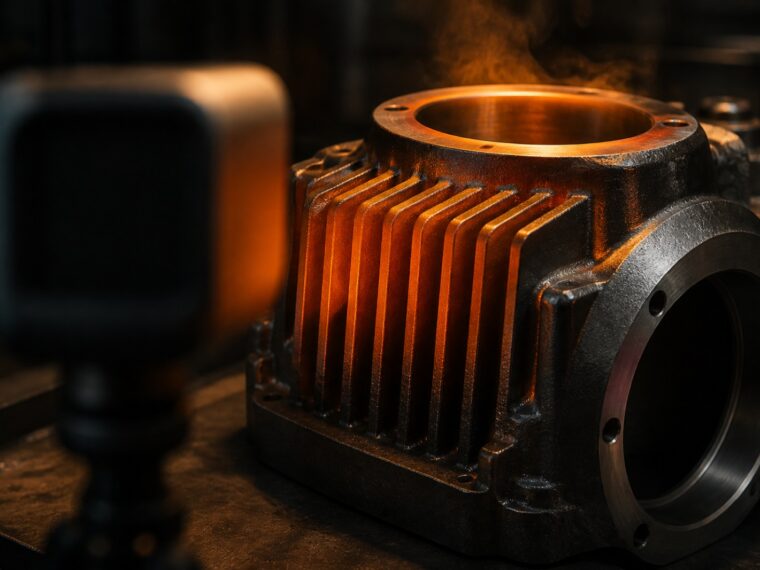
The workhorse of the inline family. Deeper cooling ribs and a wider bearing span than the H37, so it holds full catalogue…
Helical Inline
The large inline frame, with thick machined foot pads and a bearing arrangement rated for direct pulley loads. Where an inline drive…
Helical-Bevel
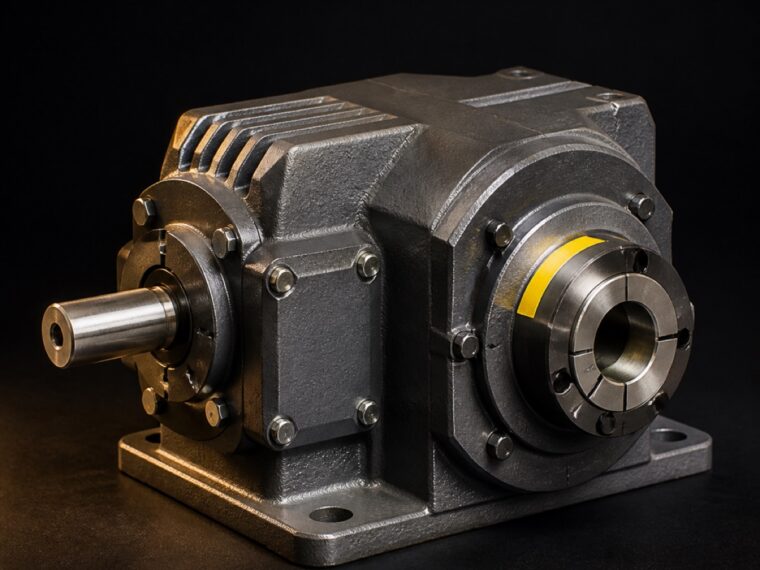
Compact right-angle unit with a lapped spiral bevel first stage. Folds the motor back along the machine so the drive footprint stays…
Helical-Bevel
Mid-size right-angle unit for continuous process duty. Four bearing planes carry the bevel thrust so overhung load capacity stays high right through…
Helical-Bevel
The top of the right-angle range. Massive flange sections, a wide bolt circle and a bearing system sized to hang directly on…
How a unit gets rated
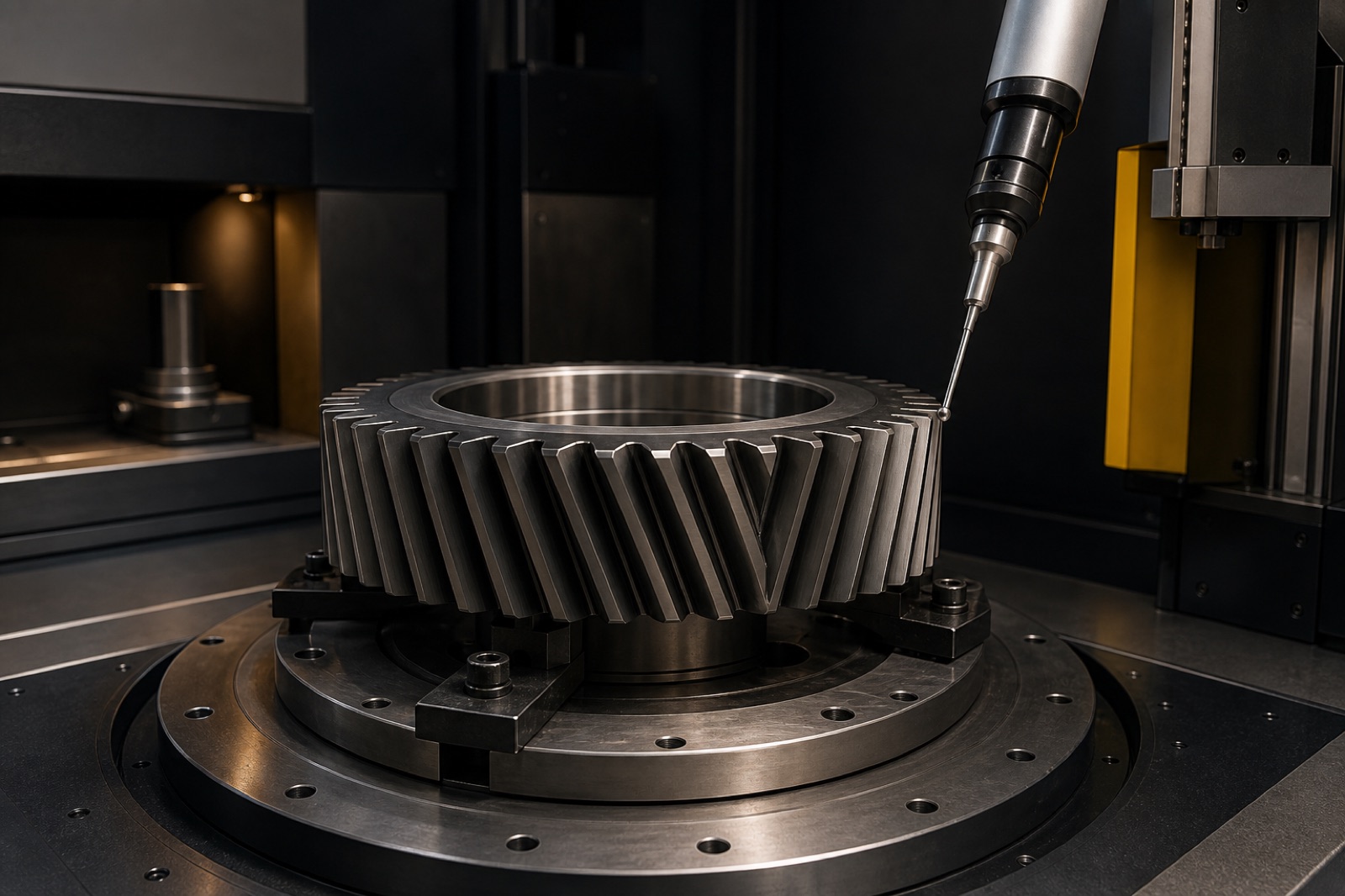
Contact stress and bending stress calculated to international gear standards for the whole gear train, at the required service factor and the real load pattern rather than a nominal constant torque.
L10h life at the stated overhung load and its position on the shaft, plus a shaft deflection check so the mesh alignment stays inside the contact pattern under full load.
Heat generated at the given duty cycle against what the housing can shed at your ambient. If it does not balance we quote a fan, a larger frame or a cooler - not a footnote.
No-load run-in, loaded back-to-back test, noise and sump temperature logged, contact pattern photographed. The test sheet ships in the crate and stays on file against the serial.
Where they end up
Different plants, same three questions: will it hold the torque, will it shed the heat, and will the shaft take the pull.
Conveyor head and tail drives, apron feeders, stackers. Shaft-mounted parallel and right-angle units on torque arms.
Typical framesK157 / F127
Screens, clarifier rakes, aeration and screw pumps. Slow output speeds, wet ambient, IP66 as standard.
Typical framesK97 / S87
Reactor and blend vessel agitators sized on bending moment and axial thrust, not torque alone.
Typical framesA75
Kilns, mills and crushers. Heavy shock duty, so the service factor does most of the sizing work.
Typical framesX220 / K157
Washdown conveying, fillers and cappers. Quiet running and synthetic food-grade fills.
Typical framesS57 / H67
Slew, travel and hoist drives where backlash and holding torque both matter.
Typical framesP305
Small inline units built into machine frames, with encoder-ready shaft ends.
Typical framesH37
Deck machinery and winches, split housings for inspection without a full strip-down.
Typical framesX220 / P305
Engineering notes
18 Jun 2026
Tooth strength tells you whether a gear unit will break. Thermal capacity tells you whether it will cook. Here is how to tell which one is…
Read the note7 May 2026
Switching a worm unit from a mineral CLP to a PAO synthetic changes efficiency, sump temperature and wear rate. Here is what to expect and what…
Read the note26 Mar 2026
By the time a misaligned drive sounds wrong, the bearings have already spent most of their life. What alignment tolerance actually buys you, in hours.
Read the noteApplications desk
Give us the required output torque, speed, load character and running hours. Our applications desk returns a sized unit, the service factor it achieves and a thermal check within one working day.
Send the output torque, output speed, load character and running hours. We will confirm the frame, the ratio and the service factor it achieves.