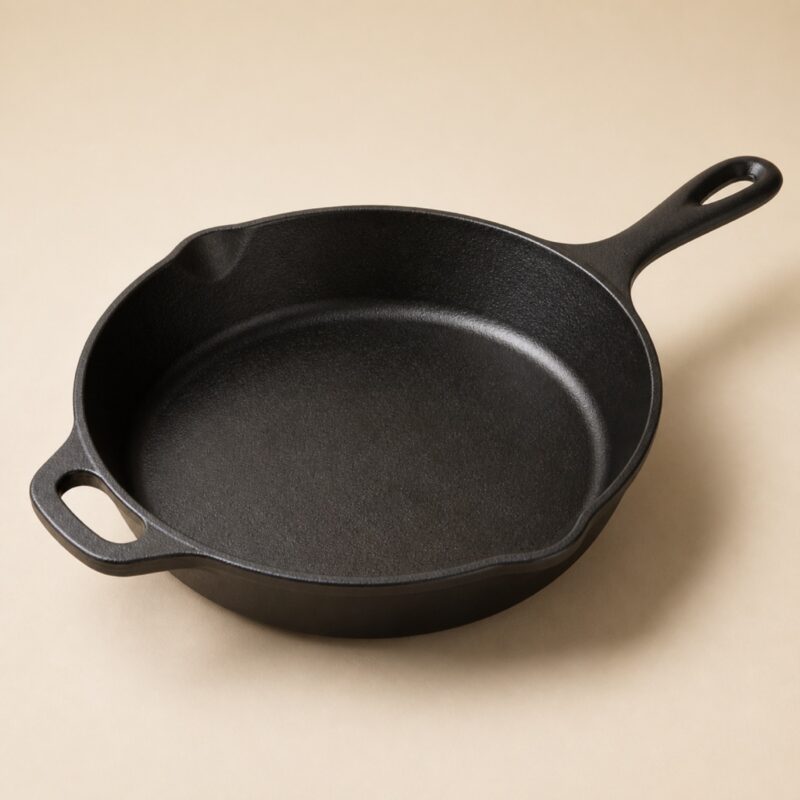
How to season a new skillet in one evening
Three coats, four hours, and one very specific mistake almost everybody makes on the first one.
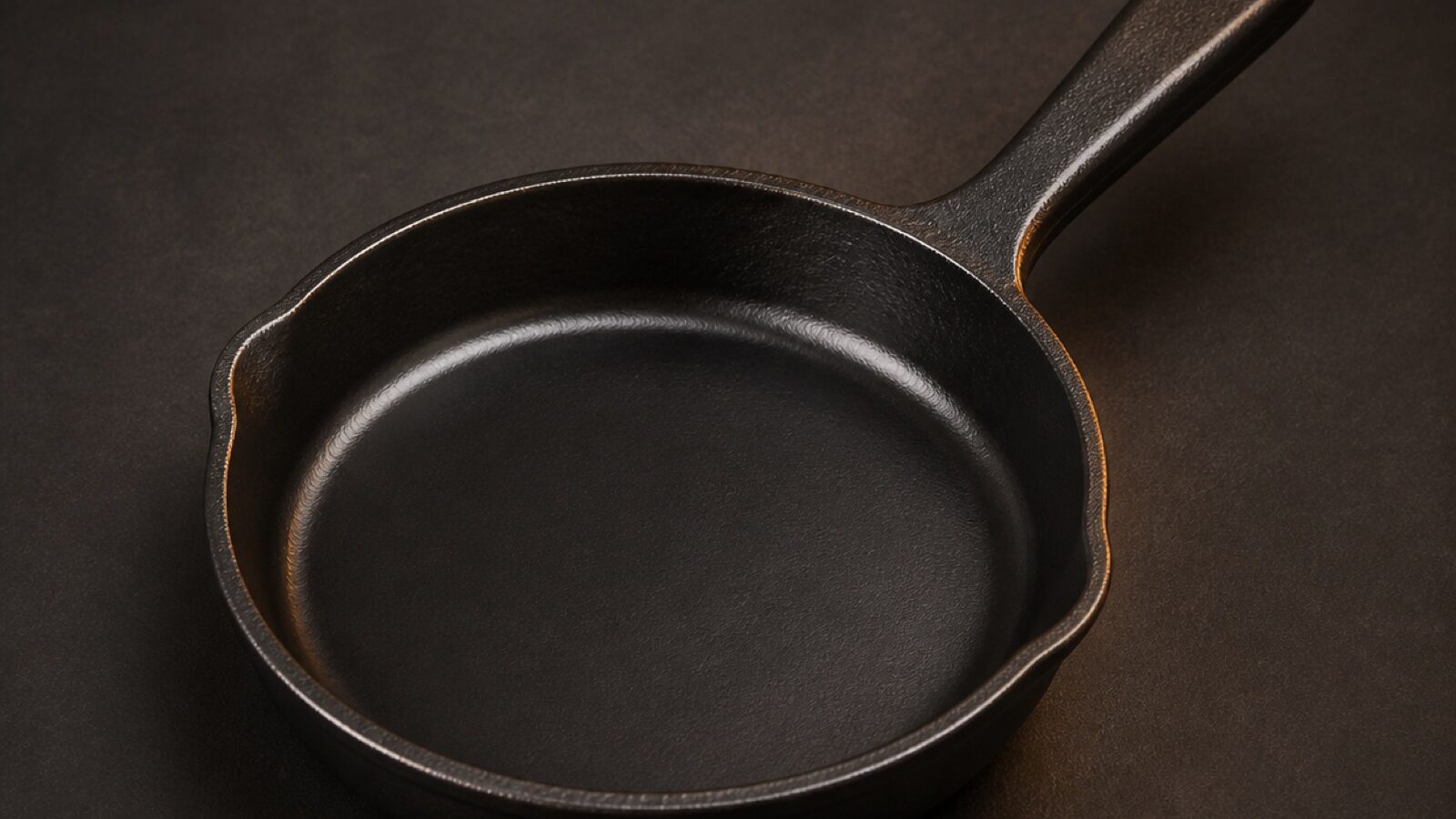
Your pan arrives with three coats already on it, so strictly speaking you do not need to do this at all. But if you have stripped a pan back to bare metal, or you have rescued something from a barn, this is the routine we use on the workshop floor — and it fits into one evening.
What you need
- Cold-pressed flaxseed oil, or a seasoning puck.
- Two lint-free cotton cloths. Paper towel works but sheds.
- An oven that genuinely reaches 500 °F, and a working extractor.
- Four hours, of which about fifteen minutes involve you.
The one mistake everyone makes
Too much oil. This is the entire difficulty of seasoning, and it is the reason people end up with a sticky, blotchy, faintly tacky surface and decide cast iron is not for them.
The coat needs to be so thin that after buffing, the pan looks like you forgot to oil it. You have not. There is a molecular film there. If you can see a sheen of liquid oil, there is roughly ten times too much on it, and the excess will pool and polymerise into a sticky varnish rather than a hard film.
Coat one
Warm the pan on the hob until it is too hot to hold but not smoking — around 200 °F. Take it off. Put a few drops of flax on a cloth and wipe the whole thing: face, walls, handle, underside, everywhere.
Now take the second, clean cloth and buff it all off. Really. Buff until it is matte. Then put it upside down in a 500 °F oven for one hour, and when the hour is up, switch the oven off and leave the pan inside until it is cool enough to handle.
Coats two and three
Identical. The pan is already warm, so you can skip the hob step. The colour will shift from grey toward bronze over the three coats and the surface will start to look faintly glossy in raking light.
Then cook something fatty
Three coats is a foundation, not a finish. Fry bacon in it. Do potatoes in an inch of oil. Bake a cornbread. Ten cooks like that will do more for the surface than another six oven coats, because food does things to a seasoning layer that oil alone cannot.
What it should look like at each stage
Out of the crate: warm graphite grey, grinding marks visible. After ten cooks: bronze, marks fading. At six months: dark chocolate, eggs sliding. At three years: near black with a low mirror sheen, and you will have stopped thinking about it entirely.