




Most Motors Do Not Burn Out, They Get Greased to Death
An overfilled bearing runs hotter than a lean one, plus the things a relube chart will not tell you.
Load torque, working speed range and starts per hour go on the sizing sheet before a price does.
A thermocouple sits in the winding while the motor is loaded, so the class letter is not doing the talking.
Send a nameplate photo and a shaft height and you get a bolt-for-bolt replacement, not an adapter plate.
Bearings and seal sets are stocked by serial number long after a model line goes quiet.
Order path
Nothing on this list is outsourced, including the awkward parts.
Load torque, the speed range it really runs at, starts per hour, and a word about the room.
Motor, gearing and inverter picked together, quoted with the mounting drawing attached.
Stators wound and impregnated here; shafts and end shields cut on our own lathes.
Rise and vibration go on the record against the serial number, then it is packed for the crossing.
Winding shop
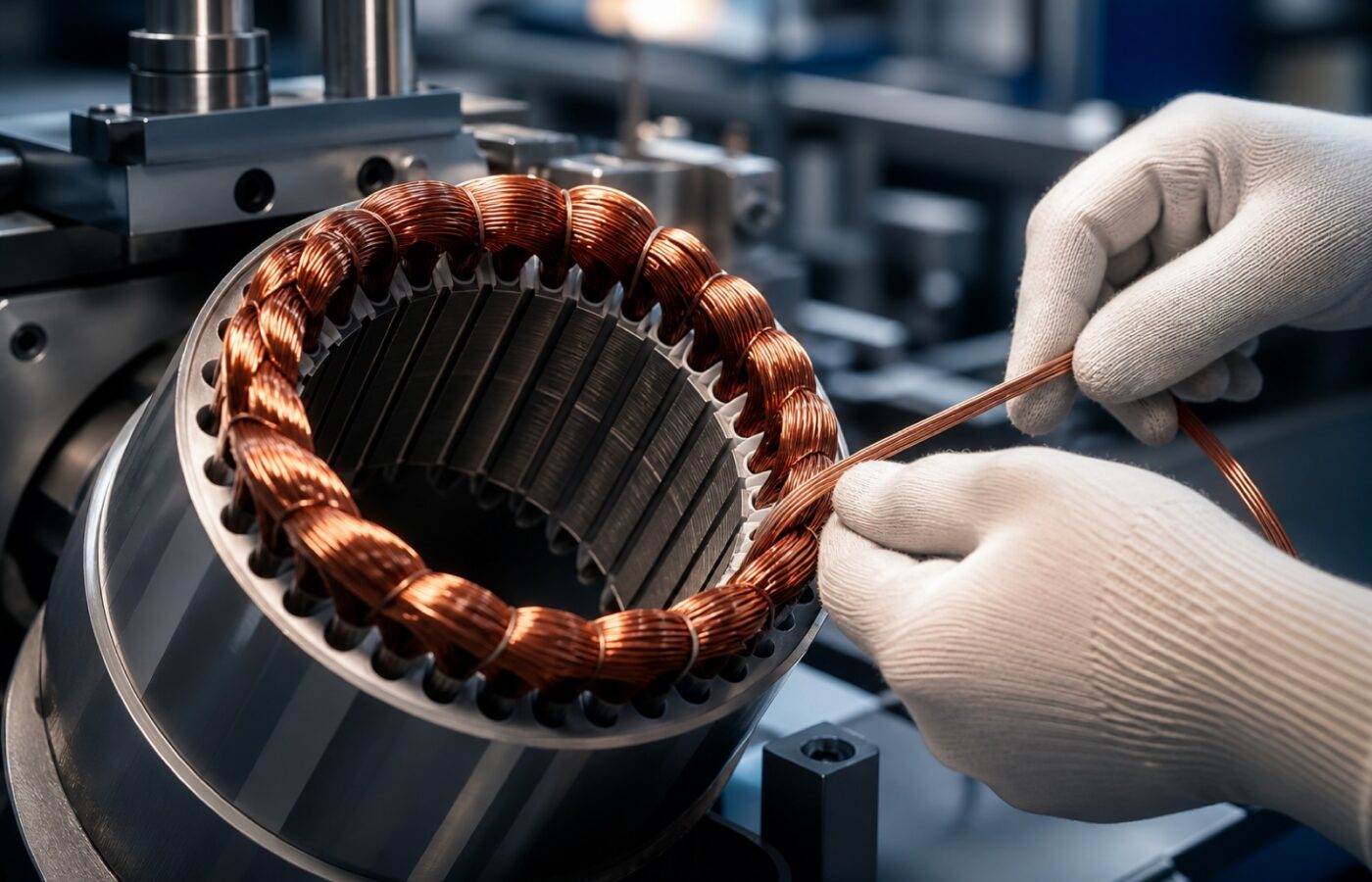
Stators are wound here, lowered into the vacuum pressure impregnation tank, then surge-tested before a housing ever closes over them. Shafts and end shields come off our own lathes, so the fits get measured rather than trusted.
Inside the shopMost quoted
Not the cheapest lines we build, just the ones that keep coming back on repeat orders.
Flame paths machined wide and long into solid cast iron, with a bolted terminal…
View & InquireConformal-coated boards on a die-cast heatsink, mounted shoulder to shoulder without derating.
View & InquireSkewed magnets and a light rotor keep cogging out of short, fast index moves.
View & InquireCase-hardened helical teeth, ground after heat treat, sharing one housing with the motor.
View & InquireInterior magnets hold IE4 efficiency two frame sizes below the induction motor it replaces.
View & InquireCast-iron workhorse with 0.5 mm low-loss laminations and bearings sized a step over the…
View & InquireOn the record
Their engineer caught that our duty cycle would cook the catalogue motor — the severe-duty frame they sized instead has run two summers without a trip.
Drive cabinet arrived tested, labelled and matching the drawings. Commissioning was landing cables and pressing start.
They matched a forty-year-old DC mill motor down to the shaft height. Swap took a weekend, not a redesign.
Test bay
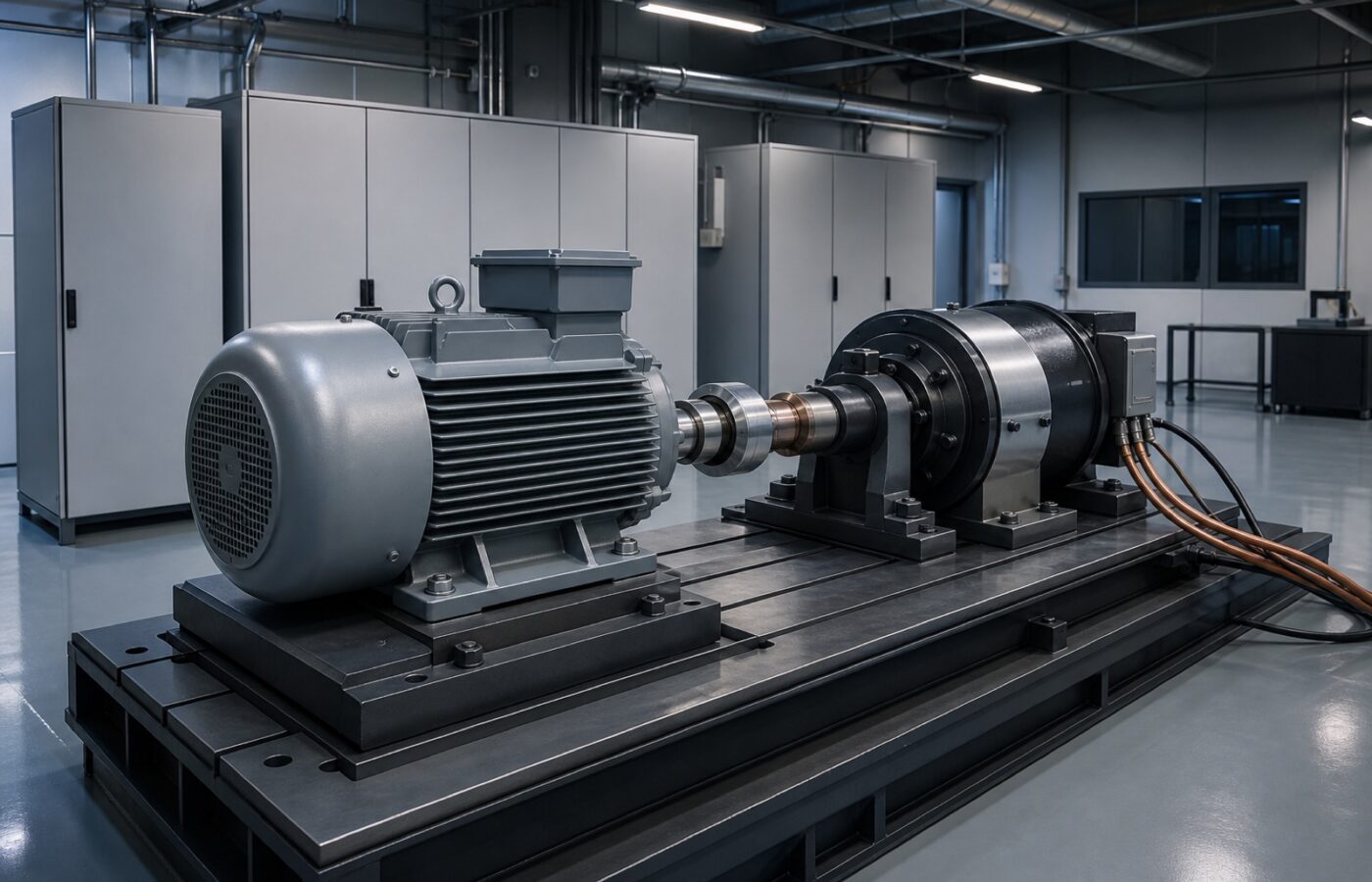
Resistance, insulation, no-load current and vibration go down against the serial number, and drive cabinets are heat-run at their rated profile. That sheet travels in the crate, not in an email six weeks later.
Send us a duty sheetSend the load torque and the speed range it actually runs at. A sized proposal with drawings comes back the next working day.

Scan with WeChat to start a chat.
Please share your requirements, quantity and application details. We will reply promptly.

