Almost every measurement problem that reaches our application desk turns out to be the same problem in disguise. The camera is repeatable, the lighting is stable, the software is sound — and the measurement still drifts between parts that are supposedly identical.
The hidden culprit
With an ordinary lens, anything that sits closer to the camera looks bigger. Move a part a couple of millimetres towards the lens and every feature on it appears slightly larger than it really is. For a photograph that does not matter. For a measurement it is fatal: the size you read depends on exactly where the part happened to sit.
Where the movement comes from
Nowhere exotic. Part-to-part height variation, a chip of debris under the fixture, thermal growth of a mounting plate over a shift, a slightly bowed conveyor. A couple of millimetres is a small number in a factory.
What a telecentric lens does
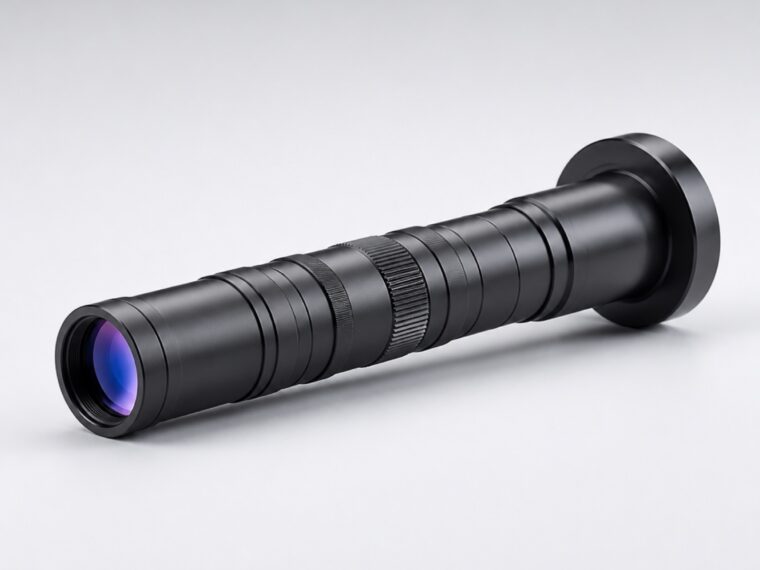
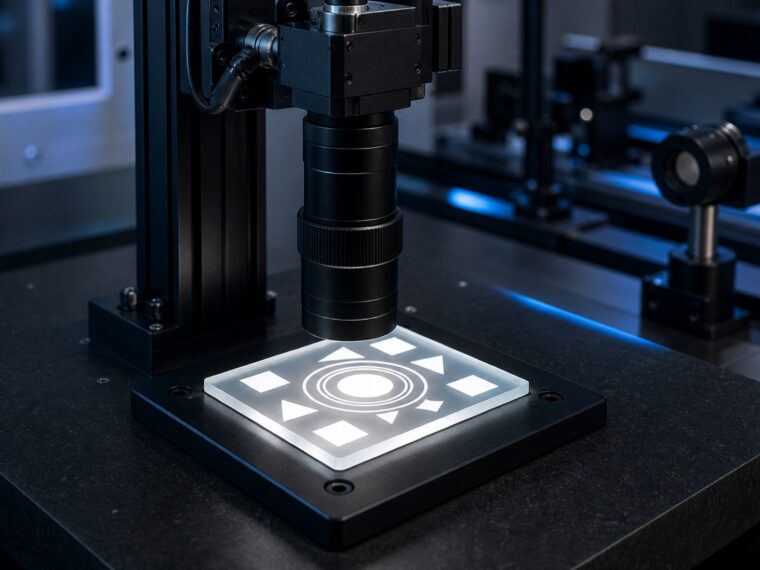
A telecentric lens is built so that the apparent size of a part does not change as it moves slightly closer to or further from the camera. Within its working range, the image scale stays constant — which means the measurement no longer depends on part position.
The trade you are making
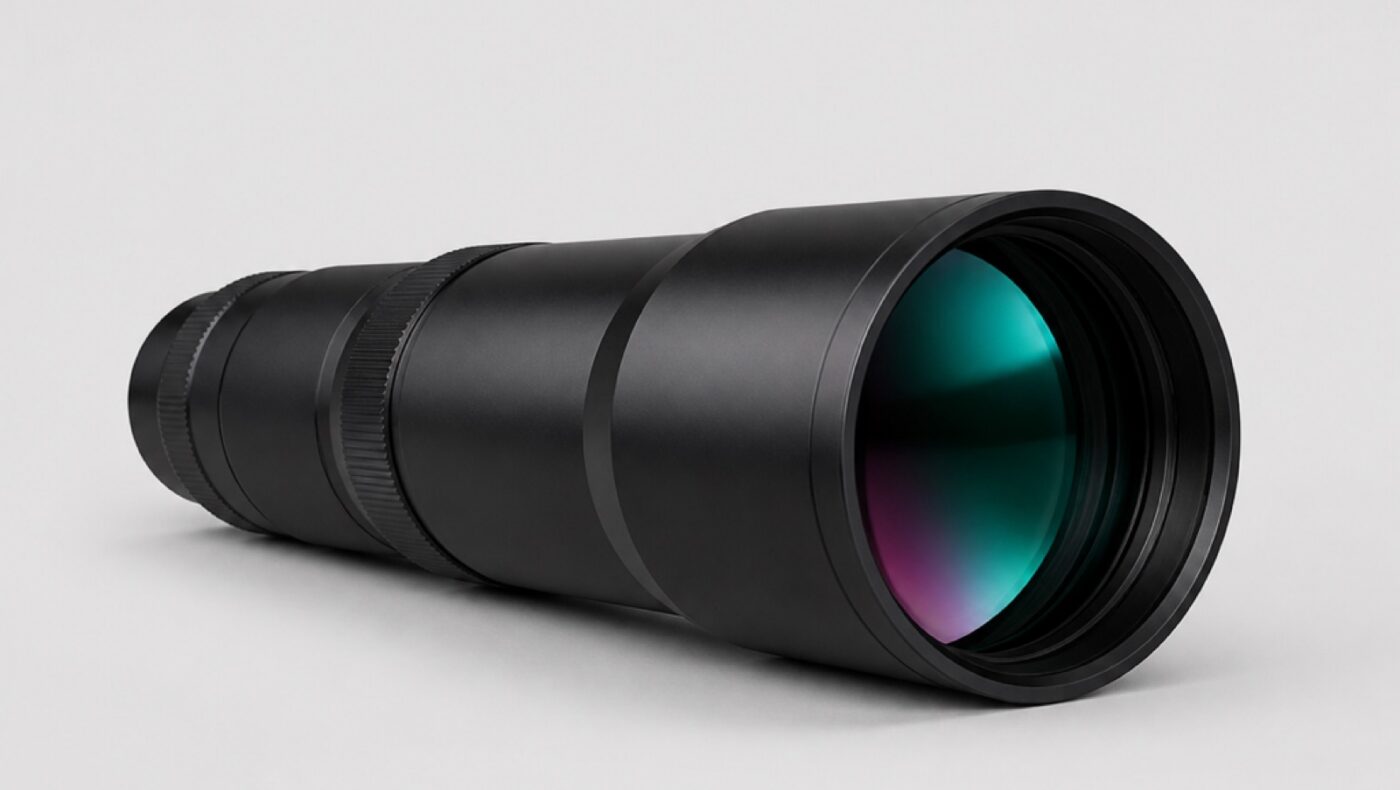
Telecentric lenses are physically large, because the front of the lens has to be at least as big as the object being measured. They are fixed in magnification, and they cost more. You take that trade when the measurement matters. You skip it for simple presence checks or code reading, where an ordinary lens is smaller, faster and cheaper.
Talk it through
If this note touches something you are specifying right now, our application desk will look at your part drawing and recommend an optic.