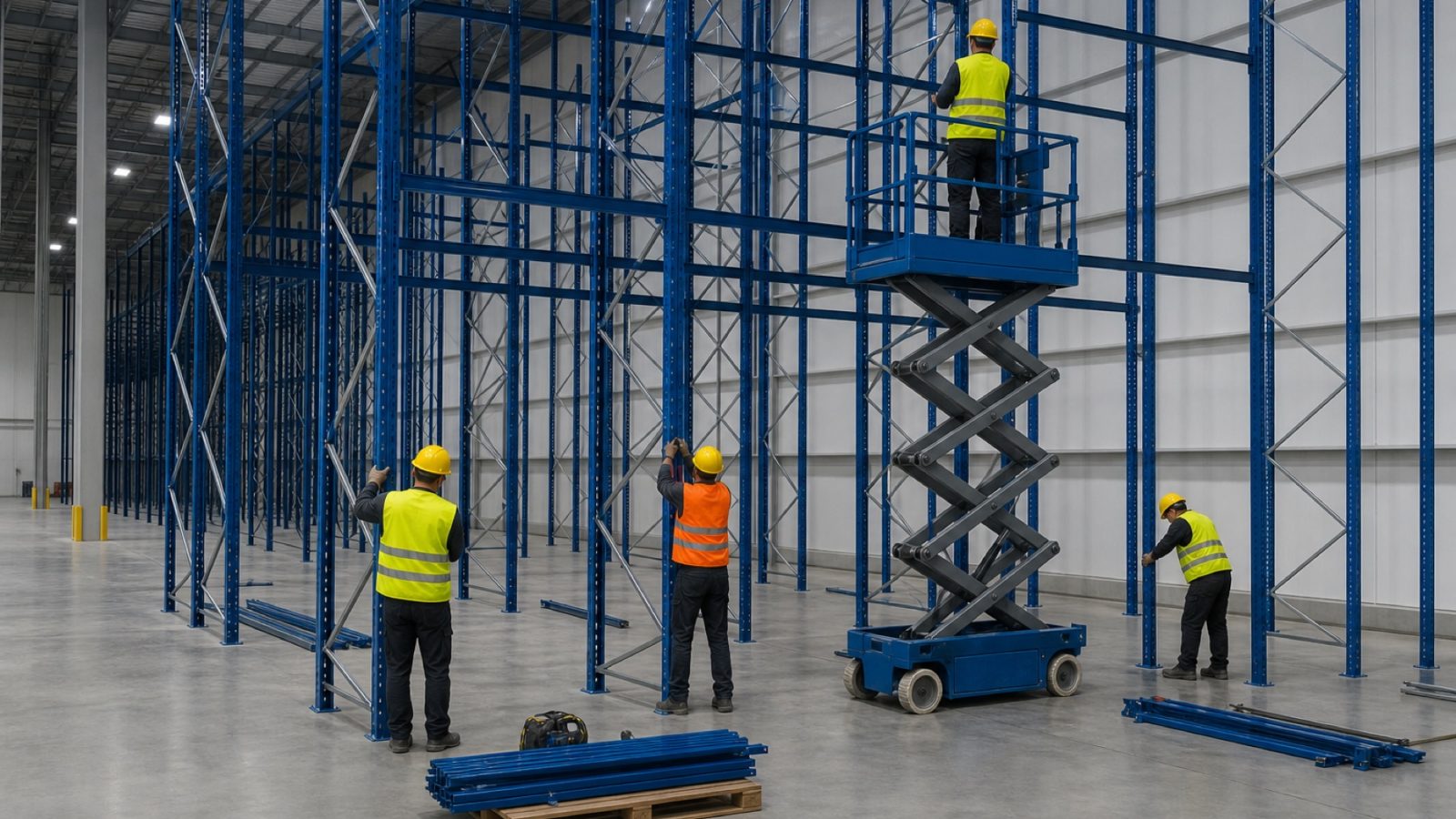
A racking inspection is not a search for dents. Damage is the most visible finding and rarely the most serious one. An inspector is checking whether the structure still matches the assumptions it was designed under, and most of those assumptions are about geometry rather than about steel.
Verticality
This is first because it is the one people overlook. A frame is designed as a vertical column. Lean it and part of the load stops travelling straight down and starts trying to push the frame further over, which makes it lean more. Out-of-plumb is measured against the height of the frame, and a run that is beyond tolerance is beyond tolerance whether or not anything on it looks damaged.
Lean usually comes from three places: a floor that was never as flat as the drawing assumed, base plates shimmed by eye during installation, or an anchor that has worked loose. All three are fixable, and all three get worse if the reading is not taken.
Beam deflection under load
Beams are designed to deflect. Span divided by 200 at full rated load is a normal design limit and the sag it describes is visible if you sight along a run. The inspection measures deflection with the beam loaded, because an unloaded beam that has taken a permanent set is a different and more serious finding: it means the beam has been loaded beyond its elastic range at some point, and it does not recover.
Component damage
Uprights, bracing, beam connectors and safety pins, in that order of consequence. A dented upright in the bottom metre is significant because that is where the column load is highest. A missing safety pin is significant out of all proportion to its size, because the pin is what stops a beam being lifted out of the connector by a fork under the pallet. Bracing matters because it sets the unbraced length the frame was calculated with; a diagonal knocked out changes the bay load whether or not it looks structural.
Findings are classified by severity so the report is actionable. In practice that means three groups: unload this bay now and repair before it is reloaded; repair within a defined period and keep it under observation; and record it, monitor it, no immediate action.
Load against the load notice
The last check is not structural at all. It is whether what is on the racking matches what the load notice says should be. Pallets get heavier when a product changes. Beam levels get moved when a pallet gets taller. Both are ordinary warehouse events and both make the notice on the end frame wrong. An inspection that does not reconcile the two has checked the steel and missed the reason it might fail.
What a useful report contains
Findings tied to a location on the as-built drawing rather than to a photograph with no context. Severity classification. The replacement components each finding needs, by part reference. And a date for the next inspection based on the duty of that installation, because a high-throughput freezer aisle does not need the same interval as a slow-moving archive store.