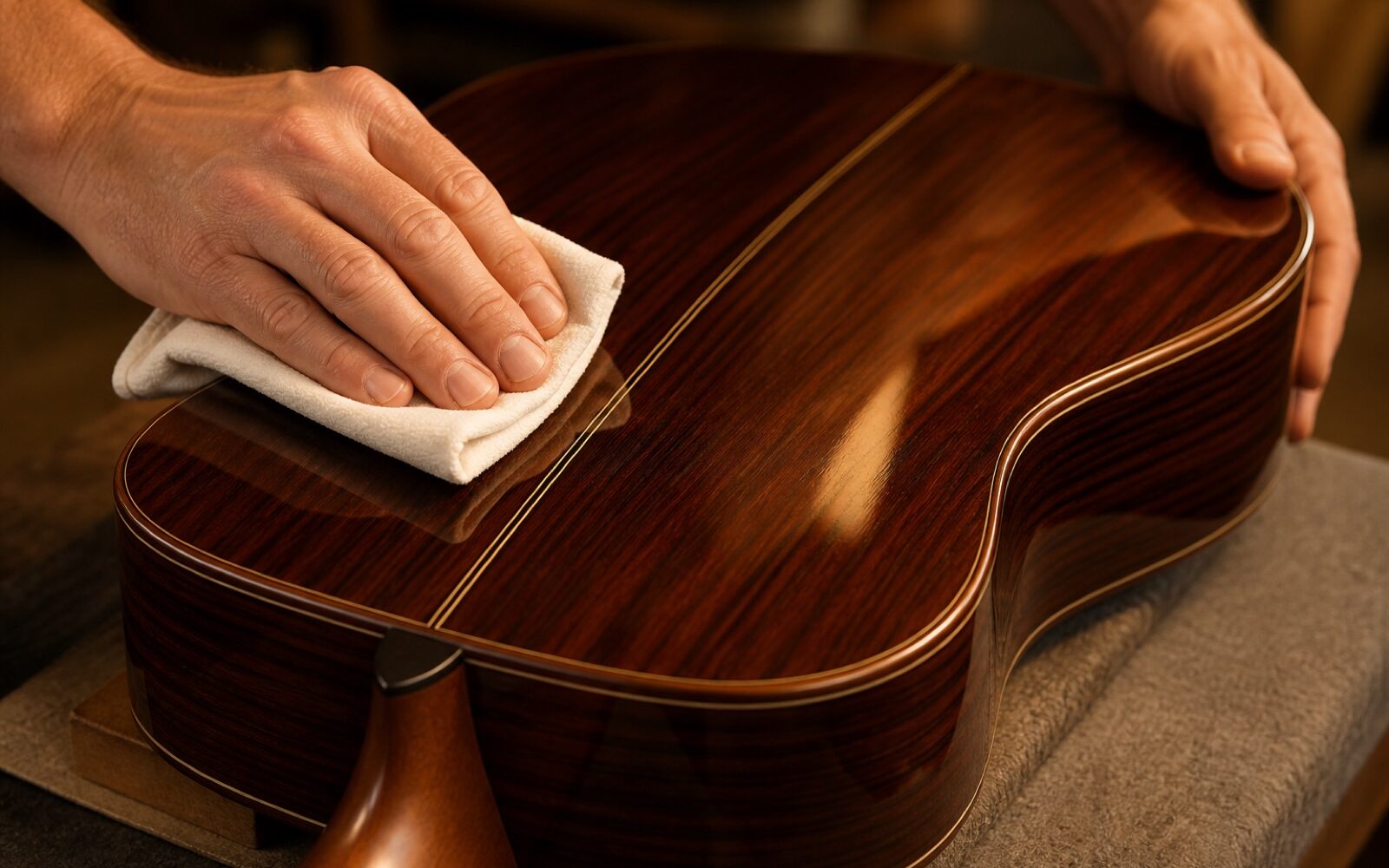
Nitrocellulose lacquer is the thinnest durable finish anybody has found for a musical instrument, and it is also the fussiest. It never fully stops curing, it stays slightly soft for years, and it will take an impression of almost anything left pressed against it.
Why we still use it
Because a finish is a damper. A hand-rubbed lacquer finish is far thinner than a typical factory finish, so the top is left free to vibrate. A thick finish muffles the sound from day one and gets worse as the instrument ages, because it stays stiff while the wood underneath keeps changing.
The three things that ruin it
- Rubber and vinyl. Guitar stands with soft grips, vinyl straps and foam case linings all contain plasticisers that migrate. Given a month of contact they leave a permanent dull print. Cover any stand contact point with cotton cloth.
- Silicone polish. It looks wonderful and it makes any future finish repair impossible, because nothing will bond over it. Never let a silicone product near an instrument you might one day want touched up.
- Heat. A car in the sun goes past the softening point in under an hour. The lacquer does not have to melt to be ruined; it only has to move.
How to clean it
A dry microfibre cloth handles ninety per cent of it. For fingerprints, breathe on the surface and wipe. For anything greasy, a cloth barely damp with water. That is the entire list; there is no product you need to buy.
Checking, hazing and the rest
Fine crazing across the top, usually after a sudden temperature change, is called checking. It is cosmetic. It does not affect tone, it does not spread structurally, and on most instruments over twenty years old it is simply present. Refinishing to remove it costs more than it is worth and always changes the sound.
If you want a finish that shrugs all of this off, ask us for satin. It is the same lacquer, sprayed thinner and not polished, and it hides handling far better.