Eleven days from wet bean to wrapped bar
Everything happens in one room on Kiln Row. Sacks come in one door, wrapped bars leave the other, and nothing is toll-manufactured elsewhere. That limits how much we can make — about twenty-eight kilograms a week — and it is the main reason a batch is gone when it is gone.
Sorting and roasting
Beans are hand-sorted on a light table. Flats, germinated beans, clusters and anything with an insect hole come out by hand, which costs roughly ninety minutes per sack and removes about four per cent of the weight. The rest goes into a drum roaster on a curve written for that estate. We do not run a house profile across everything, because a five-day ferment and a seven-day ferment want different heat.
Cracking and winnowing
A slow roller cracks the shell without pulverising the nib, and a column of moving air lifts the shell away. Shell goes back to the farms as mulch. What is left is nib, and nib is what a bar actually is.
Grinding and conching
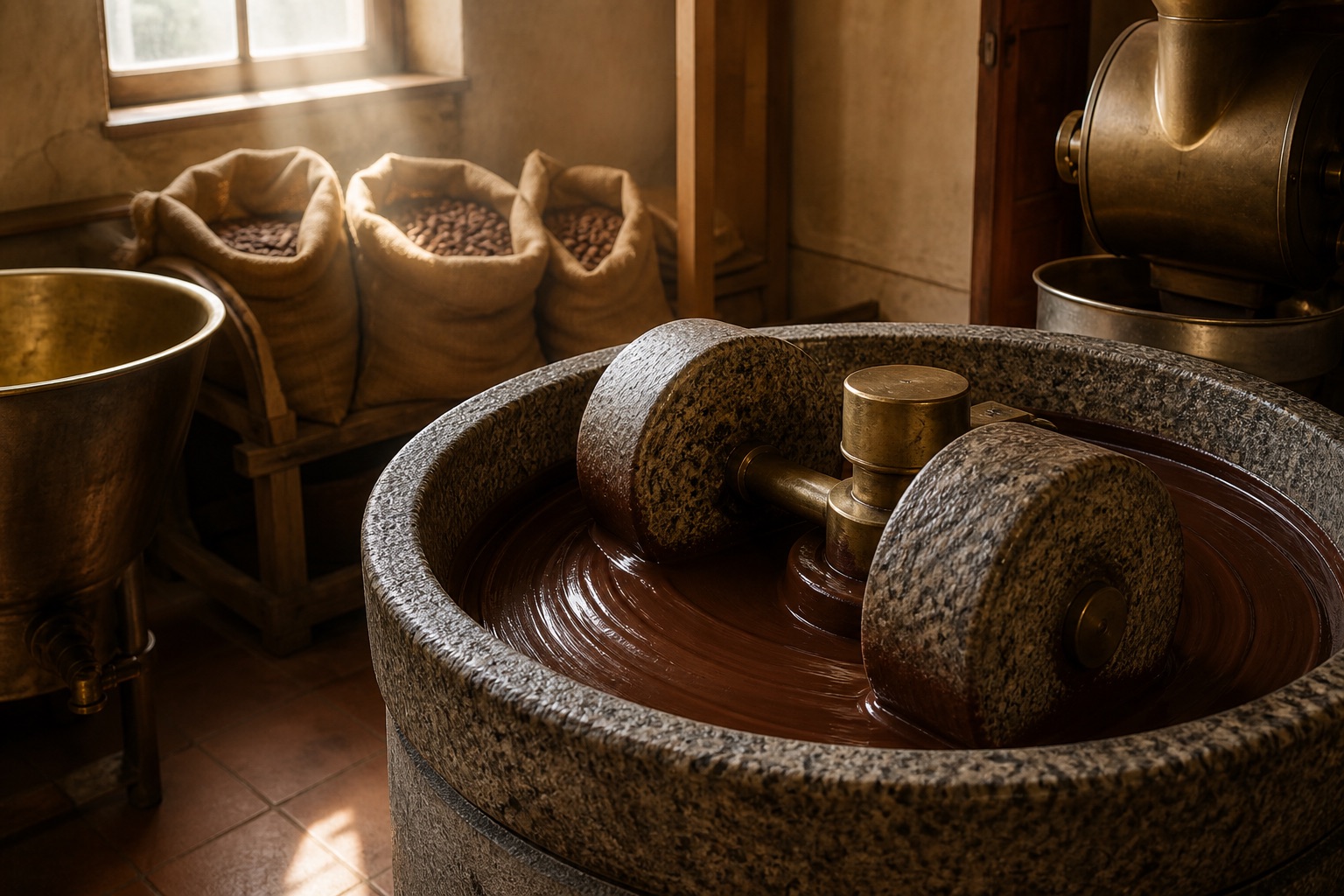
Granite wheels turn nib into liquor over seventy-two hours. The heat is friction rather than a heating jacket, so volatile acids leave at their own pace instead of being driven off. Sugar goes in at hour four. Nothing else goes in at all — no lecithin, no vanilla, no added cocoa butter.
Tempering and moulding
We seed to form type V crystals, pour at 31 °C, vibrate the moulds to clear air, and rest the bars three days before wrapping. That rest is why the snap survives the journey to you.
Why two ingredients
Added cocoa butter makes a bar melt faster and forgive a rougher grind. Vanilla covers a flat ferment. Lecithin lets you cut the fat. Every one of them is a way to make a thin bean taste acceptable, and we would rather buy a better bean.