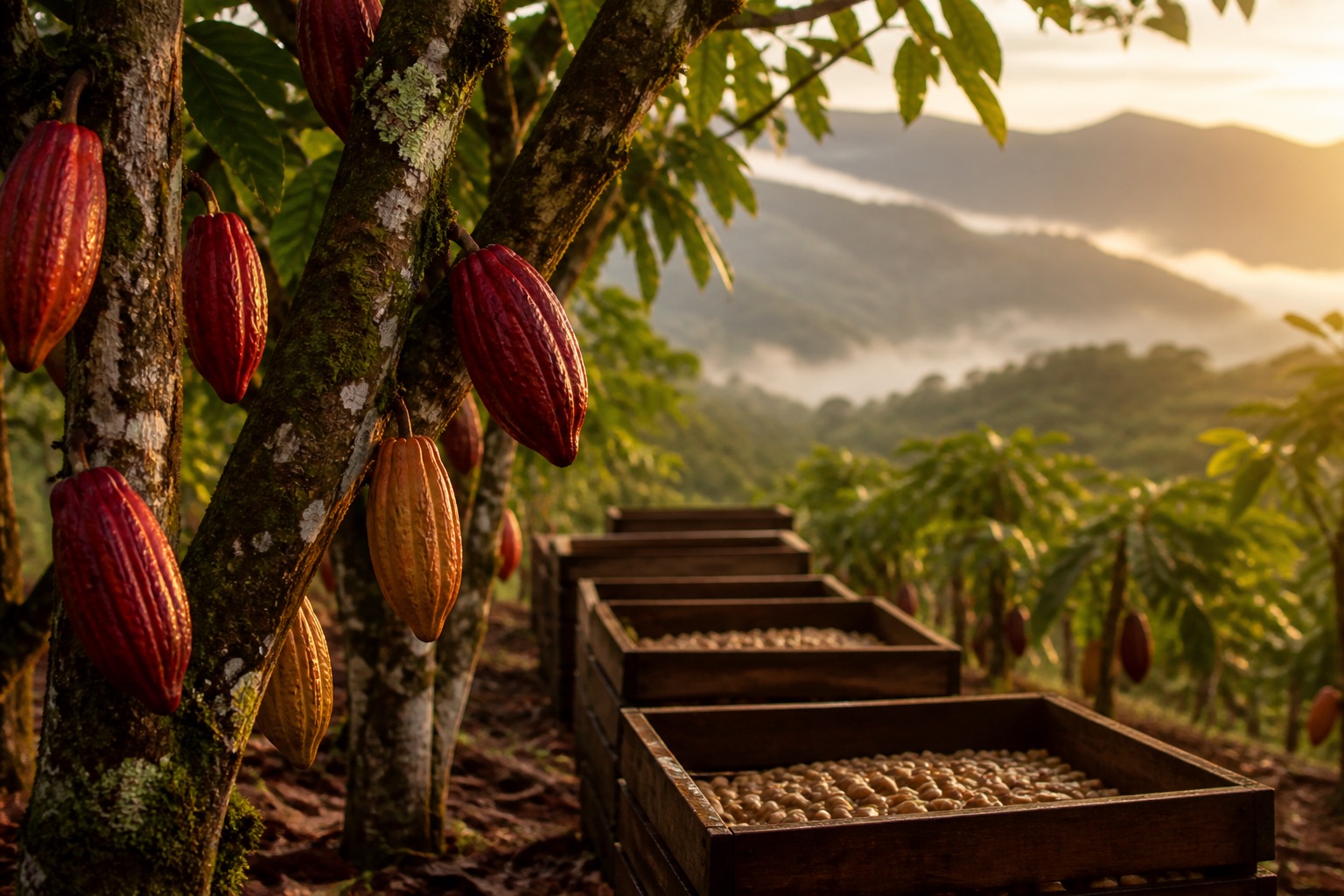
We buy the harvest, not the commodity
The board price for cacao is a floor set thousands of miles from any farm. It tells a grower nothing about whether the extra two days of turning the ferment boxes were worth the labour. So we do not pay it. We agree a price per dry kilogram with each estate before the pods are cut, based on a protocol we write together, and we publish that figure on every product page.
Six estates, named
We work with six partner estates across three growing regions. None of them are anonymous co-operative lots, and none of the beans are blended between farms before they reach us. When a batch sells through, the next one tastes different, because it is a different ferment.
What we ask for
A protocol, agreed in writing: box size, turn interval, ferment duration, drying method and moisture target. In exchange we commit to the volume before the harvest starts, pay half on agreement, and take the lot whether or not the cupping goes the way we hoped. Two of our six estates have had a bad ferment on our watch. We paid for both.
The premium
Across the 2025 main crop we paid an average of 2.4 times the board price. That is not charity — a seven-day ferment with three turns a day costs labour, and a grower who cannot fund that labour has no reason to do it. The premium buys the protocol, and the protocol is where the flavour comes from.
What we do not claim
We are not certified organic, because two of our estates cannot afford the audit and we are not going to drop them over paperwork. We do not use the word sustainable without a number attached to it. And we do not print a farmer’s photograph on a wrapper unless they asked us to.