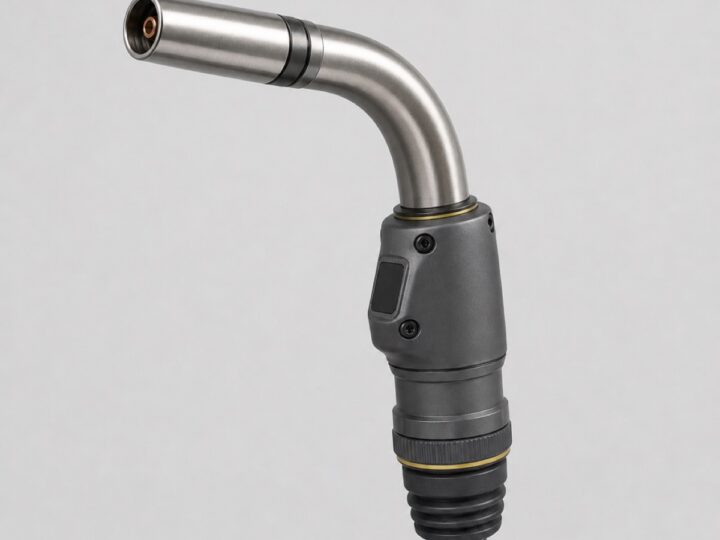
Seam tracking is not a substitute for good fixturing, but no fixture eliminates all variation on large fabricated assemblies. A laser sensor measures the actual position of the joint ahead of the arc and corrects the robot path in real time.
Adaptive welding
Finding the joint is only half the job. Where the gap varies, the sensor can also adapt the welding parameters as it goes, so a variable joint still produces a consistent weld.
When it pays
Tracking earns its place on parts that are large, costly to fixture tightly, or naturally variable. On small parts in a good fixture it is often unnecessary — we help you decide based on measurement, not assumption.
| Measuring principle | Laser triangulation, 405 nm |
|---|---|
| Standoff | 95 mm nominal |
| Field of view | 30 mm at standoff |
| Measurement rate | 250 profiles/s |
| Position accuracy | ±0.10 mm |
| Gap tolerance | Up to 3 mm compensated |
| Joint types | Fillet, lap, butt, V-groove, corner |
| Adaptive output | Path offset, weave width, wire speed |
| Protection | IP65, air-purged optical window |
| Interface | Ethernet to robot controller |