 Absorption
FeltCore F40 Wall Absorber
Our reference wall panel. A 60 kg/m³ mineral wool core inside a solid walnut frame, faced…
NRC 0.90
100 mm

Acoustic Treatment Engineering
We design, make and install acoustic panels and sound treatment for studios, offices, home cinemas and everyday rooms. Every project starts with listening to your space and ends with a room that simply sounds better.
The Catalogue
Four product lines cover the full frequency span of a room — broadband absorption for the mids and highs, diffusion to keep the space alive, membrane and pressure devices for the bottom octaves, and decoupling hardware where structure-borne noise is the problem.
Absorption
Our reference wall panel. A 60 kg/m³ mineral wool core inside a solid walnut frame, faced…
 Absorption
A 120 mm suspended cloud hung on brass aircraft cable. The air volume behind it does…
 Absorption
Self-supporting 400 mm hexagons pressed from 100% recycled PET. Peel-and-stick installation, no frame, no dust, and…
 Diffusion
Seventeen wells of mathematically derived depth, machined from solid walnut. Scatters from 380 Hz to well…
 Diffusion
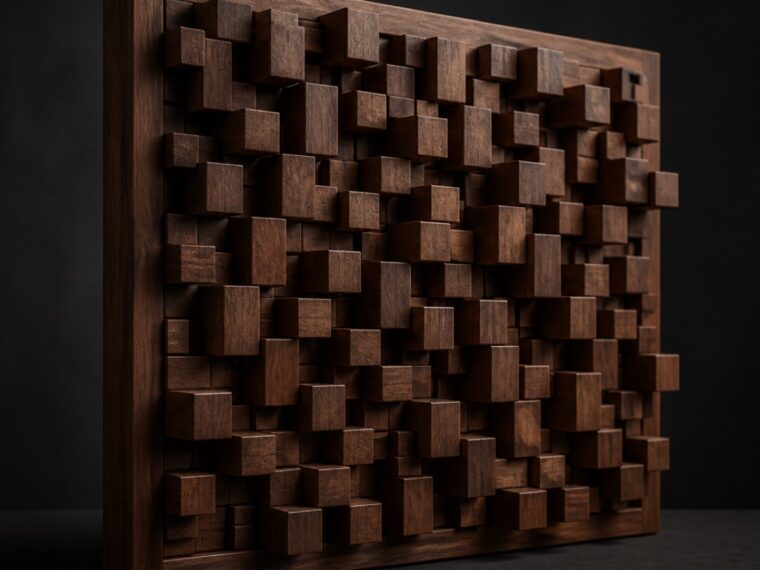
A 7 × 7 block array scattering in both the horizontal and vertical plane. Where a…
 Diffusion
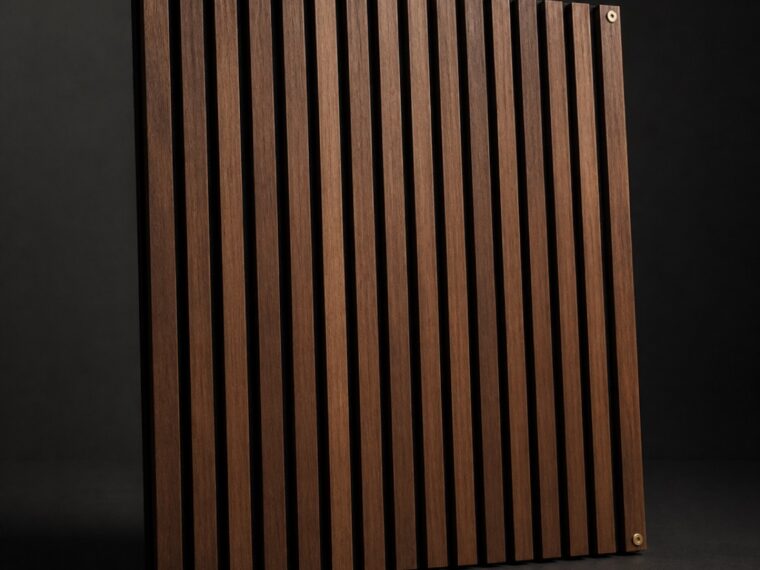
A Helmholtz slat resonator tuned by slot width and cavity depth. Absorbs where the room is…
 Bass Control
A 300 mm triangular column that fills the vertical corner where every axial and tangential mode…
 Bass Control
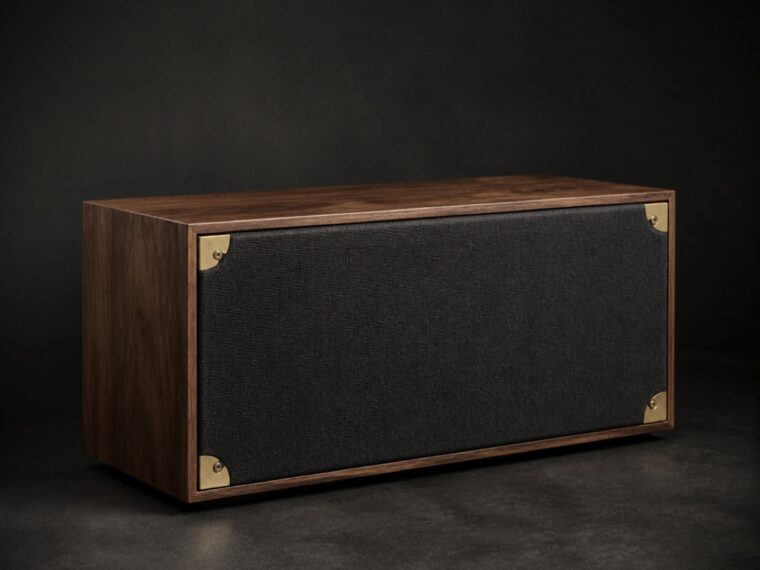
A sealed cabinet with a mass-loaded diaphragm, tuned to a measured problem frequency. Where porous absorption…
Application Spaces
A control room wants a flat, short decay. A cinema wants envelopment. A boardroom wants intelligibility. We start from the target curve for the room type, then specify the hardware that gets there.
Control rooms and live rooms that need an even, honest sound so what you hear is…

Cinema rooms where dialogue should be crisp and the sound should wrap around you — controlled,…

Boardrooms and meeting spaces where the goal is simple: everyone on the call can be heard…

Small voice rooms where hard, close walls can make a recording sound boxy. The fix is…

How It Works
Every room problem falls into one of three categories, and each one needs a physically different device. Treating all of them with the same foam panel is why so many rooms end up dull and still boomy.
Soft, porous material soaks up sound energy as it passes through. Depth is what matters — thin foam only tames the crispest part of the sound, which is why deeper panels work so much better.
Wells of varying depth return energy to the room spread over time and angle. It removes flutter and comb filtering without stealing the liveliness that makes a room pleasant to work in.
Mass, an air gap and a broken structural path. Absorption never stops sound getting through a wall — only decoupled mass does, and it has to be detailed correctly at every junction.
Not sure which of the three your room needs? Tell us about the space and we will point you at the right starting place — no jargon, no obligation.
Selected Work

A dedicated music room where boomy bass had made listening a chore. Corner traps, made-to-order panels and a sculpted rear wall brought the room under control without deadening it.

A live room and control room built side by side. Floating floor platforms kept drum sound out of the control room while slat panels kept the live room bright and natural.

A busy broadcast floor treated over four night shifts. Felt wall tiles and ceiling clouds made voices clearly easier to follow without touching anything above the ceiling.
Technical Journal

Boomy bass is the hardest room problem to fix and the one thin panels never touch. A plain-language look at…
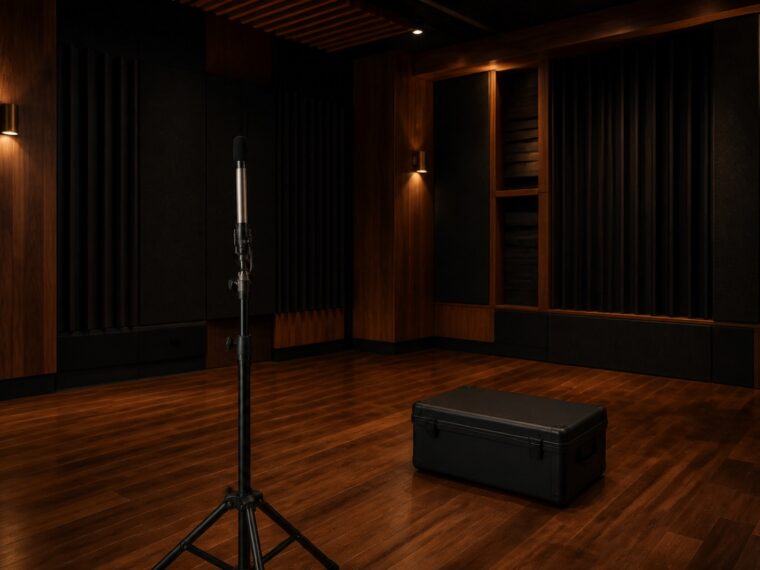
Before you buy anything, find the mirror points. A modest panel in the right place beats an expensive one in…

A single rating number is a convenience, not a promise. Here is what the number on the box covers, what…
Start a Project
Dimensions, construction, what the space is used for and what is wrong with it today. That is enough for our engineers to come back with a treatment plan, a predicted decay curve and a priced bill of materials.
Tell us about your room — its size, what you use it for and what bothers you about the sound. We will reply with a clear treatment plan and a quote.
Tell us the quantity, the room it is going into and any finish requirements. We reply within one business day.