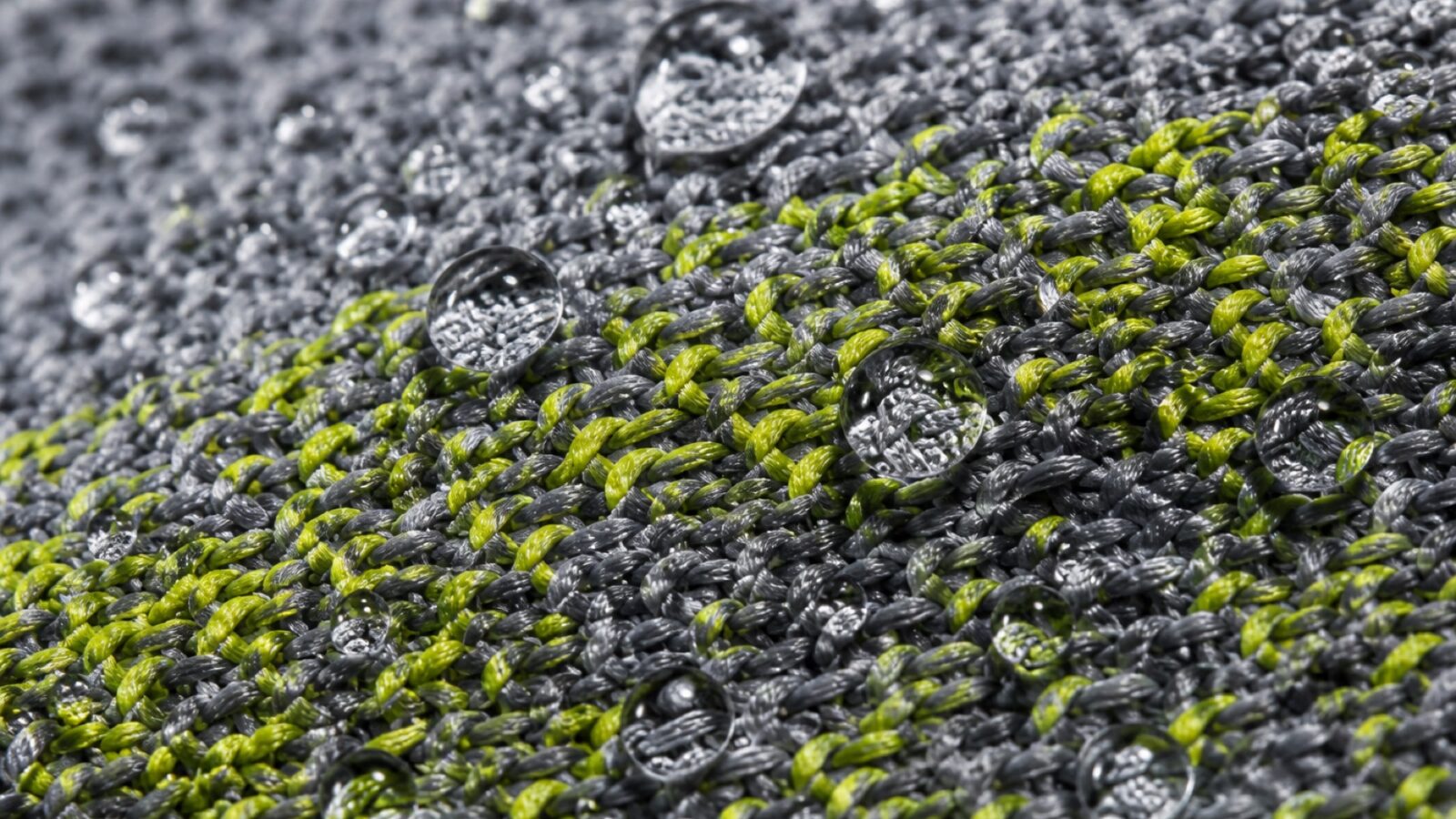
If you only look at one figure on a product page, look at the fabric weight. It is written as gsm, grams per square metre, and it is exactly what it sounds like: cut a one metre square out of the fabric and weigh it. That single number carries more useful information about when you can wear a garment than every adjective on the page put together.
The range, roughly
For knitted tops, useful territory runs from about 100 gsm to about 350 gsm.
Under 130 gsm you are in summer running territory. The fabric is thin enough to see light through, it carries almost no water, and it will not keep any heat in. Our running tee sits at 125 gsm. In still air below about 12°C it will not be enough on its own.
Between 140 and 200 gsm is the general-purpose band. Long-sleeve base layers, mid-weight tees, most training tops. It is warm enough to start a cold run in and light enough that you do not have to take it off ten minutes later.
Between 200 and 260 gsm you are into fabrics with structure. This is where tights live, and the reason is opacity rather than warmth: a lighter knit goes sheer when it is stretched over a bent knee. Our tight is 240 gsm.
Above 280 gsm is sweat fabric. Hoodies, crew necks, anything you put on before and after rather than during. That band is where sweatshirts live, and it is deliberately not where anything in this range sits.
Woven fabrics are a different scale
The numbers above are for knits. Woven shells run far lighter for the same job, because a woven fabric blocks wind at a weight where a knit would be transparent. A 48 gsm ripstop, like our wind shell, stops wind almost completely. A 48 gsm knit would be barely there. So compare gsm within a fabric type, not across.
What gsm does not tell you
Two fabrics at the same weight can behave very differently depending on how they are knitted. A tight, flat knit at 150 gsm blocks more wind than an open mesh at the same weight. A textured knit at 150 gsm holds more air against the skin and feels warmer than a smooth one. Weight sets the range; construction decides where in that range a garment lands.
It also says nothing about fibre. At the same weight, cotton will hold considerably more water than polyester and take much longer to dry. That is not a defect, it is just what cotton does, and it is why a cotton sweatshirt is a poor running layer at any weight.
Why nobody prints it
Partly because gsm invites comparison, and comparison is inconvenient if your top is heavier than the competitor’s at the same price. Partly because it makes it obvious when a “lightweight technical” tee is 180 gsm. The number is on the mill’s spec sheet for every garment ever made. Choosing not to publish it is a choice.
Ask for it. If a brand will not tell you the weight of a fabric it is selling you, that itself is an answer.