

Caring for Handmade Ceramics
Thermal shock, cutlery marks and stacking - the complete care list is shorter than you think.
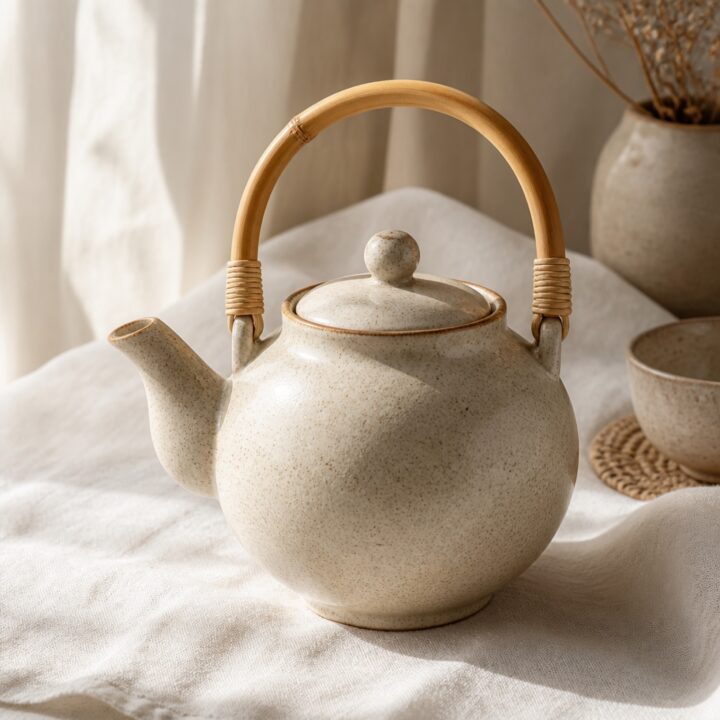
Wheel-thrown in small batches
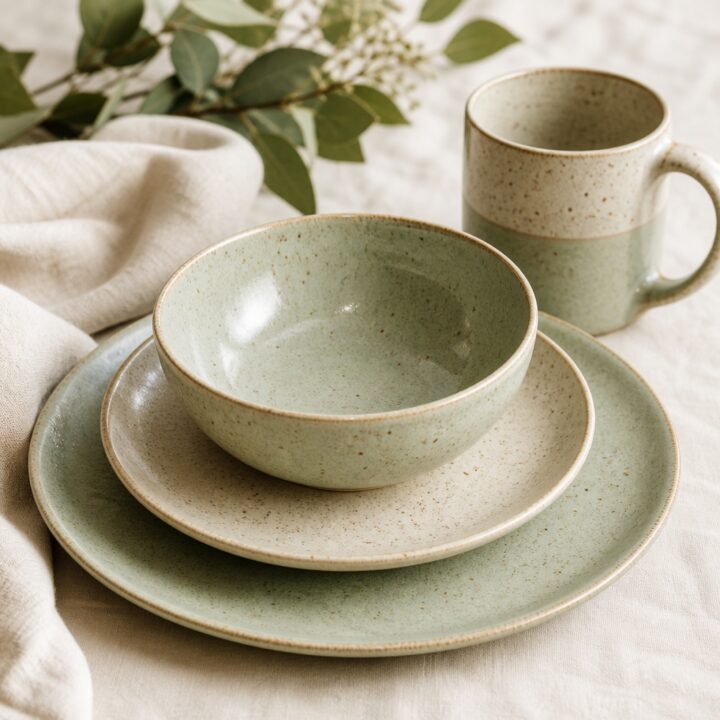
Plates, bowls and mugs thrown on the wheel, glazed in-house and stoneware-fired to 1,300 degrees. Every piece slightly different - all of it made for daily use, not the display cabinet.

From the kiln
Each piece is thrown on the wheel, trimmed the next day and dipped in glazes we mix ourselves. Stoneware firings climb to 1,300 degrees over twelve hours - dense, chip-resistant ware that lives happily in the dishwasher.
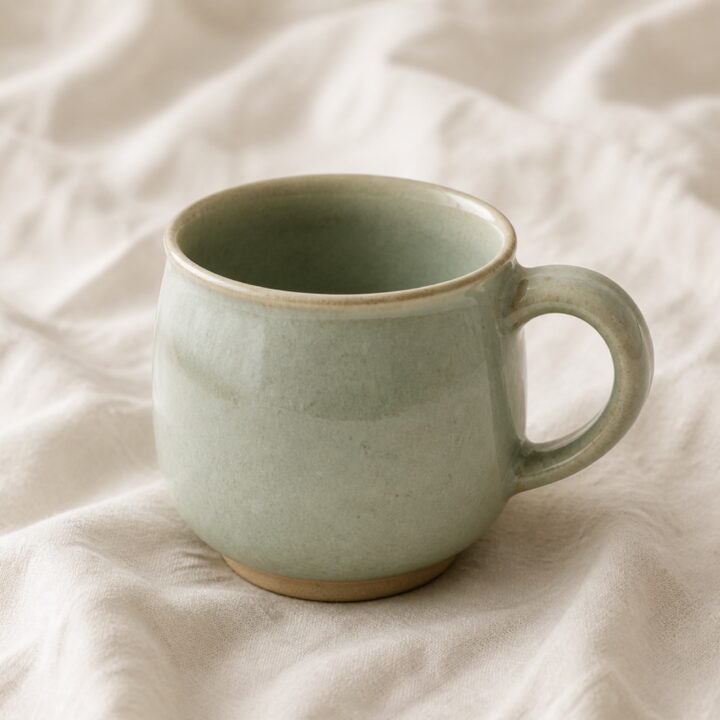
See how it is madeLead-free celadon, oatmeal and umber, mixed and tested in-house.
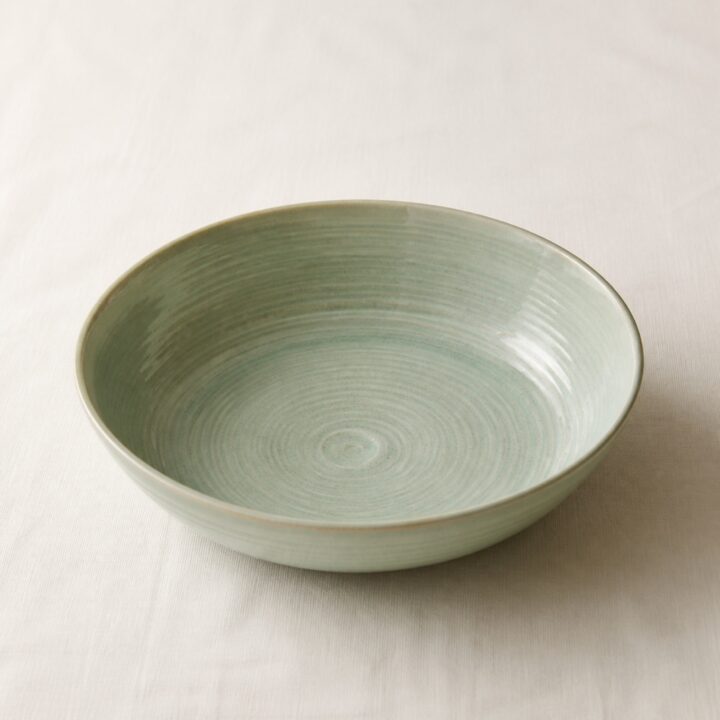
Every form starts on the wheel - throwing rings included.
Double-boxed with recycled padding, tracked to the door.
Unused pieces return freely - we cover the label, no questions asked.
From our tables
Two years of daily breakfasts and the speckled plates still look like the day they arrived. The glaze wears in, not out.
We started with two mugs and now the whole cupboard is theirs. Every new glaze pairs with the last one - that is the trick.
The full set survived a house move and a toddler. The one bowl that chipped was replaced, glaze-matched, within the week.
Most loved
The pieces our customers come back for in a second glaze.

How it works
Three weeks from wet clay to a set table, in four steps.
Weighed clay, thrown on the wheel, trimmed leather-hard the next day.
Dipped by hand in lead-free glazes mixed from raw materials.
Twelve hours up, a full day cooling - dense, vitrified stoneware.
Double-boxed with recycled padding, dispatched within two days.

Built to pair
Celadon that pools, oatmeal that steadies, umber that anchors - the three house glazes are designed to mix across the table, so a set grows piece by piece and never stops matching.
Shop full setsFree tracked shipping over $79 - fired, packed and at your door within the week.

Scan with WeChat to start a chat.