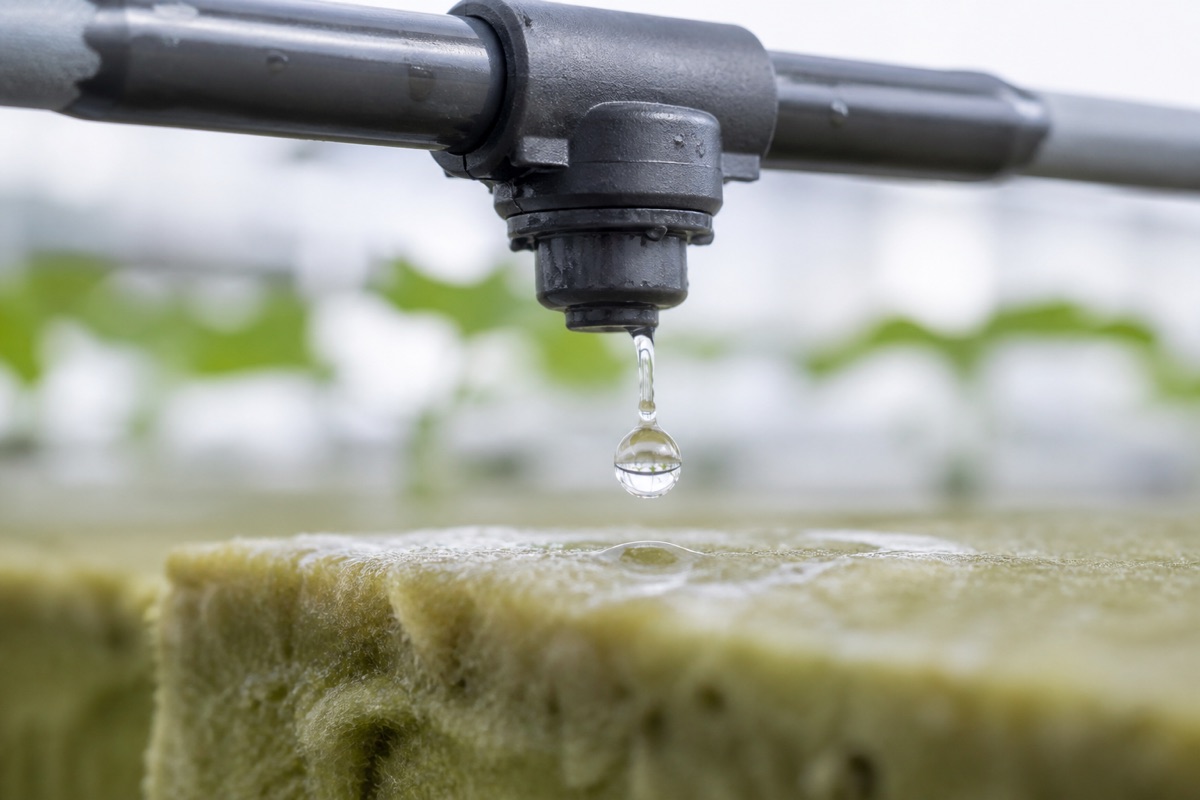
Reusing irrigation water is one of the biggest savings available to a modern greenhouse. It also means the same water passes the roots again and again, so the nutrient balance needs a little more attention than in a system that drains to waste.
One number is not enough
Most systems watch a single overall reading of nutrient strength. The catch is that plants take up some nutrients quickly and others slowly, so the mix gradually shifts even while the overall reading looks fine. Salts the crop does not want can build up quietly in the background, and the elements it uses fastest can run short.
A simple routine
Keep an eye on both the supply water and the water coming back from the crop, and send a sample to a laboratory now and then — more often in the first season, less once you know your site. That tells you what is really building up or running short, so you can adjust the feed with confidence instead of guessing.
Correct gently
When the balance drifts, there is rarely a need to dump the whole tank and start again. Adjusting the feed recipe, rinsing the root zone a little more generously for a few days, and blending in fresh water usually brings things back into line at a fraction of the cost.
Let the equipment help
Modern dosing equipment measures continuously and cross-checks its own sensors, so a faulty reading is caught before it reaches the crop. That turns nutrient management from an anxious weekly inspection into something the system quietly looks after.