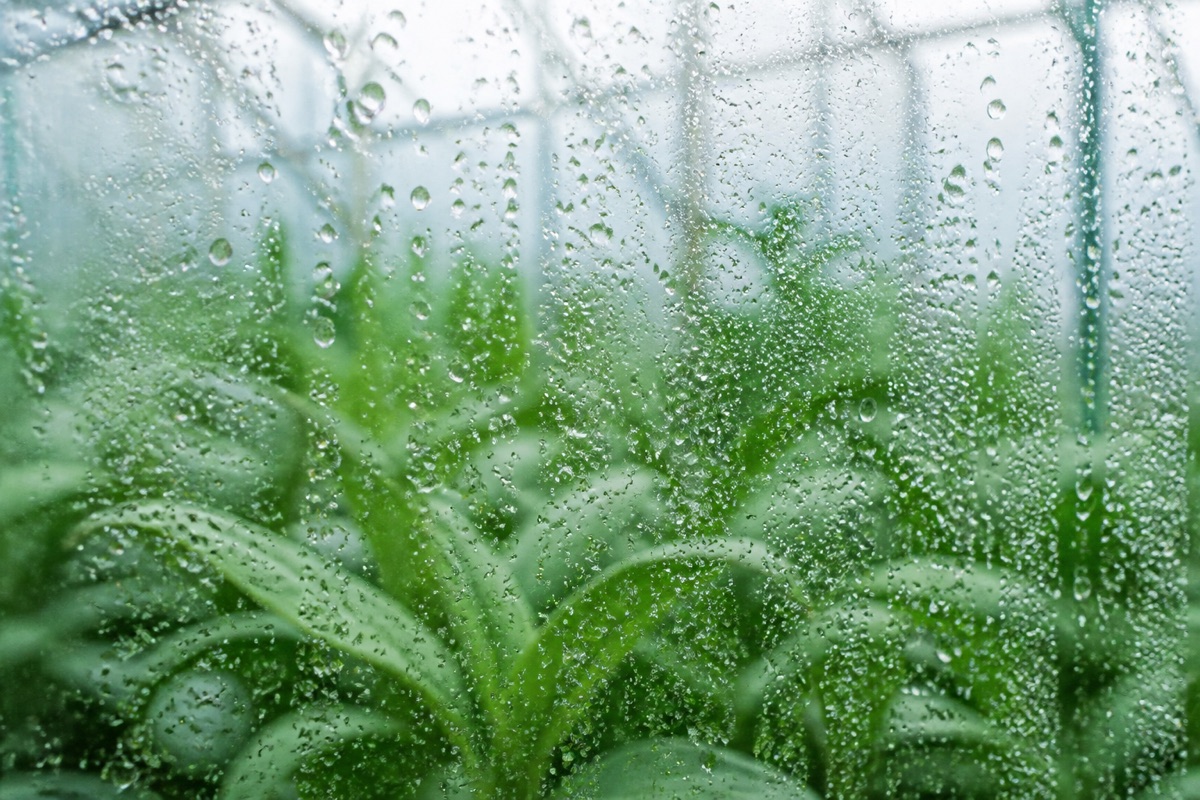
Most greenhouses control humidity as a simple percentage, but the same percentage can feel very different to a plant depending on the temperature. What really matters is how easily the crop can release moisture into the air around it — and that is what modern climate control works from.
Why it matters
When the air is too damp, plants stop moving water, and with it the nutrients they need to keep growing. When the air is too dry, they close up to protect themselves and growth slows even in perfect light. Keeping the crop in the comfortable middle band is one of the biggest levers a grower has for healthy, steady growth.
The screen gap decision
A classic problem is a fully closed energy screen on a cold night. The greenhouse holds its heat beautifully, but the air stops moving, moisture builds up over the crop, and by morning there is water on the leaves — an open invitation to disease. The fix is small and mechanical: leave the screen open by a small gap so the moist air can escape into the roof space. It costs a little heat and prevents a much bigger problem.
Measure where the crop lives
Sensors should sit at crop height, shielded from direct sun, and ideally in pairs. A sensor in the wrong spot will confidently steer the whole climate system in the wrong direction, while a pair of sensors lets a fault show up as a disagreement long before it shows up in the crop.
Watch the plants
Instruments help, but the crop gives the final verdict. Plants that are moving water comfortably look fresh and feel slightly cool at midday; plants that have shut down do not. Learn to read both the screen and the leaves.