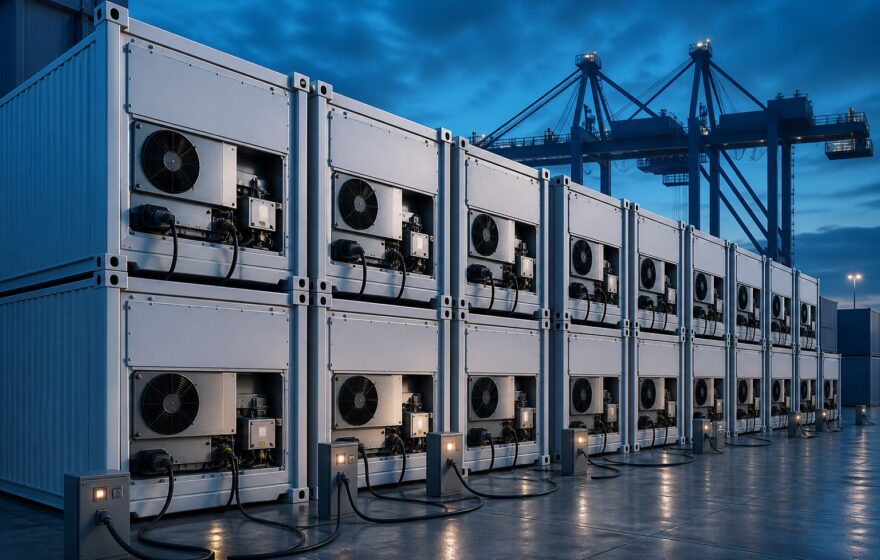
One building, four validated environments, one inventory record. Chambers are ducted and plant-fed independently, so a defrost cycle in the frozen hall has no effect on the chilled pick face next door.
Chamber mix
| Chamber | Set point | Tolerance | Typical use |
|---|---|---|---|
| Deep frozen hall | −25 °C | ±1.2 °C | Long-hold frozen stock, seafood |
| Frozen pick face | −18 °C | ±1.2 °C | Grocery and food service wave picking |
| Chilled hall | 2 – 8 °C | ±0.8 °C | Dairy, protein, produce |
| Controlled ambient | 15 – 25 °C | ±2.0 °C | Room-temperature pharmaceutical, dry goods |
Racking for airflow, not density
The temptation in cold storage is always to fill the cube. We rack for airflow instead: pallets are spaced so that return air reaches the core of every position, and the aisles are laid out to match the evaporator throw rather than the forklift turning circle. It costs positions. It also means the temperature we measure at the probe is the temperature the product is actually at.
Power and plant
- N+1 compressor redundancy per chamber, with automatic changeover.
- Standby generation sized to hold all chambers at set point indefinitely.
- Thirty hours of passive hold with the plant fully down and doors closed.
- Defrost cycles staggered so no two chambers on the same suction group defrost together.