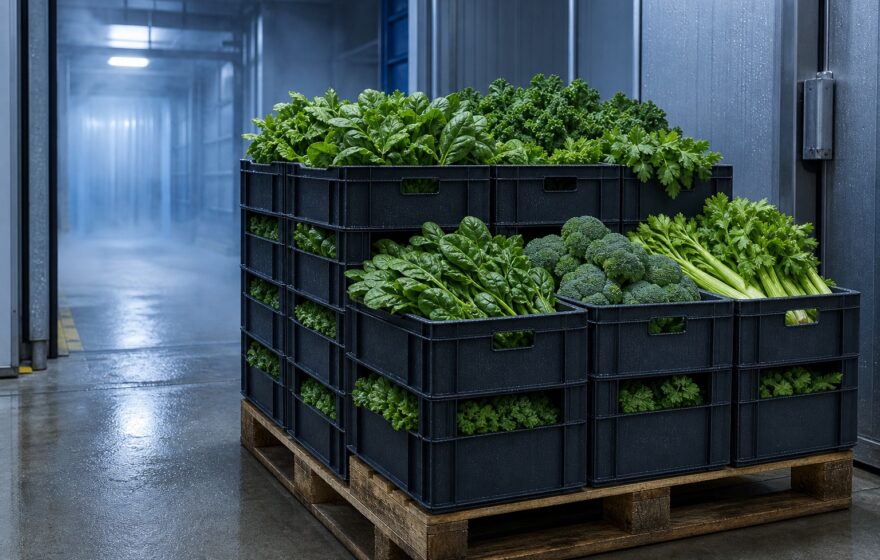
Blast freezing is the stage most often skipped and most often blamed. Product that goes into storage warm never really recovers: the surface reads correctly, the core does not, and the difference shows up weeks later as ice crystal damage and drip loss.
Pull-down discipline
We run tunnels at −35 °C with high-velocity air and rack for spacing rather than density. Batches are probed at the core, not the surface, and nothing is released to the storage hall until the core reading holds below −22 °C on two consecutive checks.
Tempering
The reverse operation matters just as much. Controlled tempering brings frozen product up to a workable temperature for further processing without ever letting the surface enter the danger band. It is a slow, boring, carefully logged process, and doing it properly is the difference between a usable block and a wet one.
- Core probing per batch, two consecutive confirming reads before release.
- Tunnel airflow verified quarterly against the commissioning report.
- Batch-level records retained and released with the storage receipt.