Skip to content
Dispatch desk live · Staffed 24 / 7 / 365, alarm response in minutes 4 validated zones · −25 °C / −18 °C / 2–8 °C / 15–25 °C +1 555 0142 8800 operations@example.com
Cold Storage

Cold Cross-Dock & Deconsolidation

Temperature-matched transfer chambers with a hard SOP cap on dwell, so deconsolidation never becomes a heat event.

-25 °C to 8 °C ±1.5 °C HACCP · BRCGS Storage
Operating parameters
Specification

Operating parameters

The numbers we contract to. Each one is monitored, logged and released with the consignment record.

Operating zone -25 °C to 8 °C Matched chamber
Control tolerance ±1.5 °C Contracted band
Passive hold 20 h Without power, doors closed
Excursion rate 0.09 % Trailing twelve months
Monitoring Chamber probes · 5 min logging Logging regime
Unit redundancy N+1 chamber plant Machinery cover
Network capacity 12 800 pallet positions Committed volume
Booking lead time 24 h slot booking From confirmed order

Cross-docking is where a well-run cold chain quietly loses control. A pallet arrives at set point, gets broken down on an open dock at whatever the ambient happens to be, and leaves warmer than it arrived — with no record of it having happened.

The chamber, not the dock

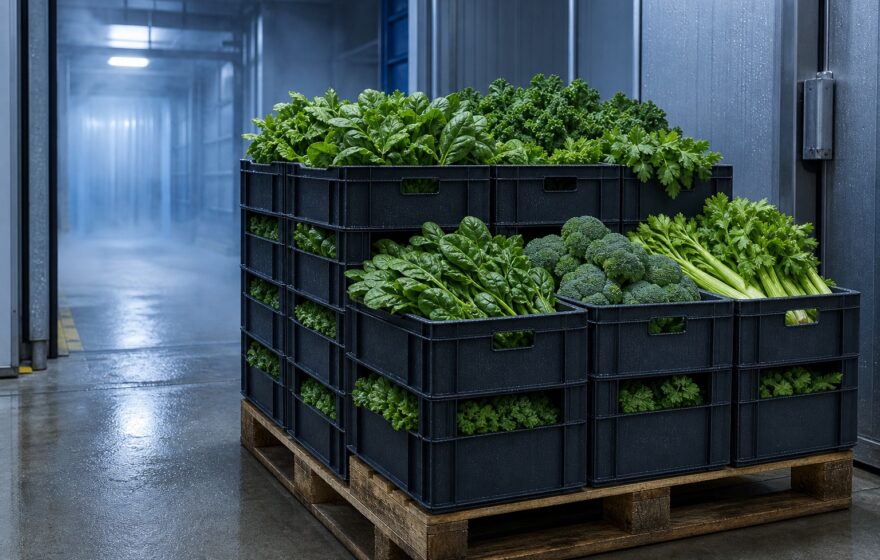
All deconsolidation happens inside a chamber matched to the inbound set point. Nothing is broken down in an ambient bay, ever. The chamber is probed on the same five-minute cycle as the storage halls, so the dwell is documented and not merely asserted.

Dwell caps

Inbound zone Chamber set point SOP dwell cap
Deep frozen −25 °C 90 minutes
Frozen −18 °C 90 minutes
Chilled 2 – 8 °C 45 minutes

Exceeding a dwell cap raises a deviation, not an apology. The record follows the consignment.
Adjacent programmes

Other service lines

Most customers combine two or three of these into a single contracted flow.

Request Cold Cross-Dock & Deconsolidation

Give us the volume, the origin and destination and the required set point. We come back with routing, packaging and an indicative rate.