

Open stock, not boxed sets
Every shape is sold on its own. Break a bowl in year three and you replace the bowl, not the set. Shapes stay in the range long enough for that to be a real promise rather than a slogan.
Stoneware for the table
Hand-glazed stoneware, hand-blown glass and washed linen, made in shapes that stack, wash and stand up to a full week of meals. Every glaze is reactive, so no two pieces come out identical.
Collections
Plates, bowls, drinking vessels, serving pieces, cutlery and linen. Buy the pieces you are short of rather than a boxed set with three shapes you will never reach for.
Shop allHow we make it
Every shape is sold on its own. Break a bowl in year three and you replace the bowl, not the set. Shapes stay in the range long enough for that to be a real promise rather than a slogan.
A plate heavy enough to feel solid and light enough to carry six of at once. Every product page lists the weight per piece, because that is the number nobody publishes and everybody notices.
Reactive glazes move in the kiln. Two mugs from the same firing will differ in tone, in how the edge breaks and in where the glaze pools. If you want four that match closely, buy them in one order.
Nothing in the range needs hand washing to survive. Where a piece has a limit (an unglazed foot, a metal detail, a linen wash temperature) it is written on the product page, not buried in a care card.
The range
Sold as open stock, so you can buy two of something now and add four more next year without hunting for a discontinued glaze.
Shop allDinner knife, dinner fork, dessert fork, soup spoon, teaspoon
A five-piece place setting in brushed stainless steel, balanced so the knife does not tip on…
38 cm
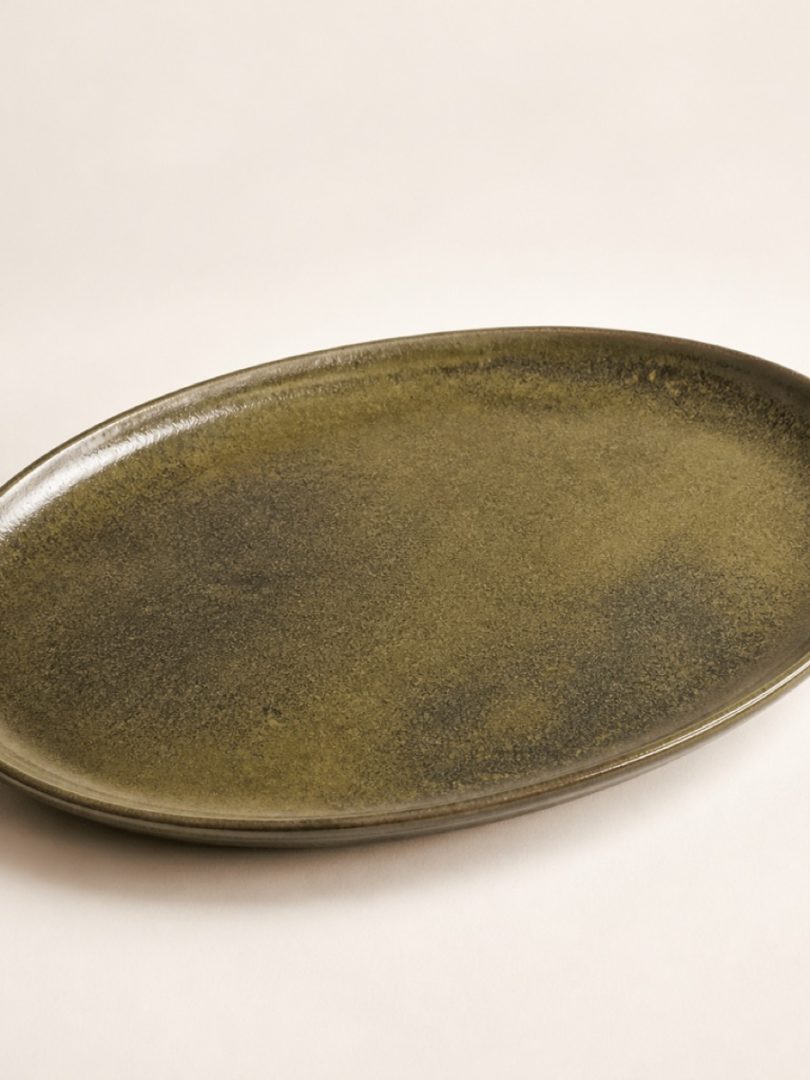
A 38 cm oval platter with a dished floor, oven safe to 220 °C and flat…
600 ml
A 600 ml teapot with a strainer pierced through the wall, a lid that holds through…
4 bowls
Four bowls, 18 cm across and 600 ml to the rim, in the same reactive glaze…
350 ml comfortable fill, 400 ml to the rim
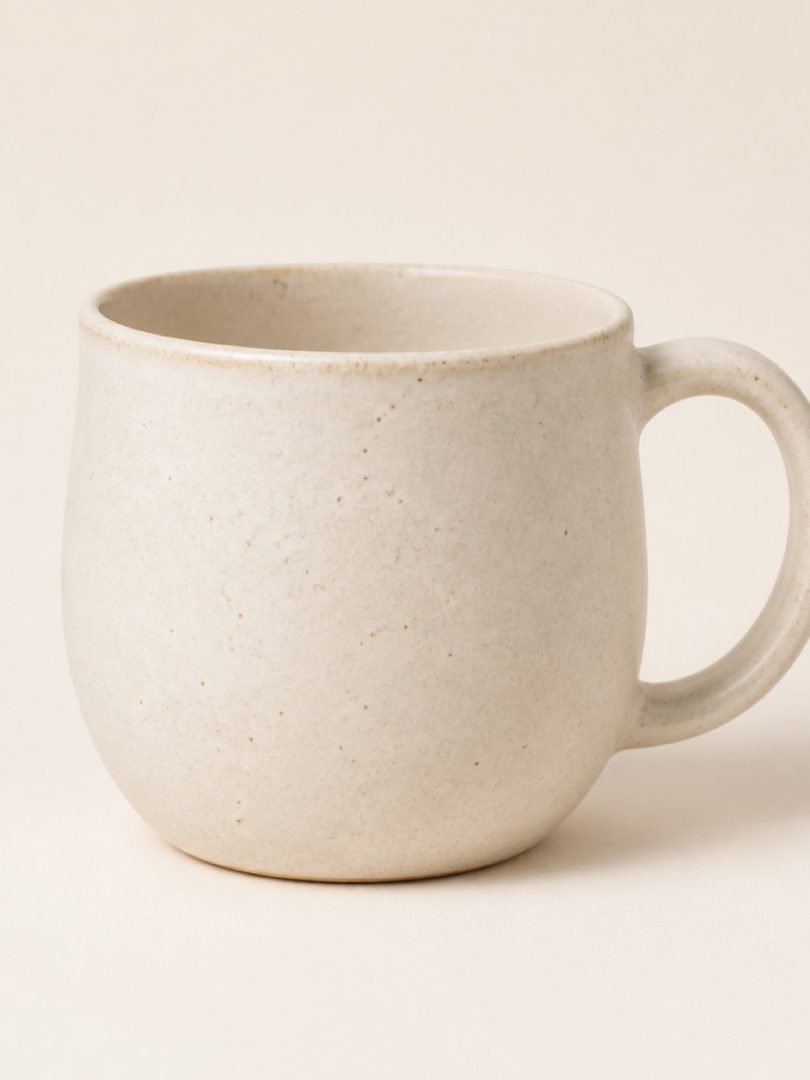
A 350 ml mug with a wide body and a handle sized for three fingers rather…
27 cm
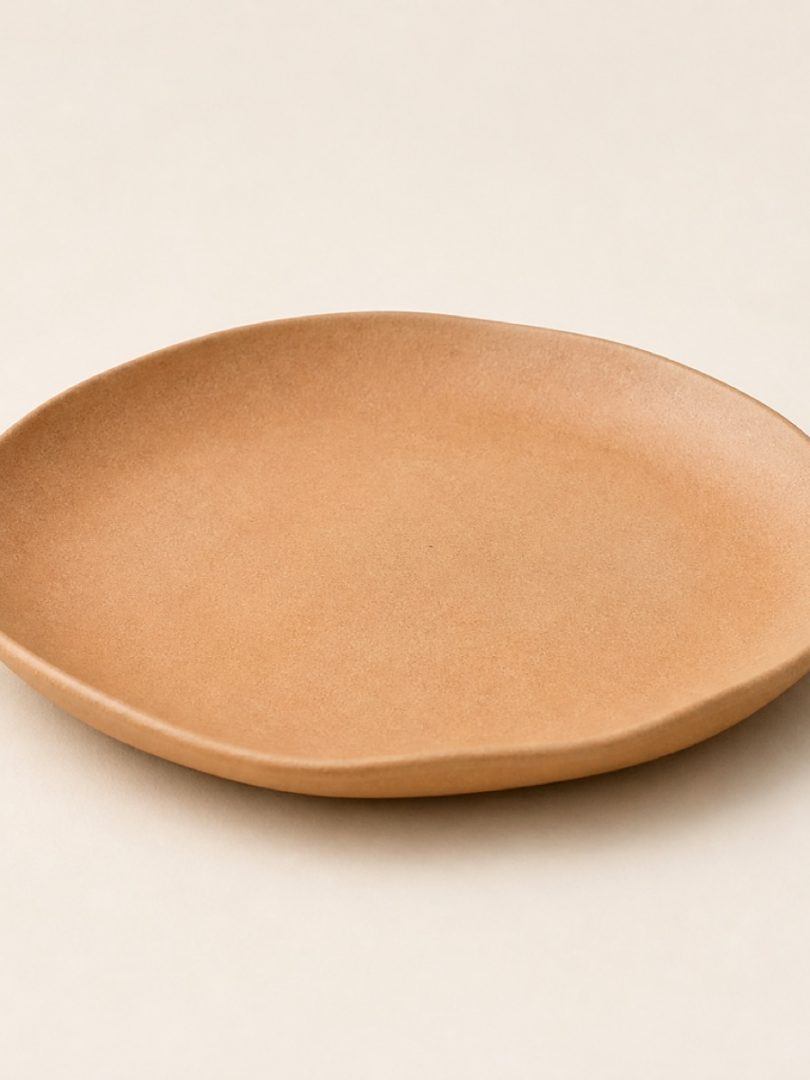
A 27 cm stoneware plate with a low rolled rim, fired to vitrification and safe in…
4 napkins
Four 45 cm napkins in stonewashed flax linen, pre-shrunk and hemmed on all four sides.
300 ml to the rim
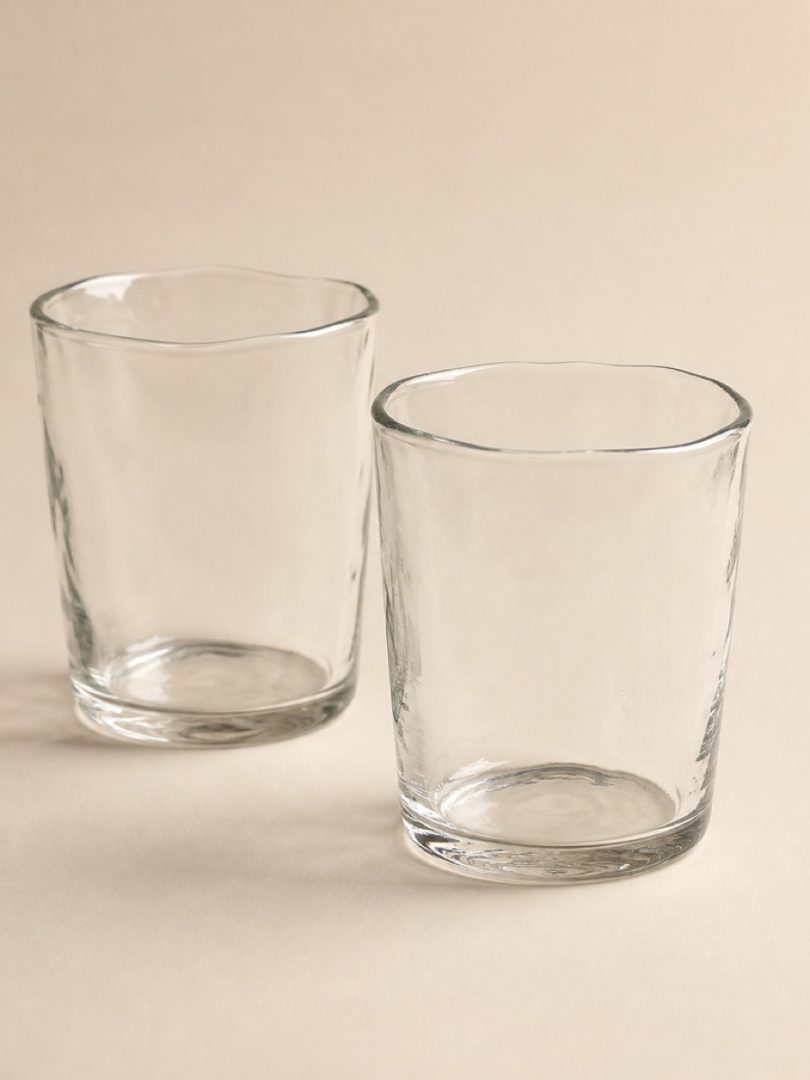
A 300 ml free-blown tumbler with a thickened base, no mould seam and a hand-finished rim.
How it is made
Dimensions, weights and care instructions are published on every product page rather than left for you to guess at.

Every plate and bowl starts on a wheel or a press mould, then gets trimmed by hand at leather-hard. That is why the foot ring on two plates of the same size can differ by a millimetre or two.

The glazes we use move in the kiln. Iron and manganese in the clay body pull through, so edges break lighter and pooled areas go darker. Variation between pieces is the finish, not a fault in it.

Stoneware is fired hot enough that the body vitrifies and stops absorbing water. That is what makes it dishwasher-safe and far less prone to staining than earthenware fired at lower temperatures.

Rims, feet and handles are sized so plates nest, bowls stack and mugs sit under a standard cabinet shelf. Full stacking dimensions are on every product page so you can measure before you buy.
Care
The full version, including what crazing is and when it matters, is on the care page.
Dishwasher, standard cycle. Load pieces so they cannot knock each other, chips come from contact in the rack, not from the water.
Do not move a piece from the fridge into a hot oven, or pour boiling water into a cold mug. Thermal shock is what actually cracks stoneware.
Slide a felt pad or a paper towel between stacked plates. The unglazed foot ring is harder than the glaze it sits on.
Fine lines in the glaze are crazing. On vitrified stoneware they are cosmetic rather than a leak. The long answer is on the care page.
Journal
What to buy first, how many of each, and the five measurements worth checking before anything goes in a basket.
The difference between the three is firing temperature, and it decides chipping, staining, weight and whether a crazed glaze matters.
Reactive glazes move while they are firing. What actually changes, how much, and how to order so the variation works in your favour.
Restocks and firings
Restock dates for shapes that sell out, notes on how a new glaze behaves, and the occasional correction when we get a measurement wrong. Roughly once a month. Unsubscribe in one click.